India Supreme Court no gree legalise same sex marriage
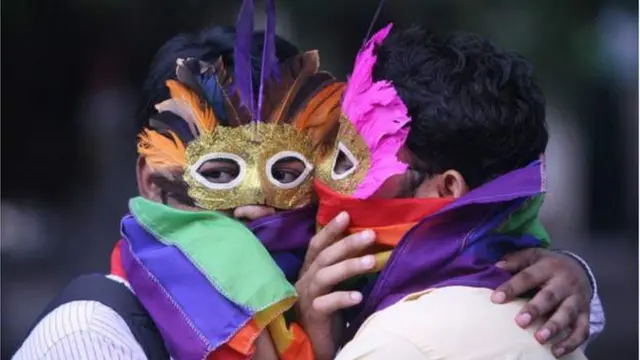
Wia dis foto come from, Getty Images
India Supreme Court no gree legalise same-sex marriage, dem say dem no get di power to do am.
Di court instead accept say make goment set up panel wey go consider granting social and legal rights and benefits to same-sex couples.
Di court bin hear 21 petitions for April and May from same-sex couples and activists wey tok say dia inability to marry don make dem become "second-class citizens".
Di ruling go fall di hopes of India LGBTQ+ population, wey dey in dia millions.
India goment and religious leaders strongly oppose same-sex unions, dem tok say e dey against Indian culture.
Wetin di judges tok
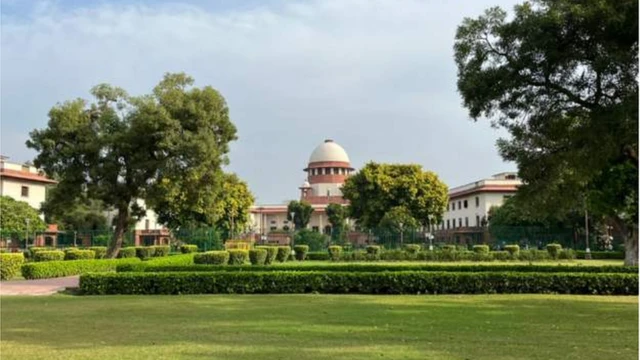
One five-judge constitution bench – wey dem set up to consider important questions of law – bin hear di case for April and May.
Chief Justice DY Chandrachud, wey dey head di bench tok say na parliament and state legislators fit pass laws wey go recognise and regulate queer marriage.
"Dis court no fit either strike down di constitutional validity of di Special Marriage Act or read words into the Special Marriage Act because of im institutional limitations. Di court, for di exercise of di power of judicial review, must steer clear of matters, particularly those wey affect policy, wey fall for di legislative domain," e tok.


End of Di one wey oda users dey read well well
Justice Sanjay Kishan Kaul, wey be di second most senior judge on di bench, tok say na from ancient times same-sex relationships don dey recognised, no be just in terms of sexual activities but as relationships wey foster love, emotional support and mutual care.
Dis moment, e say, "na opportunity for us to remedy di historical injustice and discrimination [against LGBTQ+ pipo] so governance dey needed to grant rights to such unions or marriages".
Justice Kaul agree wit Chief Justice Chandrachud say di state must make sure say queer couples no face discrimination in accessing basic needs.
But, e add say "di court no fit grant LGBTQ+ pipo di right to marry as dat na legislative exercise".
Justice S Ravindra Bhat tok say im agree wit di Chief Justice say queerness na neither urban nor elitist concept, e say di judiciary no fit add words into di Special Marriage Act.
However, he disagree wit several oda points, wey include giving LGBTQ+ couples di right to jointly adopt children.
Justice Bhat add say LGBTQ+ pipo get di right to choose dia partners under Article 21 of di Constitution.

Wia dis foto come from, Getty Images
Wetin di judgement tok about adoption
Chief Justice Chandrachud tok say queer and unmarried couples go fit jointly adopt pikin – dis don raise hopes among LGBTQ+ community, especially for some of di petitioners wey dey raise children together.
Justice SK Kaul support am and add say dem fit change India adoption laws to include di rights of queer pipo.
But three oda judges on di bench bin kick against di suggestions, dem say e no fit happun.
Since majority of di judges on di five-judge bench bin dey against am, e dey clear say adoption remain out of bound for same-sex couples.
No tweaks for di Special Marriage Act
For di centre of di hearings na di Special Marriage Act (SMA) – wey allow marriages between pipo from different religions, castes and kontris.
From di start, di judges bin tok say dem no go put mouth for religious personal laws wey dey govern much of India laws around marriage, adoption and inheritance.
Instead. dem tok say dem dey open to look if dem fit change some words for di SMA - like replacing man and woman wit spouse or husband and wife.
But di bench finally tok say making changes to di SMA no dey under di judiciary domain.
No to civil union
Hope bin dey say di court go allow civil union as Chief Justice Chandrachud tok say unmarried same-sex couples wey dey in union suppose dey enjoy di benefits wey married pipo dey enjoy.
Justice Kaul support am, but for di end, na minority view, dem leave di issue for parliament to decide.
On giving more rights to do community
During di hearing, di petitioners tok say dia inability to marry mean say LGBTQ+ no go fit access many basic rights like opening joint bank account, collect pensions and take health insurance policy, among oda things.
For di final verdict, di judges recognise dia dia demands but e be like say dem take different positions.
While Chief Justice Chandrachud and Justice Kaul tok say na goment duty to provide LGBTQ+ pipo "rights and privileges" wey dey available to heterosexual couples, Justice Bhat no gree, she tok say "state no fit dey obligated" to do dat.
All di five of dem, however, agree to accept goment proposal to set up expert panel to look into granting LGBTQ+ pipo more rights.
Transgender pipo fit legally marry?
One point wey get pipo attention, na di judges comments on transgender pipo right to marry.
Di Supreme Court clear am say transgender pipo for India don already get di legal right to marry - as long as dem marry pesin of di opposite sex.
"A transgender man fit marry a transgender woman. If a transgender pesin wish to marry a heterosexual pesin, dia marriage go dey recognised if one na man and di oda pesin na woman," di chief justice tok.
If dem no allow such a marriage, e tok say, dat one don go against di the Transgender Act.
From hope to disappointment
Air of hope and excitement bin dey outside di Supreme Court among petitioners, LGBTQ+ activists and allies wey bin gada to hear di judgement.
But as di judges finish to dey read dia remarks, dia cheerful mood turn into disappointment. While many tok say dem feel let down, odas hope say goment go truly provide dem more rights and benefits as di court order.
LGBTQ activists tok say dem dey disappointed wit di ruling.
Adish Aggarwala, president of di Supreme Court Bar Association, tell tori pipo say im dey happy say di court don accept goment argument say dem no get di power to legalise same-sex union.
"Dat right only rest wit di Indian parliament and we happy say di court agree wit us," e add.
"Dis dey look almost tokenistic," Archit Dutt, one gay student for Delhi tok.
"We dey pay di same amount of taxes as heterosexual pipo, we dey struggle hard di same way, if not more, but dem still reduce us to second-class citizens."
Pia Chanda wey bin dey in a same-sex relationship for 34 years, tell BBC say "di Supreme Court dey play passing di parcel".