Illegal entry into UK dominate election tok-tok - Leaving EU don increase di kontri immigration?

- Author, BBC World Service
- Role, London, UK
- Published
“Take back control.” Na di three word slogan of di Brexit campaign, wey bin see di UK leave di European Union, many pipo bin see am as call to regain control of dia immigration policy, and end di ability of EU citizens to live, work and study freely for UK.
But, years afta Brexit we don see some of di fastest population growth since di 1960s, as tins be now, migration na one of di key issues for di upcoming UK general election. So, wetin don happun?
To understand immigration for UK, di English seaside town of Skegness na good place to start. Here, more dan three quarters of pipo vote to leave di EU.
Like many parts of di UK, wen e get to do wit immigration, di major focus dey on dose wey arrive UK illegally. “Stop di Boats” na key pledge by di governing Conservative party, dem dey refer to di tens of thousands of pipo wey make di dangerous journey across di English channel, most times wit small boats.
Even though say none of dose boats don ever land for di beaches of Skegness, Dis na issue wey dey cause concern for di town. Some of di hotels wey dey di seafront, dem bin dey use dem house asylum seekers while dem process dia claims .
Julieanne Bunce, wey dey run di North Parade Hotel, say dis mata dey cause wahala for di community..
"Dem no worry us at all," she tok, but add say: "Di general view within di Skegness area na say di pipo no want dem here."
Majority of dose wey dey seek asylum dem don move dem out of di hotels since, but local concerns about di impact of migration still dey.


End of Di one wey oda users dey read well well
Vast majority here dey legal
You fit dey tink, say, di record surge for immigration dey mostly driven by pipo wey arrive for UK illegally.
You dey very wrong.
For 2022, di net migration figure - dat one mean di difference between di number of pipo wey dey arrive and leave di UK each year - di estimate reach all-time record of 745,000.
For 2023, di figure dey around 672,000. For dat same year, 30,000 pipo bin arrive wit small boat.
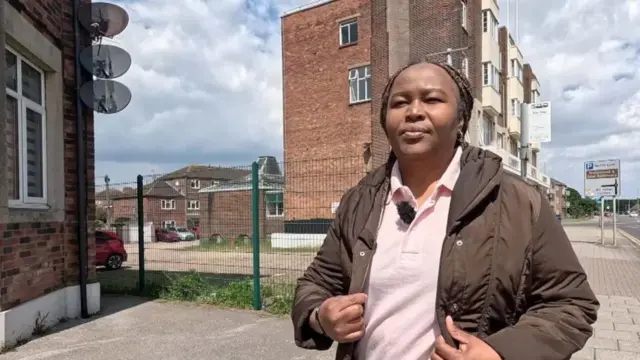
Di vast majority of dose wey arrive for UK come in legally. Dem be pipo like Kiki Ekweigh, wey dey work for one assisted living complex for Skegness.
As she dey do her rounds, she knock for one door. "Hello! my name na cheeky Kiki!" she tok, and laugh, as she go inside.
"To work as a carer no be easy job. You need to dey mentally balanced, you need get empathy, you need to dey very patient," she tok.
Kiki come UK from Nigeria, her initial plan na to study for university, but she stay back to work.
Students and health and care workers like Kiki dey represent around two thirds of visas wey pipo collect for UK last year. According to di Migration Observatory for Oxford University, dem be di biggest drivers behind increases in net migration since di 2010.
Di numbers wey dey arrive, wey former prime minister Boris Johnson call “scandalous” dey at a much lower level dan today, actually to a large extent na di result of deliberate policy decisions by di goment.
So, wetin dey happun?
Di truth be say successive goments bin don calculate am say UK need migrants.
Foreign students dey pay much higher fees, essentially dem dey fund domestic students. Wen dia numbers fall, either UK students go pay more, universities fit go broke, or goment go need to fund dem. None of dis go dey popular.
On top of dat, many sectors of UK economy, mainly health and social care, dey really short of labour.
Of di 1.5 million pipo wey dey work for UK National Health Service (NHS), 1 in 5 na foreigners.
But despite di rise for immigration numbers, dem still get 150,000 vacancies for di health sector last year.
Di Brexit effect
While e dey noticeable say leaving di EU coincide wit increased immigration, Brexit don reduce di numbers of one group.
For di 12 months to June 2023, net EU migration bin dey at -86,000, e mean say more EU nationals leave di UK pass dose wey dey arrive.
But dem don replace dat number, dat number dey replaced by pipo wey dey arrive from di rest of di world. Around 250,000 pipo bin arrive from India and just under 150,000 from Nigeria. China, Pakistan and Zimbabwe na di next three most common places to come from.
‘Stop di Boats’
Despite dis, na di illegal arrivals wey dey dominate UK political discussion.
Wit di election period underway, “Stop di Boats” don become campaign slogan wey dem dey frequently use.
Di current prime minister, Rishi Sunak, don make am one of im five priorities.
To tackle di issue, Im come up wit a plan to send some asylum seekers wey arrive illegally to Rwanda.
But di opposition Labour party say dem go ditch dis plan. Instead, dem go establish a new Border and Security Command to help remove failed asylum seekers.
And di recently-created Reform party don promise a zero-tolerance approach, including leaving di European Convention on Human Rights.
Di UK dey receive more migrants pass oda kontris?
UK dey broadly in line wit oda comparable, high-income kontris wen e get to do wit migration.
For 2022, 14% of pipo wey dey live for UK dem define dem as “foreign-born” - na similar proportion of di population to kontris like US and di Netherlands.
But wen you look kontris like Canada, New Zealand and Australia, we go see a different picture wey dey emerge. For Australia, for example, di foreign-born population na about times two of di UK own.
Difficult trade-offs
And so make we come back to our original question: why UK net-migration dey so high, eight years afta dem leave di EU?
Di reality be say, no be only freedom of movement dey drive migration. UK economy need migration, regardless of political game wey dem dey play.
Many of di decisions wey dem go need to significantly reduce di numbers wey dey arrive UK go require difficult trade-offs, wetin goment dey reluctant to make.
Illegal migration, especially via dangerous routes, na somtin wey all di parties dey oppose, and so dat na wia di focus of discussion fall.
Back for Skegness, na somtin Kiki dey aware of as she dey waka pass di town seafront attractions.
"I dey watch di news so no be say I no know wetin dey happun," she tok wen we ask about di tok-tok around immigration.
"If pipo get negative impressions, dem no understand di mata, in my opinion. I no tink say dem dey really aware of di reality of wetin really dey happun. A lot of pipo dey vulnerable here and dem need care. I feel say dem dey misguided for di way dem dey tink."