Schengen visa refusal - Big loss for Africans but ogbonge business for European nations
Wia dis foto come from, Getty Images
Di information wey di applicant get no dey complete or no dey reliable, dem subject applicants to measures wey stop dem to return or access di territory of di host kontri, or di applicant present risk or threat to public order, public security or public health for di host kontri.
Dis na just some of di reasons why European kontris dey deny many Africans visas go di Schengen area.
"Di authorities for di embassies dey consider say e get some applications wey no dey clear and enough evidence no dey to justify di journey. Authorities dey refuse dis kain applications as dem feel say di applicants no fit justify clearly di reason why e wan go di host kontri", one consulate official for Dakar tell BBC Afrique on top phone.
Sake of dat, dem dey deny many African applicants Schengen visas, despite di plenty money dem dey spend, to prepare paperwork and to pay di visa fees. Dem dey put all dia energy, all dia money, in short, everything wit di hope say dem go get di Schengen visa.
But for di end, most of dem dey disappointed as dem no go get di visa and dem no even get di courage to appeal.
Some African applicants share dia tori
Wia dis foto come from, Getty Images
“I bin apply for Schengen visa for Belgium. I fill di form online before I make appointment to go submit my application. I provide all di documents, give all di information about my trip and my stay for there, and pay di fees. But for di end, dem refuse to give me visa", Freeman Loga, one Beninese national wey dey live for Dakar tok.
Frustration, resignation and even anger na di feelings wey dey drive dis applicants wey dey apply for Schengen visa. Becos dem no dey refund di visa fees.
Wen di applicants apply again, dem go pay for di process again.



End of Di one wey oda users dey read well well
Afta dem refuse im visa application, Baye Niass, one young student for Dakar, dey shocked wen dem tell am say di visa fees no dey refundable. And e no fit do anytin about am.
"Dem suppose pass my file, but dem give me some reasons why dem no do am. Part of di reason na say di information wey I provide to justify my conditions of stay no dey reliable or complete.
E shock me as I no tink say dem go give me dis reason, afta I don do AVI and don book hotel, e suppose pass. Unfortunately, dat no be di case.
"But wetin you want make I do? No be my parents get di consulate or di visa. I just hope say next time I go get am," Loga add.
Most of dis applicants don refuse to appeal, as di chances of a favourable decision dey very slim.
Di economic impact big
Wia dis foto come from, Getty Images
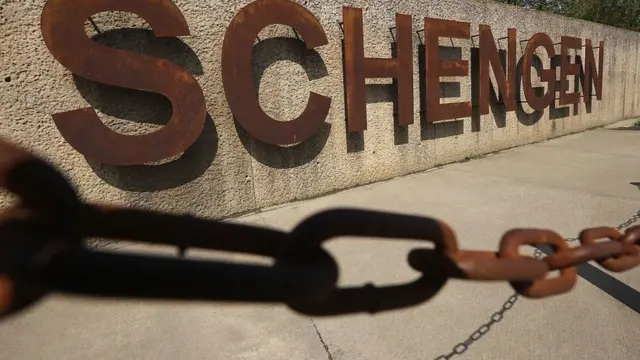
According to statistics wey Schengen News analyse, African applicants dey lose 56 million euros, or 37 billion CFA francs, sake of Schengen visa rejections.
Dis amount represent big financial loss, especially as visa fees no dey refundable. Apart from dat, dem put applicants at risk as dem don collect dia personal data and nobody know wetin dem dey later do wit am.
Schengen News statistics show say for 2023, African nationals receive 704,000 negative responses to dia visa applications. Dis number of rejected visas represent 41.3% of di total amount wey di rejected applications generate dis year.
Di travel agencies wey these applicants dey turn to, dey embarrassed by di situation, since dem dey do everytin possible to ensure say di customer, wey dey spend plenty money dey satisfied.
Complicated situation for travel agents
Wia dis foto come from, Getty Images
Dis travel agencies dey go great lengths to ensure say dia potential travellers get visa.
Alassane Diallo, Director of Safabhe Voyages, tok say sometimes, those wey dem refuse visa dey meet all di conditions. "And often, pipo no dey get motivation to appeal, becos na only 1 or 2% chance of success dey," e tok
According to am, majority of di applicants dey prefer to wait one or two months before dem try again.
"Your intention to comot di kontri neva dey established" na di most common reason dem dey refuse to give visa application. Between 70% and 80% of Schengen visa refusals dey based on dis reason.
"In oda words, di consulate think say once pesin visa don expire, e mean say di pesin no wan return to Africa or Senegal again. Becos, in dia view, di financial documents dem present to support di application no dey convincing", Oga Diallo tok.
E admit say unhappy applicants dey frustrated, but dat na di fault of di consulate and no be dat of di travel agencies. E say dem dey do dia job well-well before dem send applicants to go submit dia applications.
Di fees dey depend on wetin di agency agree wit di customer. Director of Safabhe Voyages tok say im dey charge some pipo less dan di amount dem bin agree on. "Wen you help a customer well and dem dey satisfied, dat na successful communication," e add, as e tok say visa application rate dey low.
European Union Observer bin carry out one study wey show say African and Asian kontris account for 90% of all costs wey dey associated wit refused Schengen visas.
Dis figure dey likely to rise becos di European Union measure to increase visa fees bin come into force on 11 June 2024.
Under di new measure, Africans go now pay 90 euros, or 59,000 CFA francs, for adults, and 45 euros, or 30,000 CFA francs, for children wey dey between 6 and 12 to obtain a Schengen visa. Dis compare wit di €80 for adults and €40 for children. Dis represent an increase of 12.5%.
Major financial challenge wey suppose make African states negotiate wit di Schengen kontris
Wia dis foto come from, Getty Images
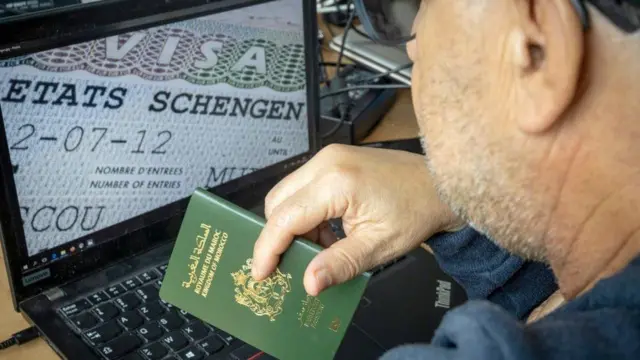
Africans dey spend plenty amount of money on top Schengen visa applications, especially wit di new fee dem release recently.
Dis visa refusals, despite di huge money dem dey spend, first and foremost na diplomatic problem, according to international relations expert, Mouhamad Maiga.
"Wen we tok about visas, we dey tok about something wey dey closely linked to diplomacy and di internal policies of states. Except say, e dey difficult for di diplomatic system of certain African or even Asian states to negotiate wit dia counterparts for di Schengen area", Mouhamad Maiga explain.
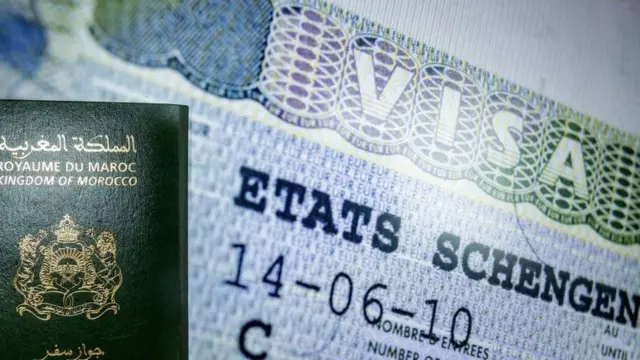
E also tok about di selective immigration policy, e say imbalance dey in understanding of visa policies of certain African states, wey require make dem review some migration policies on di African continent. E add say states like Morocco need to work on policy of balance and equity in access to visas.
Di expert in international relations point out say e dey ridiculous to see say proven lack of transparency dey for di refusal procedures.
"Dis procedures fit be di subject of discussions and negotiations between dis African states and di Schengen kontris, so dat dem fit achieve something wey dey balanced, e tok.
Wit regard to di data wey dis Schengen kontris dey collect, Oga Maiga point out say dem fit use dis data for many purpose, plus di diplomatic services of di two parties (African kontris and Schengen kontris) suppose discuss am.
"Becos na di data of African citizens dem get. We no know how far dem fit use di data", e add.
For dis particular case, Mouhamad Maiga say, African states no even dey strong enough to implement di principle of mutuality.
E insist say di systems no dey equal. African states get plenty disadvantages.
North Africa top di list of applicants
North Africa remain for di top of di list of Schengen visa applicants.
And Algeria dey di top of di list. Dem spend 13 million on rejected visas for 2023.
E dey followed by Morocco, wit almost 11 million euros. Egypt dey for di third place, wit 3.75 million euros spent on rejected visa applications.
West African kontri, Nigeria, come fourth, wit 3.44 million euros, before Tunisia close di top 5 wit 3.11 million euros.