Hunger, killings and rape: For frontline of di world 'hidden' war
Wia dis foto come from, Dany Abi Khalil / BBC
- Author, Feras Kilani in Sudan and Mercy Juma in Chad
- Role, BBC News
- Published
Pipo wey hook for di Sudan civil war don give accounts to BBC of rape, ethnic violence and street executions. Our journalists don manage to make am to di front line of di fighting close to di capital, Khartoum.
One top UN official don describe di conflict as one "hidden war" wey don plunge di kontri into "one of di worst humanitarian nightmares for recent history", and odas dey warn say e fit trigger di world largest hunger crisis.
E also get fears say for Darfur, for di west of di kontri, repeat of wetin di US call genocide 20 years ago fit don begin to unfold.
WARNING: Dis article contain accounts of physical and sexual violence.
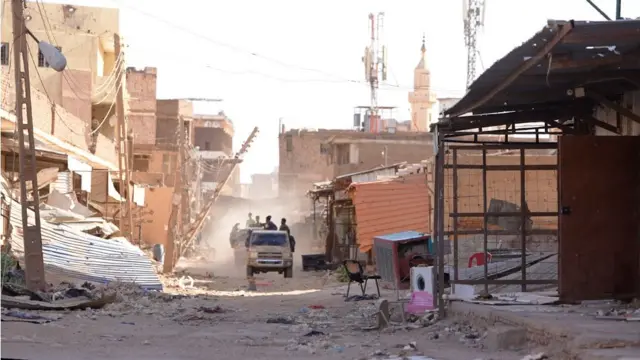
As if out of nowhere, one huge blast shake di road for Omdurman. Pipo scream and run for all directions, dey shout: "Go back, go back, anoda one go dey" Tick smoke blanket evritin.
Moments earlier, di battered street bin dey dotted wit pedestrians picking up rice, bread and vegetables from di shops, wey don only recently begin re-open.
For mid-February, di Sudanese army bin retake di city - one of three along di River Nile wey bin form Sudan wider capital, Khartoum.
Civilians now don begin return, but mortars, like di one wey bin land for di middle of dis main street, still dey fall daily.
For international tori pipo, to fit gain access to cova di civil war wey burst last April dey difficult, BBC don manage get to di front line. We bin find as di once-bustling heart of Omdurman don transform into one thinly inhabited wasteland.
Wia dis foto come from, Dany Abi Khalil / BBC
Di serious power struggle between di kontri military and im former ally, di Rapid Support Forces (RSF) paramilitary group, don kill at least 14,000 pipo across di kontri- possibly many more.
For nearly one year, di army and di RSF don battle ova Khartoum and nearby cities.
Di RSF don take control of areas wey dey south of di capital, as well as large swathes of Darfur, wey don dey inside gbege for years wit violence between im various African and Arab communities.
Women wey bin escape Darfur to neighbouring Chad don give BBC accounts of rape - sometimes multiple times - by militiamen. Men for di camps bin tell us dem bin escape street executions and abductions.
Embedded for di front line wit di army for Omdurman, di BBC team movements bin dey carefully controlled - we bin get minder wit us and no dey allowed to film military activity.
Di army fear say informate about dia activities go leak.
Wen our cameraman bin start to film di aftermath of di mortar explosion, armed men for civilian clothes surround am, one point gun for im head.
Dem turn out to be from military intelligence, but na sign of how high tensions dey.
Despite di army recent gain for Omdurman, we fit still hear exchange of fire crack around di area from time to time.
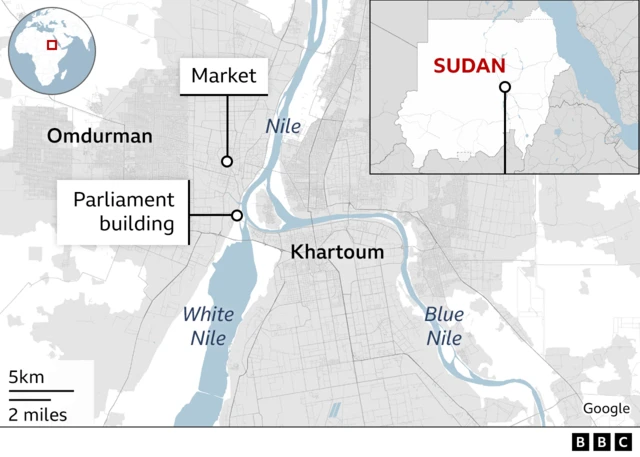
Part of di front line now run along di Nile, wey separate Khartoum for di eastern side from Omdurman, wey be west of di river.
Di military tell us say RSF snipers dey stationed for apartment blocks across di water from Sudanese army positions for di badly damaged parliament building.
Omdurman old market, once busy wit locals and visitors, dey for ruins, shops for dia don dey looted empty. Most of di vehicle for roads na military own.
More dan three million pipo don run comot for Khartoum State for di past 11 months, but some Omdurman residents no gree leave. Most wey we meet na elderly.
Wia dis foto come from, Dany Abi Khalil / BBC
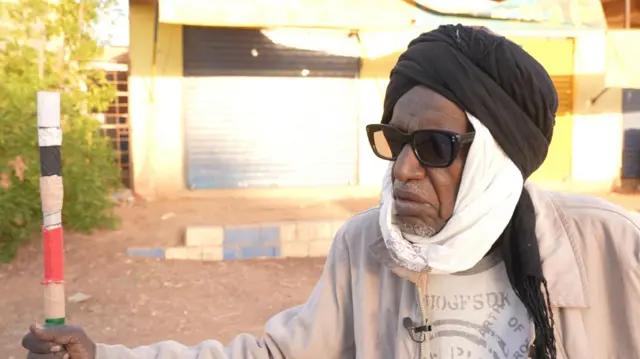
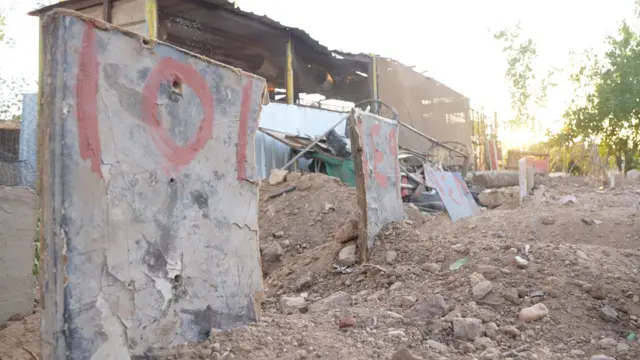
Less dan one kilometre from di front line, Mukhtar al-Badri Mohieddin dey waka wit stick near one mosque wit damaged minaret.
Di open space opposite am dey covered wit makeshift graves - rough earth mounds wey dey marked wit broken bricks, boards and concrete slabs.
"Na 150 pipo dey here. I sabi many of dem, Mohamed, Abdullah… Jalal," e tok, pause for long moment bifor one name, Dr Youssef al-Habr, one popular professor of Arabic literature.
"Na just me remain," e add.
Di Sudanese military don dey criticised for for dia heavy use of aerial bombing, including one civilian areas wia RSF fighters hide out - though dem say dem dey take "necessary precautions" to protect civilians.
Pipo here hold di two sides responsible for di destruction inside and around di capital.
But many accuse di RSF of looting and attacks during di time dem kontrol di area.
"Dey bin clear di houses of belongings, dem tiff cars, TV, dem beat old pipo, even women," resident Muhammad Abdel Muttalib tell us.
"Pipo bin die of hunger, I bin pull some of dem out of dia houses so di bodi dem no go rot inside," e add.
E tok says e dey "widely known" say dem dey rape and grope women for dia homes during security checks.

Wia dis foto come from, Dany Abi Khalil / BBC
Afaf Muhammad Salem, for her late fifties, bin dey live wit her brodas for Khartoum wen di war break out.
She tok say she bin move across di river to Omdurman afta dem dey attacked by RSF fighters, wey she tok say loot dia house and shoot her broda for leg.
"Dem bin beat up women and old men and threaten innocent girls," she tok.
For one veiled reference to sexual violence, wey be taboo topic for Sudan, she add: "To insult honour do more harm dan to take moni.”
'One weapon of revenge'
Victims of rape fit face one lifetime of stigma and marginalisation from dia own families and communities. Many pipo for Omdurman no wan tok about di issue.
Wia dis foto come from, Marek Polaszewski / BBC
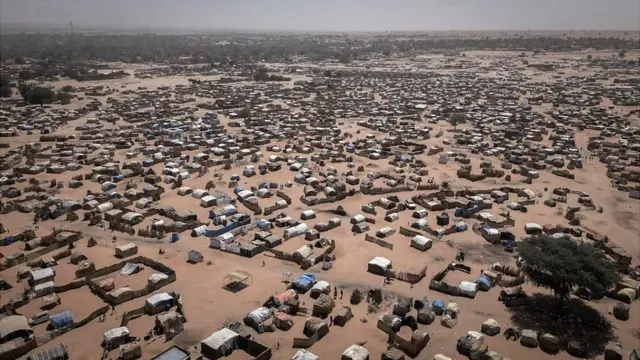
But more dan 1,000km to di west, for di sprawling refugee camps ova di border for Chad, di volume of testimonies of sexual violence wey dey drop dey force one new, grim, level of openness.
Amina, wey her name we don change to protect her identity, come to one temporary clinic run by di charity Médecins Sans Frontières, to seek abortion. She greet us, she no look up.
Di 19-year-old, wey bin don japa from Darfur for Sudan, only find out say she dey pregnant di previous day. She desperately dey hope say her family no go eva know.
"I no dey married and I be virgin," Amina tok for faltering sentences.
For November, militiamen bin catch her, along wit her aunty and cousins, as dem dey run from dia hometown of Ardamata to nearby city of Geneina, she tell us.
"Di odas bin escape but dem bin keep me for one whole day. E bin get two of dem, and one bin rape me many times bifor I manage to escape," she tok.
Di RSF dey expand domination for Darfur, wit support of allied Arab militias, don bring wit am rise for ethnic attacks for di black African population, especially di Masalit ethnic group.
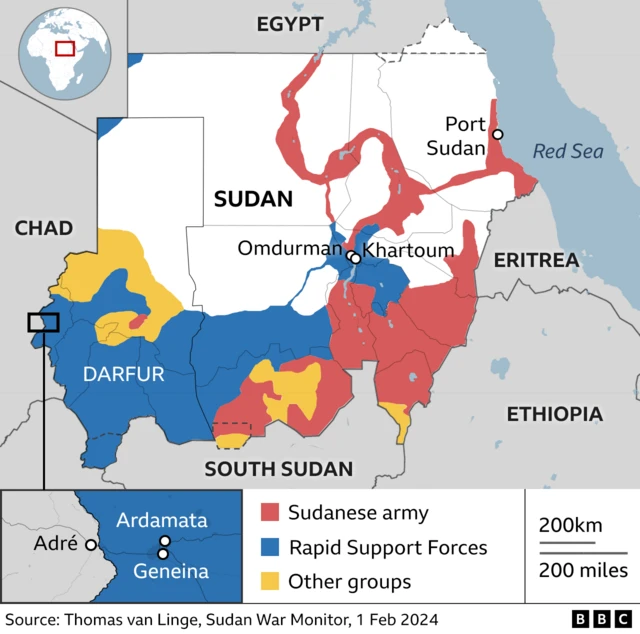
Amina tori na just one of many testimonies of attacks against civilians wey bin happun around 4 November wen di RSF and im allies bin seize one Sudanese military garrison for Ardamata.
E follow violence earlier for di year - one recent UN report wey BBC see say more dan 10,000 pipo dey believed to don dey killed for di area since April.
Di UN don document about 120 victims of conflict-related sexual violence across di kontri, wey dem tok say be "one vast under-representation of di reality".
E say men of RSF uniform and armed men wey link to di group dey reported to dey responsible for more dan 80% of di attacks. Separately, e also get some reports of sexual assaults by di Sudanese military.
Wia dis foto come from, Marek Polaszewski/BBC
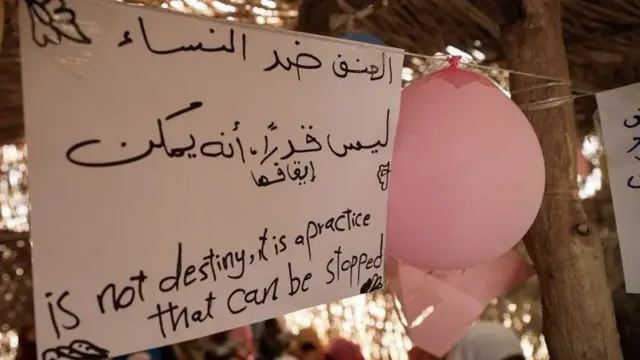
Just outside di same camp, wey be dey di border town of Adré, about 30 women and girls meet for hut for midday.
Pink and blue balloons hang from one string above dia heads, along wit handwritten notes. "Rape no be destiny; na practice wey dem fit stop," one read.
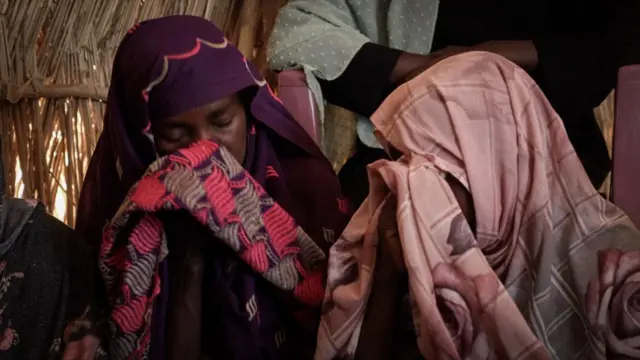
Tears flow freely as di women speak of dia experience of both physical and sexual violence.
Maryamu - no be her real name - tok say she dey raped by armed men wey wear di turban-style headdresses typical of Arab fighters for di area, for November for her home for Geneina.
E bin dey difficult for her to waka afterwards, she dey cry as she dey describe running: "Pipo bin dey run, but we no fit sake of say my grandmama no fit run. I dey also bleed."
Wia dis foto come from, Marek Polaszewski/BBC
Zahra Khamis, social worker wey be refugee herself, dey run di group.
Both Amina and Maryamu come from black African communities, and Ms Khamis tok say dis communities, particularly di Masalit ethnic group, dey targeted for Darfur.
During di war for Darfur 20 years ago, one Arab militia di Janjaweed - wey di RSF get roots - dey mobilised by former President Omar al-Bashir to crush one rebellion by non-Arab ethnic groups.
Di UN say 300,000 pipo bin dey killed and raped bin dey widely use as way to terrorise black African communities and force dem to run. Some Janjaweed leaders and Mr Bashir don dey indicted by di ICC on charges of genocide and crimes against humanity. Dem don deny di charges and no-one don dey convicted.
Ms Khamis believe say rape dey used for dis conflict "as weapon of revenge".
Wia dis foto come from, Marek Polaszewski/BBC
"Dem dey do dis to di women sake of say rape dey leave impact on society and di family," she add.
For one rare insight into di attitudes wey dey drive violence against women, one RSF member wey describe imself as "field commander" post one video for social media for November.
"If we rape your daughter or your girl, na eye for eye. Dis na our kontri and dis na our right and we take am," e tok for di clip, wey don dey deleted now.
For response to BBC kwesions about rapes and oda attacks, di RSF tok say Sudanese military intelligence dey "recruite pipo to wear RSF clothes and commit crimes against civilians so dem go fit say na RSF dey commit crimes, sexual assault and ethnic cleansing".
"Maybe one or two incidents dey committed by RSF fighters and dem bin dey held accountable," Omran Abdullah Hassan from di RSF leader advisory office bin tell BBC.
Last year di RSF say dem go set up process to investigate alleged human rights abuses by dia forces, but di UN say no details don dey given.
'If you be Masalit, dem go kill you'
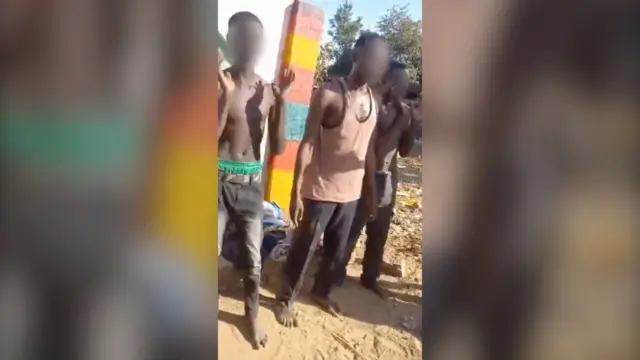
For anoda shelter for di same camp, Ahmat hands shake as e hold one phone, dey watch one video, wey BBC don verify. Di video show five unarmed men lined up for one street for Ardamata for November.
"I just dey go to finish dem off," one voice shout for Sudanese Arabic, bifor dem rake dem wit gunfire from one assault rifle for point blank range.
"Dis na Amir, and dis na Abbas...," Ahmat tok, as tear roll down im cheek.
Wia dis foto come from, .
Dis na di first time wey di 30-year-old, wey her name we don change, go see footage of di moment dem shoot am. E dey filmed, apparently by one of di armed men, on 5 November - di day afta di RSF seize di garrison - and post online.
Ahmat tok say im cousin Amir and im friend Abbas bin die instantly, but e and di two odas survive.
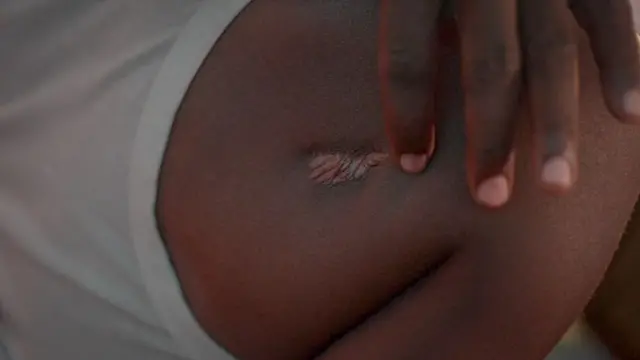
One large scar on am mark di exit wound wia bullet rip through im shoulder. E say e be teacher bifor di war and say all five of dem be civilians.
"We bin lay down as if we don die," e tok. "I remember say I dey pray. I dey tink say na di end."
Ahmat tok say e don dey abducted from near im home by members of di RSF and dia allies. Di video show men wey dress di style wey dey typical of dis forces.
Two oda men bin give BBC detailed testimony of being abducted and injured by armed men wey dem believe say dey linked to di RSF during di same period for Ardamata.
One of dem, 55-year-old Yussouf Abdallah, tell us say e bin manage to escape afta armed men gbab am. E say e bin see dem kill one mother and her newborn baby.
Wia dis foto come from, Marek Polaszewski/BBC
"Dem bin ask if we come from di Masalit community and, if you be, dem go automatically kill you," e add.
Sudan bin enta one fresh period of instability for 2019, wen street protests and military coup bin end di near three-decade rule of Oga Bashir.
One joint military-civilian goment dey established, but e dey overthrown for anoda coup by di army and RSF for October 2021.
But di two allies bin fall out ova di proposed move towards civilian rule - and how di RSF suppose dey integrated into di regular armed forces.
Last April, di RSF bin redeploy dia members around di kontri, di Sudanese army bin see di move as threat, and di violence bin start, and no side wan give up di lucrative dividends of power.
'On di brink of famine'
Nearly one year on, aid agencies dey warn of humanitarian situation wey dey spiral out of control, di UN children agency, Unicef, say some communities dey on di brink of famine.
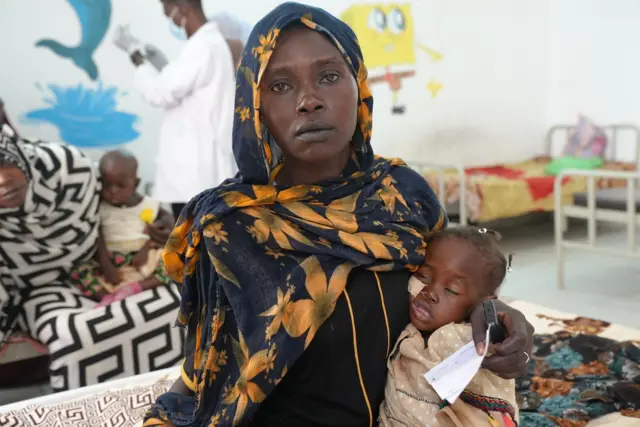
Three-year-old Manasek na one of hundreds of thousands of children wey already dey suffer from severe malnutrition. She no get di strength to waka and fit barely hold her own head up.
Her mama Ikram cradle her for one Unicef hospital for Port Sudan, one city on di Red Sea wia thousands of pipo wey dey for di fight for Khartoum don find refuge - and where most goment institutions and humanitarian organisations don also relocate to.
She no know if Manasek get underlying illness, and no fit pay for medical investigations to find out.
Wia dis foto come from, Dany Abi Khalil / BBC
"We lost our life, we lost our jobs," she tok, as she explain say her husband don go to northern Sudan to seek farm work, and how food prices don rise out of reach. She bow her head, wipe away tears, unable to tok more.
We visit one school for Port Sudan. Classrooms wia pupils bin dey learn bifor don dey crammed wit desperate families.
One stream of sewage flow along di side of di yard, wia children dey play barefoot near piles of rubbish. Sem tell us say five pipo don die of cholera here.
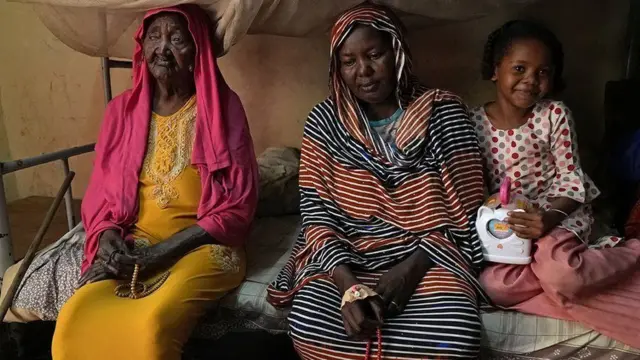
Zubaida Ammar Muhammad, one mother of eight, cough as she tell us say she get leukaemia and don dey for pain since April, wen her medication run out. She no dey able to get more wen di war break out and di family run from di Khartoum area.
Her husband bin volunteer to fight wit di Sudanese military, and she neva hear from am for two months. Her mother, grandmother and di three children wey dey stay wit dem fit only do little but watch her health worsen.
Wia dis foto come from, Dany Abi Khalil / BBC
For Port Sudan we also meet one group of Coptic Christians wey don dey run comot for di capital, to escape RSF threats and attacks, and military air strikes.
"Di air force for Khartoum don destroy us," one of dem, Sarah Elias tok.
She say one air strike kill her husband, and anoda hit one neighbour home, kill nine pipo, as di military target RSF fighters hiding inside residential areas and churches.
Di US tok say both sides don commit war crimes, and say di RSF and im ally militias don also commit crimes against humanity and ethnic cleansing.
Both sides deny di allegations.
Eleven months into di war, na little sign of any will dey on di two sides to end di fight.
Most of dose wey dey able to comot don japa from di kontri and as conflict, hunger and disease kontinu, many pipo here dey wonder wetin go remain for anyone to declare victory ova.
Additional reporting by Peter Ball and Mohamed Ibrahim, verification by Peter Mwai