Why we dey sleep for beds?
Wia dis foto come from, Getty Images
- Author, Zaria Gorvett
- Role, BBC Future
- Published
For di ancient village of Skara Brae wey dey Scottish Island, e get dis green fenced space - e dey large wit single-room houses wey dey surrounded by thick walls.
Di place dey surrounded wit grass and e dey connected wit covered stone passage ways. E don dey abandoned for some four and a half thousand years ago.
But inside each of di residence, e get two objects wey still look familiar to modern eyes - di beds.
Di dwellings wey dey Skara Brae, for di far north of Scotland, dey mostly get di same setup - a roughly 40 sq m (430 sq ft) room wey get a central burning fire and some veri old furniture.
Di room also get storage boxes and dressing tables wit shelves, e also get two rectangular material wey be like di length of a human. Like most of di artefacts wey dey available for streets on di island, dem make dis veri old beds from concrete slabs of cold, hard stone.
E get tall headboards and raised sides wey get instantly recognisable shape. Setting aside di ancient inscriptions wey dey some of di beds, and di skeleton wey dye under- e mean say e don dey dia since di 21st Century.
Humans don dey make beds for hundreds of thousands of years. Dem teach say sleeping spaces bin consist of deep and carefully arranged wit soft leaves wey pest no fit chop.
Di first bed frames come begin dey appear. Di sandstone beds wey dey Skara Brae dey among di oldest ever wey dem don find wit series of impressions wey dey for di soil at Durrington Walls near Stonehenge. Dis na di wooden bed boxes wey don dey vanish but be like say na di kain monument wey builders bin dey sleep.




End of Di one wey oda users dey read well well
As bed come since ova 5,000 years ago for di same time wey technologies like writing bin come, bed frames also appear for several places for dat time.
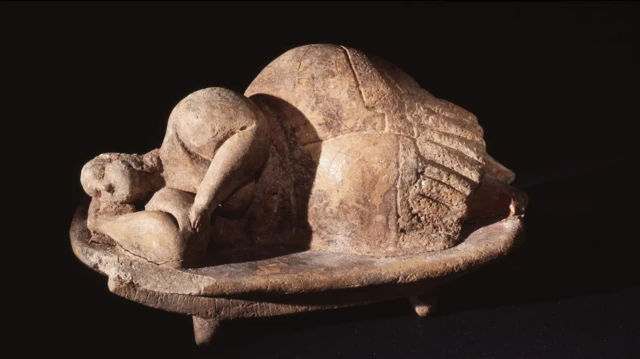
In some 1,700 miles from Orkney, Malta, e get some ritualised tunnels wia e don dey reveal evidence of early incarnations of dis furniture wey include a clay figurine of one woman wey dey slumber peacefully for her side. She put one hand under her head for one place wey dem raise up.
Dis early beds na just to rest- sake of say dem dey also mean sometin wen pipo don die.
Di bed don turn into different forms.

Wia dis foto come from, Alamy
Ancient Egypt - headrests and sleeping platforms
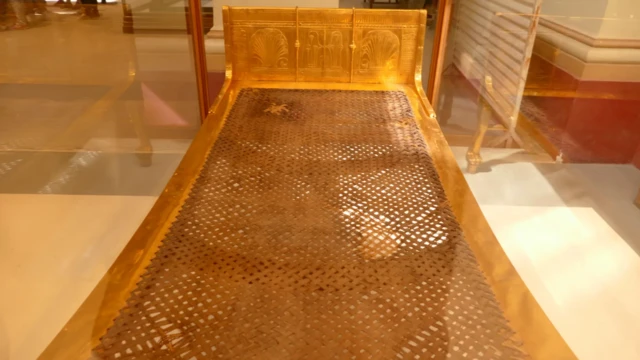
Wen Howard Carter bin break through di plaster doorway into di tomb of King Tutankhamun for 1922, dem give am gold objects – and six of di items na beds.
Some of di items wey dem bring also include bed for funeral wey resemble a cow goddess, a camp bed for travelling but e fit fold.
Wia dis foto come from, Getty Images
Like most ancient Egyptian beds wey dey for wealthy elites, Tutankhamun dey consist of a wooden frame wit a woven base of reeds or string.
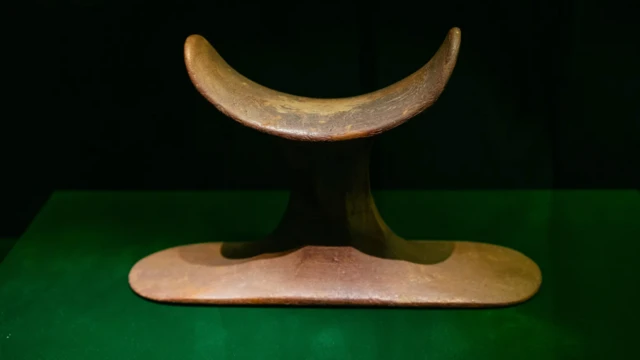
And as e dey according to custom dat time, di young king go don lay im head on one headrest wey dey rigid, instead of pillow wey soft.
Dis system fit be a way of protecting hairstyles.
Wia dis foto come from, Alamy
Ancient Rome – a bed for evri occasion
For ancient Rome wia di sleep of pipo na based on dia social status. And slaves dey stay up all night ontop mat of dried leaves or animal skins as some dey even sleep for bare ground.
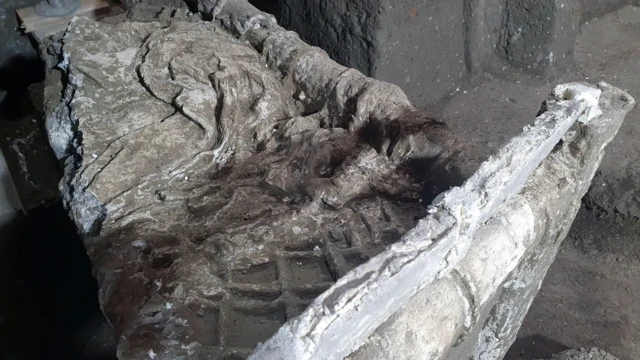
For 2021, sabi pipo bin find one bedroom wey don dey frozen for almost 2,000 years wia dem also see three beds wit loose blankets.
Wia dis foto come from, Alamy
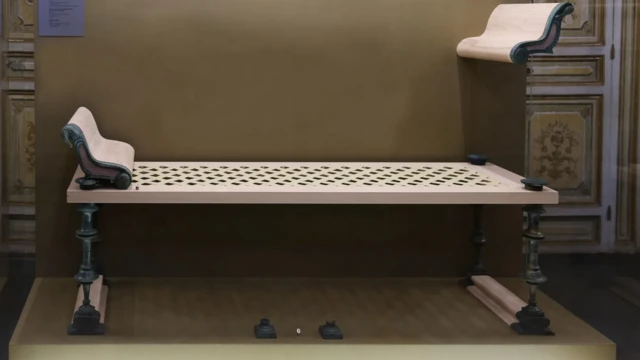
Pipo wey dey wealthy get more beds. Dem even get bed wey dey for funerals wey get raised platform made of metal, wit a thin mattress.
Wia dis foto come from, Alamy
Early modern Europe - bed bugs and thick mattresses
By di 17th Century, Europeans don get plenti of beds to choose from. We get box beds, beds wey get rope - e be like say na why dem dey tok di word "sleep tight."
Though tick mattresses suppose dey collect air sometimes since e dey always hold insects and many pipo dey always share bed wey go later dey infected.
Wia dis foto come from, Getty Images
Victorian England - hangovers and homelessness
By di 19th Century, inequality for England don reach a record high, as di working class dey struggle to earn a living for di new industrialised economy. Dis come make homelessness dey evriwia for towns and cities.
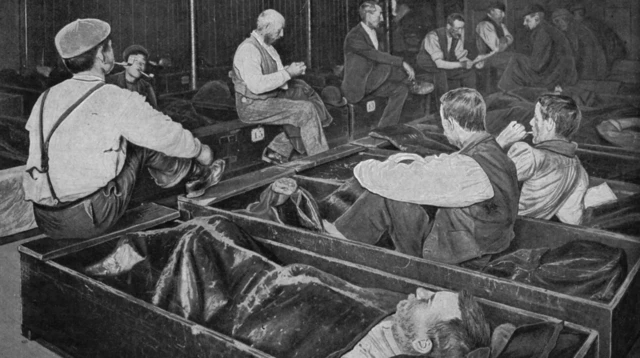
For London, charities bin come up wit solutions. One na di "fourpenny coffin" - coffin-shaped boxes wey pipo dey pay four pence to sleep for di night, anoda na di rope-bed wey dem know as "two-penny hangover".
Dose wey no too get money fit sleep better now sake of one German inventor wey collect legal right to own first coil-spring mattress for 1900s.
Today, dose wey get more options get access to foam beds, water beds, heated beds, bunk beds, canopy beds.. and e many till date.