Wetin Nigeria military tok about alleged 'coup attempt' against Tinubu
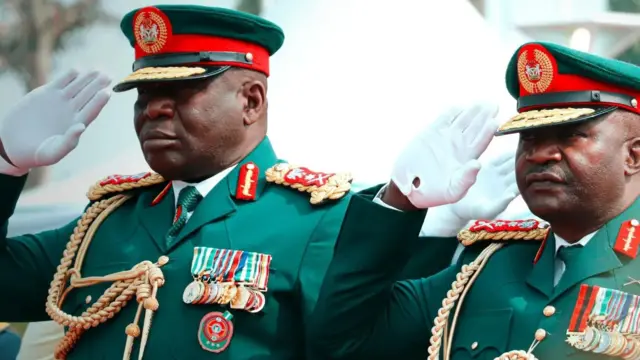
Wia dis foto come from, Defence Headquarters
One report wey allege say di cancellation of activities to mark Nigeria 65th Independence Anniversary na sake of attempted coup against President Ahmed Tinubu na lie, di Defence Headquarters tok.
Nigeria dey usually mark her independence on 1 October, but e no happun for 2025 becos di president cancel di parade. But on dat day President Tinubu address Nigerians.
Howeva, tori bin come out say dem bin dismiss 16 military officers, ranging from di rank of Captain to Brigadier General.
Di tori tok say dem carry di dismissed officers go di custody of di Defence Intelligence Agency sake of alleged secret meetings to plan a coup against di govment.
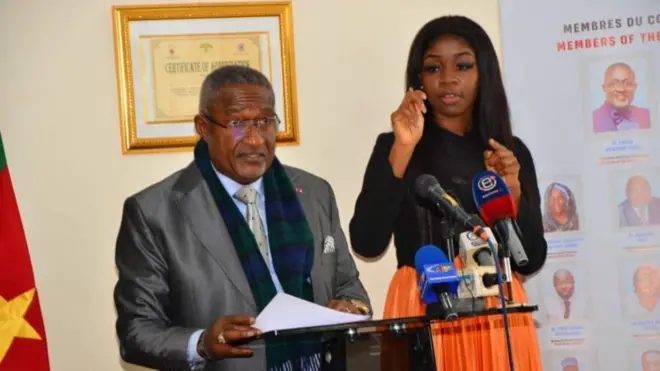
Director of Defence Information, Brigadier General Tukur Gusau, for statement wey e sign on Saturday for Abuja, say to tori about di Nigerian Armed Forces dey "entirely false, malicious, and intended to cause unnecessary tension and distrust among di pipo."
Di statement clarify say di decision to cancel di 65th Independence Anniversary parade na to allow President Bola Tinubu attend one "strategic bilateral meeting outside di kontri, and to allow di Armed Forces of Nigeria (AFN) to sustain dia success for dia ongoing fight against terrorism, insurgency, and banditry."
On October 1, reports bin break for one local newspaper di tori be say di alleged coup plot bin wan happun on independence day and dem arrest some officers becos of di coup attempt.
Di report tok say dem cancel di Independence Day parade becos of di coup attempt although di military statement don denial di rumour inside dia statement.
Brigadier General Tukur Gusau for di statement tok say dem don start to investigate di sixteen officers and di process go dey within di military internal discipline and professionalism and di panel go make di findings public.
Di DHQ call on all peace-loving citizen to kontinu to support security agencies, as di federal govment, di legislature, and di judiciary dey work closely for di safety, development, and well-being of di nation. "Democracy na forever."
"Furthermore, di DHQ wish to reassure Nigerians say di ongoing investigation involving di sixteen officers na routine internal process aim at ensuring discipline and professionalism dey maintained within di ranks.
Dem don conduct di investigative panel, and dia findings go dey public," di statement tok.
"Di DHQ urge members of di public to disregard di falsehood wey di purveyors of misinformation and enemies of our nation dey circulate. Di Armed Forces of Nigeria remain firmly loyal to di Constitution and di Federal government under di leadership of di Commander-in-Chief of di Armed Forces, President Bola Ahmed Tinubu, GCFR."
History of coups for Nigeria
Nigeria don experience several military coups since independence in 1960.
Between 1966 and 1999, Nigeria bin dey ruled by a military govment without interruption, apart from a short return to democracy under di Second Republic from 1979 to 1983.
A list of coups and coup attempts wey don happun for Nigeria include:
1. January 1966 coup: On 15 January 1966, a group of young military officers overthrow Nigeria govment and end di first Nigerian Republic. Officers wey stage di coup na mostly young soldiers, led by Kaduna Nzeogwu, and dem assassinate several northerners, including Prime Minister Tafawa Balewa, Northern Region Premier Ahmadu Bello, Western Region Premier Ladoke Akintola, finance minister Festus Okotie-Eboh, and di four highest-ranking northern military officers.
Di coup leaders pledge to eliminate corruption, suppress violence, and hold new elections. Major General Johnson Aguiyi Ironsi, wey intervene to impose discipline on di military, become head of state. E suspend di constitution, dissolve all legislative parties, ban political parties, and form an interim federal military govment, though e no specify di date wey dem go restore civilian rule.
2. July 1966 counter-coup: On 29 July 1966, a counter-coup happen wey overthrow Ironsi regime by 1 August. Lieutenant Colonel Yakubu Gowon become head of state. Ironsi and di governor of Western Region, Lieutenant Colonel Francis Adekunle Fajuyi, bin dey among di casualties.
Both di coups and counter-coup bin get an "ethnic colouration" wey fuel ethnic violence, and contribute to events wey ultimately lead to di Nigerian civil war. Afta di war end, for October 1970, Gowon try to ensure say military rule go end on 1 October 1976, but for 1974, e postpone am say Nigerians neva demonstrate "moderation and self-control in pursuing sectional ends".
3.1975 Nigerian coup d'état: On 29 July 1975, Colonel Joseph Nanven Garba, a close friend of Gowon announce for Radio Nigeria say im and oda officers don decide to remove Gowon as head of state and commander-in-chief. Di coup bin dey bloodless as Gowon bin travel abroad to attend a meeting of di Organisation of African Unity in Kampala.
Na Brigadier Murtala Muhammed replace am, wit Brigadier Olusegun Obasanjo installed as deputy head of state. On 1 October, Murtala Muhammed, like Gowon, bin pledge a return to civilian rule, following di drafting of a new constitution and various institutional changes, wit plans to hold elections wey for make way for a transfer of power on 1 October 1979.
4. 1976 coup attempt: On 13 February 1976, Muhammed bin dey assassinated for one coup attempt wey also kill driver and aide, along with Ibrahim Taiwo, di military governor of Kwara state. Di coup bin dey led by a group of officers wey call demsefs "young revolutionaries" for one radio broadcast.
However, dem lack both civilian and military support as some division commanders and govment leaders outside Lagos no supoort di coup and suppress am and Obasanjo become head of state. Di Nigerian govment report say di coup bin dey led by Lieutenant Colonel Bukar Suka Dimka wit di aim to restore Gowon regime.
Dem arrest 125 pipo in connection with di coup attempt and, in March, 32 pipo receive death sentences, among dem Dimka and di defence minister, Major General Illiya D. Bisalla. Obasanjo go later organise election wey return Nigeria to civilian rule with Shehu Shagari as President.
5. 1983 Nigerian coup d'état: On 31 December 1983, a group of senior military officers lead a coup wey end di Second Nigerian Republic. Di coup remove di democratically elected govment of President Shehu Shagari, wey for di first military broadcast after di coup, Brigadier Sani Abacha call "inept and corrupt."
Di only reported casualty occur wen Brigadier Ibrahim Bako bin dey killed for one fire fight during Shagari arrest for Abuja. Major General Muhammed Buhari come dey installed as head of state.
6. 1985 Nigerian coup d'état: On 27 August 1985, officers led by Major General Ibrahim Babangida, di army chief of staff, seize Buhari govment for wetin dem call "a palace coup" while Buhari bin travel from Lagos and im chief aide, Major General Tunde Idiagbon, bin dey on pilgrimage to Saudi Arabia.
Na Major General Joshua Dogonyaro announce di coup on radio in di morning and Babangida later address di kontri, say Buhari regime bin dey "rigid and uncompromising and demonstrate inconsistency and incompetence."
7. 1990 Nigerian coup attempt: On 22 April 1990, military officers led by Major Gideon Orkar attack Dodan Barracks in an attempt to overthrow Babangida administration. But Babangida escape successfully, and fighting stop ten hours later, wen senior military commanders for oda parts of di kontri announce dia support for Babangida. 42 men convicted of involvement in di coup attempt chop execution by firing squad in July 1990.
8. 1993 Nigerian coup d'état: Facing pressure to shift towards a democratic govment, Babangida resign and appoint Ernest Shonekan as interim president on 26 August 1993. But Shonekan transitional administration last only three months becos on 17 November 1993, e bin dey overthrown in a palace coup led by General Sani Abacha.
Dis follow di annulment of di presidential elections wey bin dey advertised as di beginning of a Third Nigerian Republic. In September 1994, although e bin pledge to restore democracy, Abacha issue a decree wey place im govment above di jurisdiction of di courts, and dis give am absolute power.
Apart from di coups, e get some high-profile arrests in connection wit alleged coup plots wey also happun within dis period and dem include:
- For December 1985, Babangida govment announce say dem don thwart a coup attempt and arrest those wey dey responsible, including Major General Mamman Vatsa. 13 military officers receive di death penalty for conspiracy to commit treason, and ten of dem, including Vatsa, bin dey executed by firing squad in March 1986.
- In July 1995, Abacha govment convict 40 pipo of plotting a coup. Obasanjo, a former head of state, bin dey among those dem imprison, including Musa Yar'Adua.
- In December 1997, Abacha govment announce say dem don thwart anoda coup attempt planned by im deputy, Lieutenant General Oladipo Diya, wey also bin narrowly escape an assassination attempt. Dem arrest three oda generals, five colonels, and three senior officers Sake of dis incident.
- In April 2004, Obasanjo democratically elected govment say dem arrest several military officers in connection to a coup plot. Hamza al-Mustapha, Abacha chief of security, bin dey suspected to dey involved.
Wetin be di implications of a coup?
A coup d'état or simply a coup, na an illegal and overt attempt by a military organization or oda govment elites to unseat incumbent pesin or leadership.
Professor of Politics and Governance for di department of Political Science for Ignatius Ajuru University of Education, Rumuolumeni for Rivers State, Prof Kenneth Nweke say wen a coup happun for democracy like e dey for Nigeria, e dey suspend all democratic principles and often dey seize di freedom wey di pipo typically dey enjoy in a democracy.
E say United States of America as di leading democracy for di world dey show di benefits of a free kontri as di pipo dey enjoy free press, security and enjoy value in terms of dia welfare as social contract dey tied to di welfare and security of di citizens of a kontri and dat na wetin democracy suppose provide for di pipo.
Prof Nweke say wen di wave of democratic governance sweep through kontries for Africa, many pipo welcome am but of late, dI failure on di part of di political class to live up to di expectations of dia responsibility to di pipo in terms of protecting dia lives and giving welfare services wey di pipo actually deserve dey lacking.
"Unfortunately, wen you get evri cycle of election evri four years, dem dey give hope to di pipo but at di end of di four years, you go see di political class try to stage a comeback for a second term and little or noting dey achieved in protecting di lives of di citizens or giving di pipo di basic necessities of life.
"So dis dey make pipo disenchanted and disillusioned in dia expectations from democracy, wey in turn dey give way for di attempts by di military to take over as we don see for some kontries in Africa, especially West Africa.
"Di attitude of di political leadership for Africa also neva help to deepen democratic governance and e go make pipo wonda and question why we get a democracy wen we no dey enjoy di benefits of a democracy?"
Dis kain scenario Prof Nweke say fit make pipo to consider say a dictatorship wey fit offer di basic necessities of life and secure dia lives and property dey better than a democracy wia dem dey suffer.
Di Professor of Politics and Governance note say although di Defenece Headquarters don debunk di coup rumours, na still a strong signal to di political class for Nigeria to know say all no dey well and dem need to sit up to dia responsibility to take care of di security and welfare of di Nigerian citizens.