Dem find live worm inside woman brain for di first time ever
Wia dis foto come from, ANU
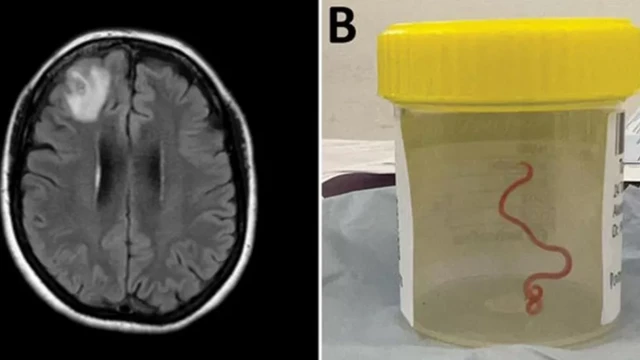
For di first time for world, scientist say dem find 8cm worm alive dey chill inside di brain of one Australian woman.
Dem comot di "string like structure" from di woman frontal lobe wey bin don spoil for surgery last year.
Di woman bin get symptoms wey doctors call unusual - from stomach pain, cough and night sweats wey come grow to increasing forgetfulness and depression.
Di red parasite fit don dey inside dia for up to two months.
Researchers dey draw ear warn kontri pipo say dis case dey torchlight di increased danger of how diseases and infections fit cross ova from animals to pipo.
Infectious disease doctor for Canberra Hospital, Sanjaya Senanayake say, "Everbodi wey dey dat operating theatre get di shock of dia life den di surgeon use forceps take carry an abnormality and e turn out say dat abnormality na moving live 8cm light red worm. Even if you comot di iyama factor, na new infection wey never dey documented for human being before."
Dem dey normally find di Ophidascaris robertsi roundworm mostly for inside carpet pythons wey be non venomous snakes wey dey all ova Australia.
Scientists say di woman fit don catch di roundworm wen she dey collect some native grass wey dem dey call Warrigal greens, beside di lake near wia she dey live.




End of Di one wey oda users dey read well well
Mehrab Hossain wey be sabi pesin on paristology write inside di Emerging Infectious Diseases journal say, she tink say di woman turn "accidental host", afta she carry di plant she pick, wey fit don already dey contaminated with Python poo-poo and parasite eggs take cook.
Wia di woman pick di worm for brain
Di patient bin dey admitted for hospital for late January 2021. Scan later show say "atypical lesion bin dey within di right frontal lobel of di brain". Na only for June 2022 dem find di cause of her condition for surgeon knife for inside biopsy.
She dey recover well even though she make medical history.
Dr Hossain write say, "Di invasion of Ophidascaris larvae for di brain neva dey reported. Di growth of di third stage larva for human dey important sake of say wen dem do experiment e no show dat kain development for sheep dogs or cats."
Dr Sananayake wey be associate professor of medicine for di Australian National University (ANU) tell BBC say di case na warning.
ANU team report say 30 new types of infection don appear in di last 30 years and more than half of dem na disease wey jump for animals to humans.
"E show say as di human population dey grow we dey enta more and more to animal habitats, Na issue we don see again and again, weda na Nipah virus wey waka from, wild bats to domestic pigs to humans, or na coronavirus like Sars or Mers wey waka from bats to possibly anoda animal before e enta humans."
"Even though Covid don slowly dey waka go, e dey very important make epidemiologists and goments to make sure say dem get beta infectious diseases surveillance for ground."