How UK go elect dia next Prime Minister, why only 160,000 pipo go vote
Wia dis foto come from, Getty Images
Wen dem replace Boris Johnson as Conservative leader, and also as prime minister of di UK, no general election go happun to choose im replacement.
Instead, about 160,000 members of im own political party go select im successor.
So why e be say na few pipo go pick di kontri leader, wen 47 million pipo register to vote for di last general election?
Di answer dey for di UK unique political system, which mean say di only pipo wey get a say for di new PM dis time around, na paid up members of di Conservative Party.
And dis no be di first time wey dis dey happen, and sometimes new leaders don dey elected by even fewer pipo.
Why only about 160,000 pipo go fit vote?
For UK, if prime minister announce say e go resign, dis no go automatically bring about a general election.
Di governing party normally go just choose a new leader.


End of Di one wey oda users dey read well well
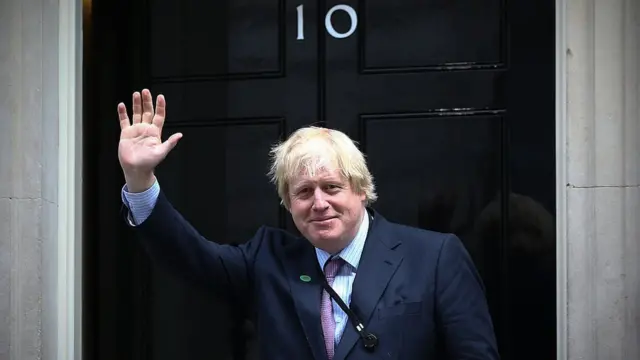
Afta current Prime Minister Boris Johnson tok say e go resign, di next step na for Tory MPs and party members to select im successor as leader of di party.
Wia dis foto come from, Getty Images
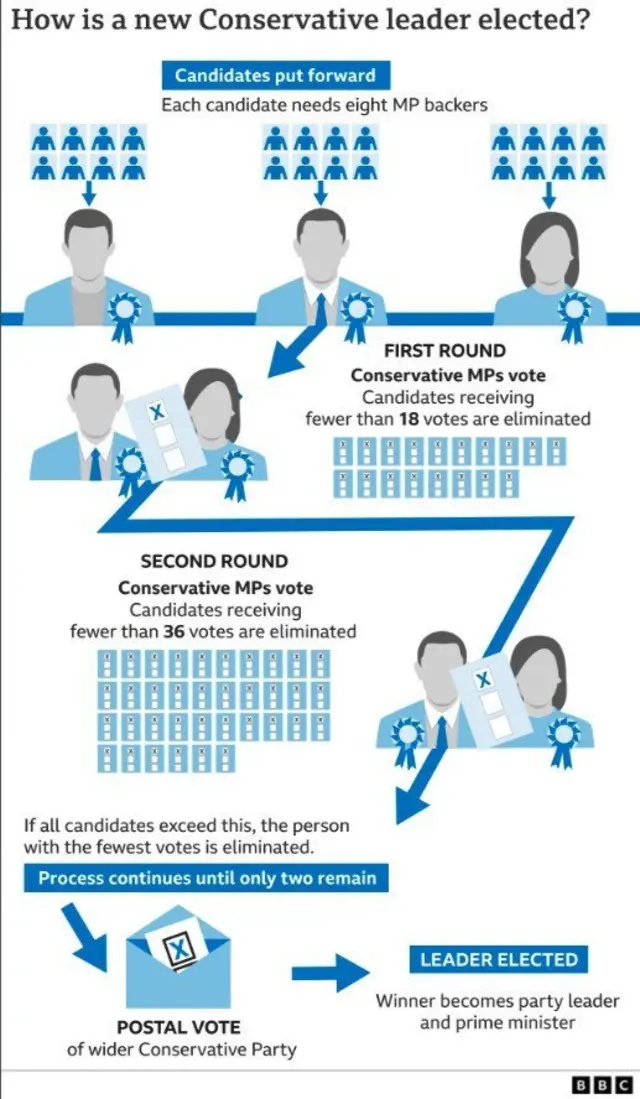
For di early rounds of di selection process, only Conservative Members of Parliament fit vote - and dem hold rounds of polling until only two candidates remain.
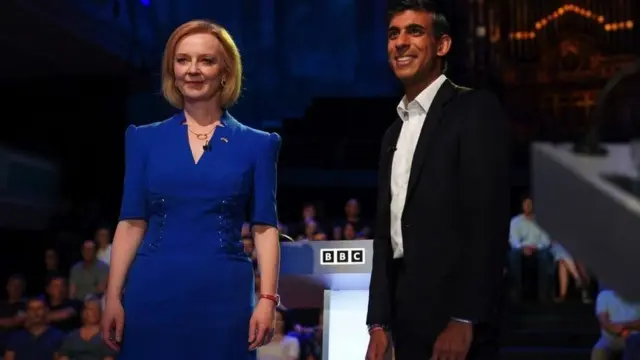
Dem be Liz Truss, di UK current foreign secretary, and Rishi Sunak, di kontri former chancellor.
At dis point, di ordinary members of di Conservative Party take part for di ballot to decide di winner.
But dat pool of about 160,000 pipo represent only 0.3% of di British electorate.
Complaints about di fairness of dis process don dey ground in di past.
But e dey fairly common for new UK prime minister to dey chosen by just dia own political party and e associated supporters.
F or di last half century, about half of di kontri leaders dey chosen by dia political parties, and not by di general public for national elections.
Dis na partly because for British political system, heads of goment dey at risk to be removed by dia parties if dem fall out of favour between general elections.
Dis be unlike presidential systems like di one wey dem dey use for United States.
Wia dis foto come from, AFP
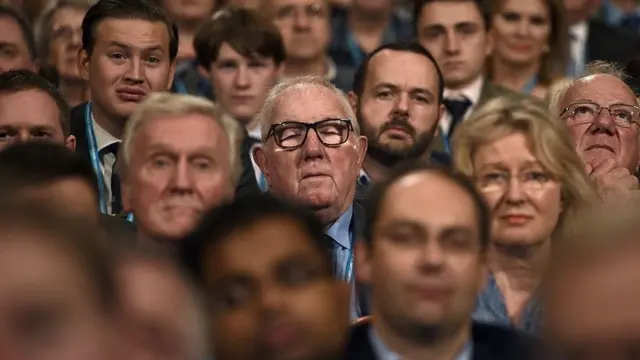
But di membership of political parties no be representative of di kontri as a whole.
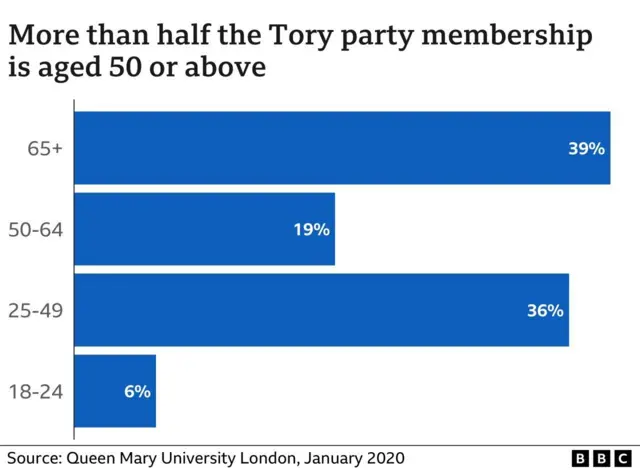
Research suggests say, like members of di oda major parties, Conservative members tend to dey older.
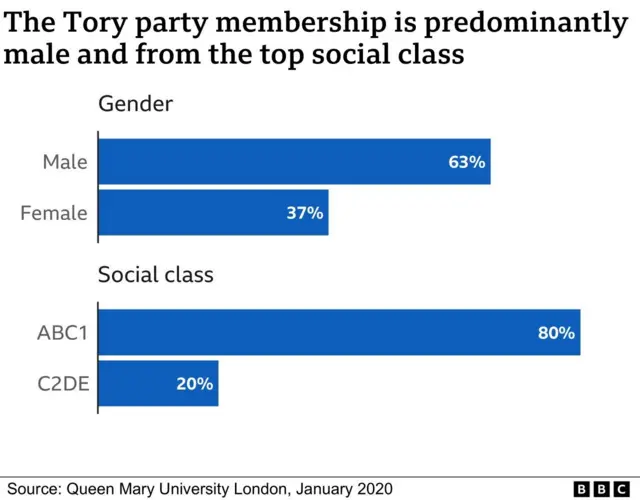
Dem be more middle-class and more white than di rest of di population.
Professor Tim Bale, head of Queen Mary University of London and Sussex University Party Members Project, say:
"Di pipo wey get to choose our next prime minister dey far from being representative of voters as a whole.
"Dem no dey as diverse ethnically; dem dey heavily concentrated for di south of England;
"Dem get significantly more men than women; Dem dey generally better off; and, although dem no dey too elderly as some imagine
"(on average dem dey actually for dia late 50s even if four-in-10 dey over 65), dem still dey relatively old.
"In short, na wetin political scientists call 'di selectorate' look pretty different to di electorate."
Most members of most parties for UK na like middle-class, according to Prof Bale research.
But Conservative Party members na di most middle-class of all.
All di main parties for di UK get relatively few black and minority ethnic members.
According to one 2018 report by Tim Bale team, 97% of Conservative members na "white British", compare with 96% for Labour and di Liberal Democrats.
So while di UK next prime minister go dey chosen by a group of pipo wey dey far from representative of di kontri as a whole, e dey far from di first time wey dis dey happen - and e dey unlikely to be di last.
Even smaller
Surprisingly, di number of pipo wey dem dey use to select a prime minister between elections used to dey even tinier.
Until 1998 for di Conservatives and 1981 for di Labour, only MPs dey allowed to chose new leaders.
Dis reduce di electorate to just a few hundred pipo wey be even less representative of UK as a whole.
Even dis no be always a democratic affair. Until 1965, di Conservatives no hold election amongst MPs to select a new leader, dem dey simply expect di winner to "emerge" from a group of candidates.
Senior party members go discuss between demsef who dem think say go be di most appropriate new leader and eventually, without any formal vote, one go dey selected.
Love and hate
One of di reasons wey so many UK prime ministers dey selected in a strange way be say, e be like say British political parties dey like removing dia own leaders from power.
Since di Conservatives enta office for 2010, David Cameron, Theresa May and Boris Johnson all tendered dia resignations afta pressure from dia own parties. Even di giants of British politics no dey immune from dis.
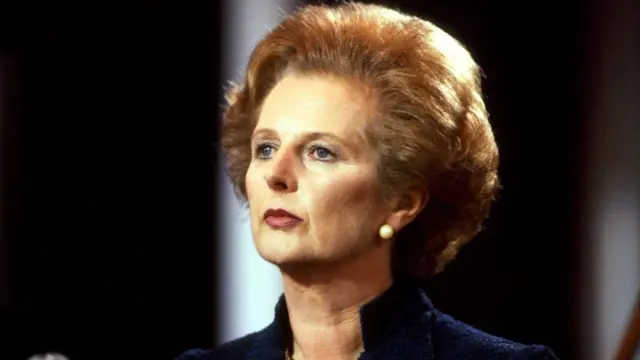
Di two most electorally successful prime ministers of di last hundred years - di Conservatives Margret Thatcher and Labour Tony Blair wey both serve over 10 years in power - step down afta attack by factions for dia own party.
But while e be like say MPs dey happy to stab dia leaders for di back, dem still dey eager to praise dem for public.
Boris Johnson final speech for parliament receive cheers and a standing ovation by im own party.
And dis kain tin no dey too happen for di House of Commons where dem dey discourage clapping.
Many of dem, however, don bin spend di previous weeks fighting bitter battle to remove am from office while publicly describing im as unfit to lead di kontri.
Johnson successor gatz keep in mind say dia time for office dey likely to dey just as much of mixure of love and hate as Mr Johnson.