BBC investigate allegations say Georgian police use WW1 chemical weapon against protesters
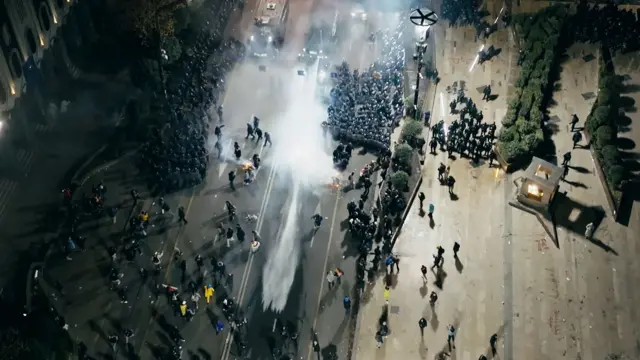
Wia dis foto come from, Shutterstock
- Author, Max Hudson
- Author, Oana Marocico
- Author, Sarah Buckley
- Role, BBC Eye Investigations
- Published
- Read am in 9 mins
Georgia authorities use a World War One-era chemical weapon to stop anti-goment protesters last year, according to evidence wey BBC gather.
"You fit feel [di water] dey burn," one of di protesters tok about water cannons wey dem turn on am and odas for di streets of di capital Tbilisi. A sensation, e say e no immediately wash off.
Protesters against di Georgian goment suspension of dia European Union accession bid don complain of oda symptoms too - shortness of breath, coughing, and vomiting wey last for weeks.

Wia dis foto come from, Gela Khasaia
Di BBC World Service tok to chemical weapons experts, whistleblowers from Georgia riot police, and doctors, and find say di evidence point to di use of an agent wey di French military name "camite".
Di Georgian authorities say our investigation findings dey "absurd" and di police bin act legally in response to di "illegal actions of brutal criminals".
Camite dey deployed by France against Germany during World War One. Na little documentation of subsequent use dey, but e dey believed say dem take am out of circulation at some point for di 1930s, becos of concerns about di long-lasting effects. CS gas - wey dem dey refer to as "tear gas" - na di replacement.
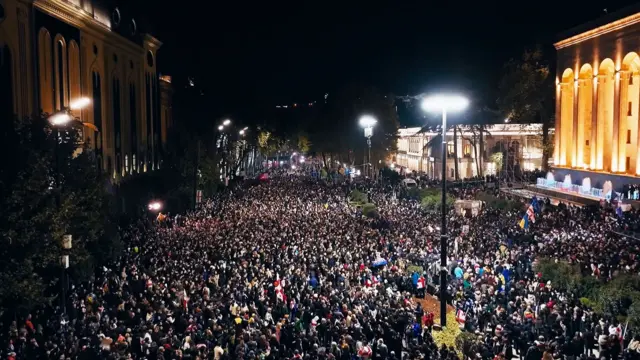
Konstantine Chakhunashvili na one of di protesters wey gather outside Georgia parliament for Tbilisi during di first week of protests - wey begin on 28 November 2024.
Demonstrators dey incensed by di ruling party announcement say dem dey pause EU accession tok. Di goal of EU membership dey enshrined for Georgia constitution.

Georgia police respond wit variety of riot-control measures including di use of water cannon, pepper spray and CS gas alias tear gas.
Dr Chakhunashvili, one paediatrician wey dey among dose wey dem spray by di cannons, and wey don take part for many of di demonstrations, say im skin feel like say e dey burn for days, and di sensation no fit wash comot. In fact, e say, "e dey worse wen you dey to wash it off".
Dr Chakhunashvili wan find out if odas bin suffer similar effects. So e appeal, via social media, for dose also targeted by crowd control measures during di first week of di demonstrations to fill out a survey. Nearly 350 pipo get in touch, and almost half say dem suffer one or more side-effects for more dan 30 days.
Dis long-term symptoms range from headaches, to fatigue, coughs, shortness of breath, and vomiting.
Im study be peer reviewed and e dey accepted for publication by Toxicology Reports, an international journal.
Sixty-nine of dos wey Dr Chakhunashvili survey also dey examined by im and find say dem get "significantly higher prevalence of abnormalities" for di electrical signals for di heart.
Dr Chakhunashvili report echo di conclusion say local journalists, doctors, and civil rights organisations bin come to - say di water cannon get chemical.
Dem call on di goment to identify wetin dem bin use, but di Ministry of Internal Affairs wey dey responsible for di police bin refuse.
Several high-level whistleblowers wey dey connected to di Special Tasks Department - di official name of Georgia riot police - help di BBC determine dis chemical likely identity.
A former head of weaponry for didepartment, Lasha Shergelashvili, believe say na di same compound wen dem ask make e test for use in water cannon in 2009.
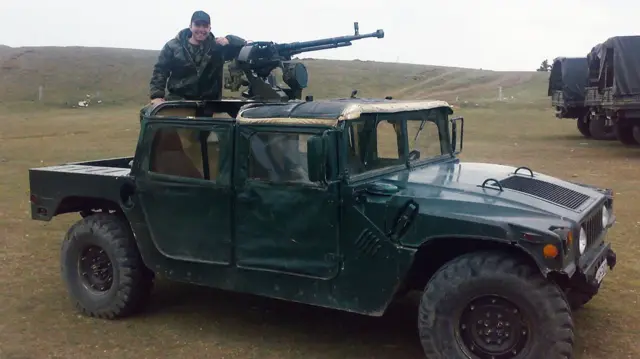
Wia dis foto come from, Lasha Shergelashvili
Di effects of dat product, e say, dey unlike anytin wey e don previously experience. E find am difficult to breathe afta e stand close to wia dem bin spray am, and im and di 15-20 colleagues wey test am wit am no fit easily wash am off.
"We notice say di effect no dey comot, as na di case for [regular] tear gas. Even afta we wash our faces wit water, and den wit a special solution of baking soda and water, wey dem prepare in advance, we still no fit breathe freely."
Mr Shergelashvili say dat as a result of im tests, e recommend against di chemical use. But e say di water cannon vehicles dey nevertheless loaded wit am - and dat remain di case at least up until 2022, wen e quit im job and leave di country.
E tell di BBC for interview from Ukraine say wen e watch di video of di protests last year, e immediately suspect say demonstrators dey subjected to di same chemical.
Colleagues wey e remain in touch wit, and wey still dey post, don also tell am say dat na di case, e add.
And di BBC speak to anoda former high-level police officer wey confam say wateva dey loaded into di water cannon vehicles wen Mr Shergelashvili dey in position na di same compound wey dem deploy for di protests of November-December 2024.
Wen dem ask Mr Shergelashvili if di product e test fit be CS gas - wey dey irritate di eyes, skin and respiratory system, but only temporarily - e say e be like say e strong pass like day.
"I no fit name any example or compare am wit anytin [else]," e say, as e add say e dey "probably 10 times" stronger dan more conventional riot-control agents.
"For example, if you pour dis chemical for ground, you no go fit stay for dat area for di next two to three days, even if you wash am off wit water."
Mr Shergelashvili no sabi di name of di chemical wey dem ask am to test.
But di BBC manage to get a copy of di inventory of di Special Tasks Department, dated December 2019.
We discova say e contain two unnamed chemicals. Dis dey simply listed as "Chemical liquid UN1710" and "Chemical powder UN3439", along wit instructions for how you fit mix dem.
We wan check weda dis inventory dey original, so we show am to anoda former high-ranking police officer from di riot police wey confam say e be like original. E identify di two unnamed chemicals as dose likely to dey added into di water cannons.
Our next step na to work out wetin dis chemicals be.
UN1710 dey easy to identify as dis na di code for trichloroethylene (TCE), a solvent wey dey allow oda chemicals to dissolve for water. We den gatz work out which chemical e dey help to dissolve.
UN3439 dey much harder to identify becos na umbrella code for a whole range of industrial chemicals, all of which dey hazardous.
Di only one of dis wey we find to eva see dey used as a riot-control agent na bromobenzyl cyanide, also known as camite, developed by di Allies for use in WW1.
We ask Christopher Holstege, a world leading toxicology and chemical weapons expert, to assess weda our evidence point to camite as di likely agent wey dem use.
Wia dis foto come from, Shutterstock
Based on di results of Dr Chakhunashvili study, victim testimony, di riot police inventory, and Mr Shergelashvili account of di chemical tests, e believe say dis na di case.
"Based on di available evidence… di clinical findings report by dose wey dey exposed and by oda witnesses dey consistent wit bromobenzyl cyanide."
E rule out di likelihood of di symptoms caused by more conventional crowd control measures, such as CS gas, wey also dey deployed by Georgia riot police last year.
"Di persistence of di clinical effects… no dey consistent wit di typical agents wey dem use for crowd dispersal, such as CS," e say.
"I neva see camite dey utilised for modern society. Camite dey irritating, [and] persistent wit di irritation."
E speculate say e dey used sake of say e go act as a strong deterrent.
"E go keep pipo away for a long time. Dem no fit decontaminate [demsef]. Dem go gatz go to di hospital. Dem go gatz leave di area. If dat na indeed di case - say dis chemical don come back - dat is actually exceedingly dangerous."
Camite dey briefly used as a riot control agent by di American police post-WW1 but dey abandoned afta safer options such as CS gas dey invented.
Under international law, police forces dey allowed to use chemicals as crowd-control agents as long as dem dey considered proportionate and get only short-term effects.
Sake of dis safer and more conventional riot-control agents available to police, an obsolete and more potent agent fit dey classed as a chemical weapon, according to weapons experts consulted by di BBC.
Our findings dey concerning, according to UN Special Rapporteur on Torture Alice Edwards.
Ms Edwards don previous write to Georgia goment regarding allegations of police violence and torture during di protests.
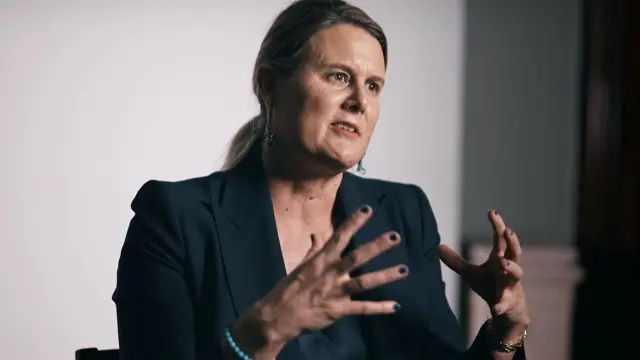
Di lack of strict regulation around di use of chemicals in water cannon na problem she go like address: "E lead me to consider [dis practice] as an experimental weapon. And populations no supposed deyjected to experiments. Dis is absolutely in violation of human rights law."
She stress say any effect of a riot control measure suppose dey temporary under international law, and say di symptoms described "dey beyond wetin fit dey considered temporary and acceptable. So all of dose cases gatz dey investigated, including under di rubric of torture or oda ill treatment".
Georgia authorities bin describe our findings as "deeply frivolous" and "absurd".
Dem say dat law enforcement bin act "within di bounds of di law and constitution" wen responding to di "illegal actions of brutal criminals".
Di protests on Tbilisi Rustaveli Avenue don reduce in size since di goment bin increase fines and jail terms, but e no dey frequent.
Almost evri night for di past year, demonstrators don call for di resignation of goment wey dem accuse of rigging elections, siding wit Russian interests, and passing increasingly draconian legislation against civil society.
Di ruling Georgian Dream party deny say di goment or di party honorary chairman, Bidzina Ivanishvili, no be pro-Russian or pursuing Russian interests.
E tell di BBC say legislative changes ova di past year serve di best interests of "public welfare".