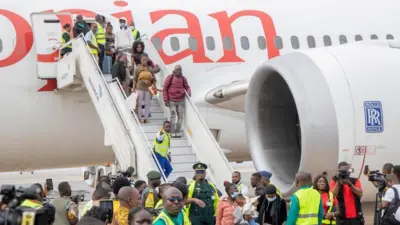
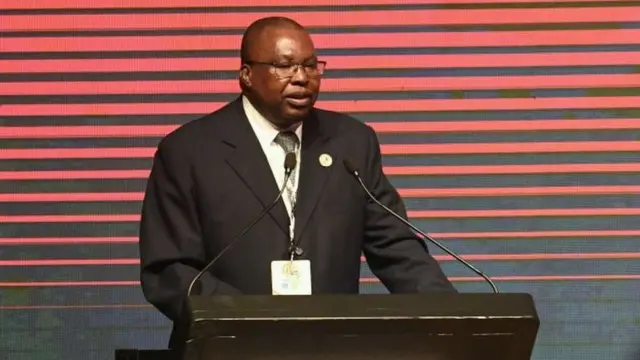
'Africa no wan only be source of raw materials' - African Union Trade Commissioner draw ear give G7
Wia dis foto come from, Getty Images
- Author, Jonathan Josephs
- Role, Business reporter, BBC News
- Published
Africa no go accept say make "dem just continue to be a source of raw materials" for di rest of di world, di African Union Trade Commissioner don tell BBC.
Albert Muchanga say instead, im continent want a future of "genuine and mutually beneficial relationships" with im trade partners.
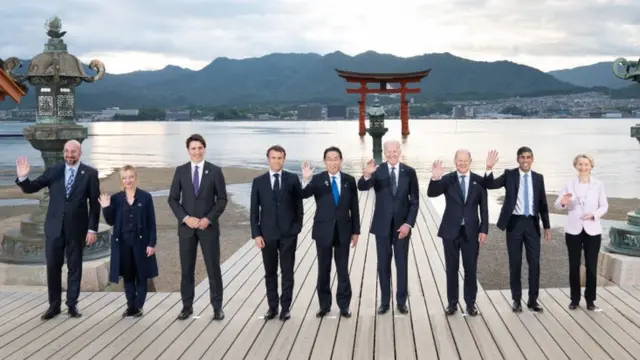
Dis wan dey come as dem invite di AU chair to di G7 summit for Japan as competition dey high with China for Africa natural resources.
With Western powers wey dey look for greater trade links with di continent, several visits to some African kontries in di run-up to di summit from di leaders of France and Germany, as well as di US vice-president don happun.
Wia dis foto come from, Getty Images
Japan Prime Minister Fumio Kishida visit Egypt, Ghana, Kenya and Mozambique for di beginning of di month as e dey look to sought to boost African support for im efforts to counter Chinese and Russian influence on di continent, as well as in regards to Taiwan and Ukraine.
Speaking for Maputo on 4 May e say: "Many kontries of di so-called Global South dey suffer from high food and energy prices. Di cause of dis issue suppose dey traced to Russia invasion of Ukraine."
Mr Muchanga welcome di recognition of Africa problems. E say di katakata wey di Covid pandemic cause also dey to blame for problems wey dey "multi-dimensional".
"Na recognition of say di North and di South want deeper interdependence, and e dey welcome."

End of Di one wey oda users dey read well well
Wia dis foto come from, AFP
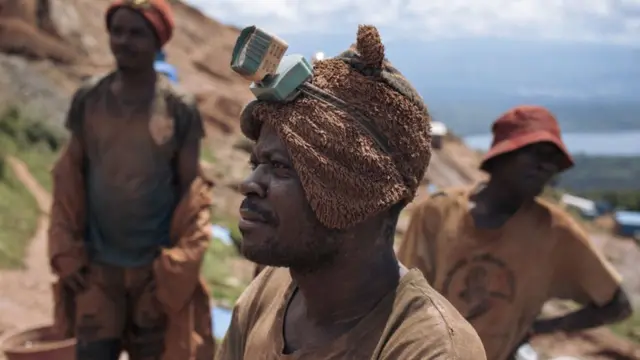
Di Zambian official say with di era of colonialism now wey dey in di past, Africa want to get more benefit from dat relationship by equipping imself with di skills to keep more of di economic value from im ogbonge natural resources.
"We no go continue to be di historical sources of raw materials. E no go work because of a growing population, wey want opportunities for decent jobs, and e fit only come from di processes of manufacturing and agro-processing," e tok.
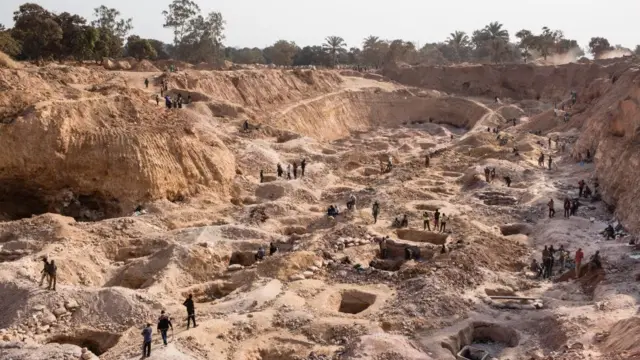
"DRC and Zambia don give a good example, wen dem go come up with a joint project on di production of batteries for electric vehicles." Di two kontries be major exporters of di copper and cobalt wey dey needed for di batteries, wey dey in growing demand around di world.
US-China competition
United States dey try to boost dia trade ties with Africa as dem dey seek to tackle climate change. During visit to Tanzania for March, Vice-President Kamala Harris highlight one project wey go benefit from US financing, wey she say na a "first-of-its-kind processing facility for di continent for minerals wey dey go into electric vehicle batteries".
"Importantly, raw minerals go soon dey processed for Tanzania, by Tanzanians. E go help address di climate crisis, build resilient global supply chains, and create new industries and jobs."
Last year, China trade relationship with Africa reach a record of $282bn (£226bn), according to Chinese customs data. E mark 11% increase from di year before am as prices for commodities like oil, copper, cobalt and iron ore go up. E also mean say Africa-China trade dey nearly four times as big as US-Africa trade, wey come in at $72.6bn.
However, " dem dey ship more manufactured and value-added products go di US dan dem dey ship to China", according to Florizelle Liser, wey dey run Corporate Council on Africa, one Washington-based organisation wey dey aim to boost US-Africa trade.
Ms Liser add say Africans "whether in goment or di private sector really like to work with US companies for different reasons. Dem like di American brand."
"Dem like di fact say working with di Americans, more transparency dey dey most times in di relationship. And dem also like di fact say US companies dey do a lot in terms of skills transfer, and in technology transfer, and dme no dey necessarily see di same with all di oda partners, China as well as odas."
Wia dis foto come from, Getty Images
China debt concerns
Dat lack of transparency for trade relations na sometin wey di outgoing World Bank President David Malpass recently criticise, wen e tell BBC say e dey concerned about di long-term implications of Chinese loans to Africa and call for international financial support to be more transparent.
Dem don spend billions of dollars on projects like ports, railways and electricity grids. Despite di economic benefits, e don leave kontries including Ethiopia, Ghana and Zambia dey struggle to repay dia debts ontop claims say China dey use dem as leverage for political influence to support im demand for natural resources.
During one visit to Beijing by Gabon president last month, China Vice-Foreign Minister Deng Li deny say dat na di case, e say: "We no dey bring a so-called 'debt trap'. We dey bring development opportunities. We no never ever attach any political strings to our aid and economic assistance to African kontries."
African Union Mr Muchanga say: "China don really do plenti job in promoting infrastructure deployment across Africa through di Belt and Road Initiative."
However, e say transparency for trade relations dey very important. "Hidden clauses no suppose dey. Unfortunately, hidden clauses don dey in di past."
E add say, "for di negotiating table before dem sign di deal, everybody suppose dey very clear on wetin dem dey sign on. I tink dat na di lesson wey we need to carri enta di future."
One way Africa dey try to strengthen im hand inside trade deals na through di development of di African Continental Free Trade Area. Di flagship project of di African Union dey aimed at eliminating trade barriers and boosting trade within di continent but e never dey fully implemented yet.
"Di next stage na to move am to African Customs Union," Mr Muchanga explain, as e hope say eventually AfCFTA go allow im 54 members to strengthen dia negotiating hand with di rest of di world on trade in a similar manner to di European Union.
Mr Muchanga say di AU's invitation to di G7 summit na "a recognition of di systemic influence of Africa to di global economy".
"Africa suppose really dey able to speak very strongly with one voice on all global economic issues."