'I bin think say I don kill my baby' - di reality of postpartum psychosis
Wia dis foto come from, Getty Images
- Author, Angela Henshall
- Role, BBC World Service
- Read am in 7 mins
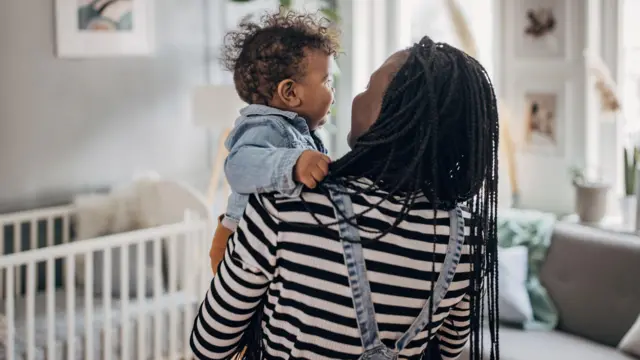
At first, Ellie say she bin dey veri happy. She born pikin for house without pain relief and she bin dey overjoyed to be new mama. Although she try sleep for few hours ova three days, she later decide say she no even need sleep at all.
"Di best way I fit describe am na like waking from a nightmare wia you no fit tok weda na dream and reality. But [dat feeling] just continue dey go on," she tok.
"Den I tink say I don kill my son for bed. I remember say I see my partner and I just dey reason say, dis dey real?"
Ellie bin dey experience postpartum psychosis (PPP), one unbearable illness wey fit temporarily turn life upside down for new parents.
Wia dis foto come from, Getty Images
Wetin be postpartum psychosis?
Among di early warning signs for PPP na if new mothers no just dey feel like demsefs or e be like say dem don lose touch wit reality.
Although sleep-deprivation dey common wit new parents afta birth, woman wey get PPP fit stop to dey sleep entirely. According to UK National Health Service, symptoms include:
- Rapidly changing mood
- Hallucinations
- Irrational guilt
- Hearing voices
- Restlessness
- Confusion
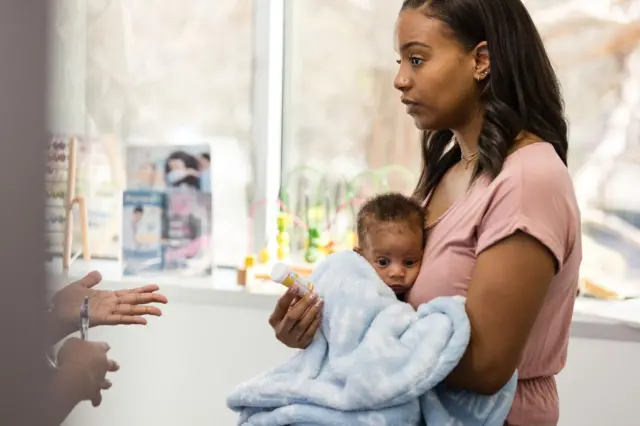
PPP na medical emergency, wia in most cases, go need hospital admission for specialist care and treatment. But experts say di most important tin to remember na as severe as an episode of psychosis sound, wit treatment most women fit recover within months.
Wia dis foto come from, Getty Images
Wetin dey cause postpartum psychosis?
Despite years of research, e neva still dey clear wetin dey cause PPP.




End of Di one wey oda users dey read well well
Doctors suggest say sudden change in hormones wey dey happun during childbirth fit get somtin to do wit am.
Dis shift fit trigger extreme confusion and fear. But no reliable way dey to predict who go dey affected, for instance – blood test no dey.
At least half of new mothers wey dey diagnosed wit PPP neva experience psychosis bifor, so for dem to begin hallucinate na somtin wey dey new and terrifying for dem.
For Ellie, di beginning of PPP bin dey veri fast.
"I dey wonder now if e even bin start as I dey active labour for hours overnight for house, for some reason, I bin decide not to wake my husband up until 6am," she tok.
PPP dey affect one to two women wey give birth in evri 1000. E no too common like post-natal depression wey dey affect around one in 10 new mums. Experts believe say more women dey affected pass bifor.
For years, dem don dismiss severe post-natal depression as 'baby blues' but doctors warn dis attitude to mental health fit make am really hard for parents to access adequate support.
Anecdotal research from UK charity Action on Postpartum Psychosis (APP) suggest say e still common for women to dey misdiagnosed, maybe by community midwife or doctor, wey fit suggest sleeping tablets.
Charities like APP, COPE: Centre of Perinatal Excellence and Perinatal Anxiety and Depression Aotearoa (PADA) dey work on campaigns wey dey raise awareness of PPP among di general public and frontline healthcare workers.
For Ellie, wey dey work now for one charity wey dey support mothers wit PPP, na few factors dey lead up to crisis point, wey include lack of sleep and di huge pressure to be perfect new mum. However, she also now know say she dey at much higher risk as she get bipolar disorder, type 1.
Around 25% of women wey get dis disorder go get severe episode wey go make dem need hospital care afta dia first baby, according to Cardiff University research dem publish for The Lancet.
For UK, Australia and New Zealand, dem dey encourage women for dis group to continue dia medication – women for dis situation go need to see specialist perinatal psychiatrist for advice according to APP and multiple oda organisations.
Research by Dr Ian Jones, one leading perinatal psychiatrist for Cardiff suggest say increased risk of postpartum psychosis no dey for pipo wit history of childhood trauma. E say dis add weight to im idea say biological element dey involved in PPP and surge in hormones be like one of di biggest driving factors.
Wia dis foto come from, Getty Images
Wetin fit help?
Risk dey say witout treatment, mothers wey get PPP fit try to harm demsefs according to multiple pieces of research.
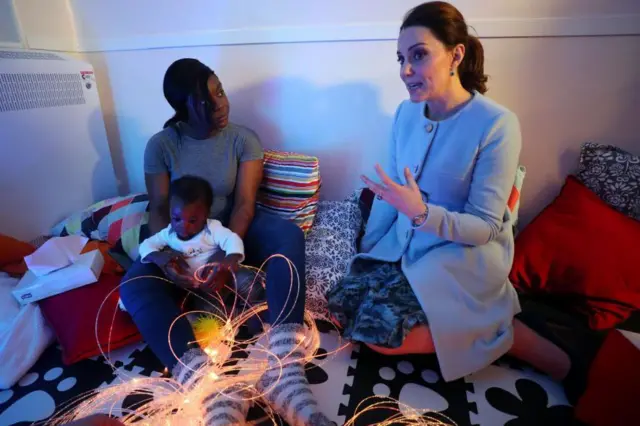
For UK, Australia, and New Zealand clinical studies don establish say e dey beta to treat mums wit PPP by keeping dem wit dia babies in mother and baby psychiatric units under veri close observation.
"For me, e feel more like 'a switch' bin go off for my brain and e dey veri obvious," Ellie tok. She get memory gaps but she remember say she stand for di top of di stairs for house dey listen to her husband phone di local maternity ward.
"I dey veri scared. I need help and becos dem hear say I dey shout, di head midwife bin fight for me to go to MBU (mother and baby psychiatric unit)," Ellie tok. "Di most important tin e dey do na to keep you well, dat na di primary focus."
Ariane Beeston, tok-tok pesin for di non-profit Centre of Perinatal Excellence for Australia wey don experience PPP, describe di need for dis beds as crucial.
For Ariane wey bin work for child protection, PPP come completely out of di blue. For her book I'm not myself you see, she describe she hallucinate say she dey see dragons next to her baby son and goment drones dey fly overhead. Afta dem finally admit her to a mother and baby psychiatric unit, she dey supported to get enough sleep, bond wit her new son and take part for 'parentcraft' lessons and recover. She say di experience don change her.
One of di hardest moments for women wey dey transition out of dis MBU na deciding wit dia care team, wen be di right time to return home. Weda or not to breastfeed na anoda major decision for women at higher risk, as you gatz understand how e go work with taking any ongoing medication, according to Dr Clare Dolman, one researcher for Kings College London.
Accessing dis kain support fit dey extremely dey limited for oda kontris. Serious sociocultural differences dey for first time mums around di world.
Some cultures still dey compulsory 40 days of confinement post-birth for new mums. For some parts of India, dem dey explain PPP as religious fate — devva hididide, or being possessed by a ghost. Whereas for oda cultures, dem dey see postpartum mental health disorders as personal deficit or failure as mother. Researchers see say mothers for Hong Kong dey under pressure to play traditional maternal role and any failure to do dat go dey experienced as shameful loss of face.
Wia dis foto come from, Getty Images
So, wetin dey happun if you want anoda baby?
For one in two mothers wey experience PPP, unfortunately dem dey go on to experience am again wit subsequent births, according to Manchester and Cardiff University research.
For mums wey get more children, dem describe detailed pre-planning to ensure say dem get extra support in place - weda dis na additional family or friends on hand to help, prioritising sleep and essentially trying to "put yoursef first, in order to be good parent," Ellie tok.