Meet di African Scientist wey dey find water on top moon
Wia dis foto come from, NASA/GSFC/Bill Hrybyk
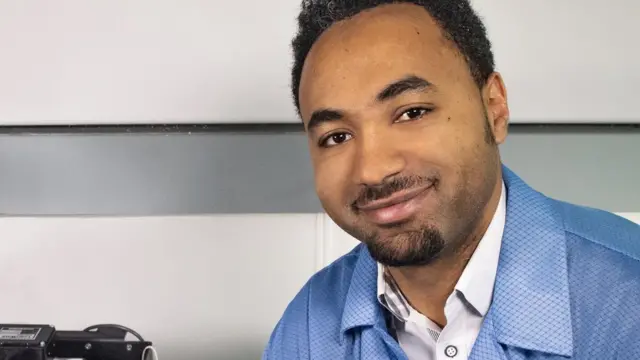
Ethiopian-American Nasa research engineer Berhanu Bulcha goal na to find solution to di problem of locating water on di moon, to help humans fit set up permanent base for there.
Without water, life no dey.
Weda pipo dey for Earth or elsewhere for di universe, water dey important.
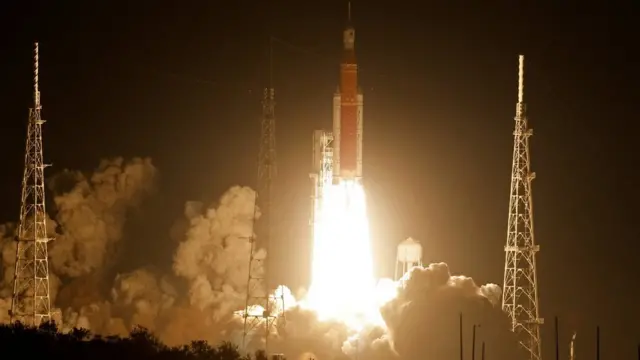
Dem finally launch di Nasa Artemis 1 rocket recently – dis na di start of ambitious space exploration programme wey dem design to take humans go back moon and beyond.
Di issue of how to get water beyond di earth dey important. Di lunar base dem dey plan no go dey possible without water and Dr Berhanu dey lead di team wey dey work on how dem go see water for di planet only natural satellite.
Dem fit carry water from Earth go di moon but e go dey expensive and highly inefficient.
More importantly, dem fit use lunar water make rocket fuel, wey go allow di moon become platform for further space travel. Wit dis, pipo no go need big rockets wey dey required to overcome our planet gravitational pull.
Di 'Million-dollar question'
Wia dis foto come from, Reuters
Dr Berhanu and im team dey develop one prototype light-weight compact spectrometer wey go identify wia water reserves dey on di moon.


End of Di one wey oda users dey read well well
"Dis na di million-dollar question," e tell BBC by phone from one of Nasa offices dem for di US.
Since e graduate from di University of Virginia 12 years ago, Dr Berhanu don dey focused on developing space instruments wey go solve problems for Nasa - and to argue am, di search for water na di biggest problem of all.
Dem don already confam di presence of some water on di moon. But id issue wit most methods of detection na say, dem no fit tok di difference between water, wey dey made up of hydrogen and oxygen, and hydroxyl, and anoda one wey come from hydrogen-containing compound.
Di team dey develop wetin dem call di quantum cascade lasers to reach dis frequency wey bin dey hard to achieve for di past, Nasa news service reports.
Dr Berhanu describe am as new technological development wey go enable astronauts to use di hand dem dey take hold machine to find both di location and volume of water - sometin wey dem neva achieve before.
Dem fit also deploy di tiny instrument go one remotely operated rover. To reduce di size and weight of any object wey dey designed to go on a lunar mission dey risky as space dey at a premium.
Dr Berhanu wey base for Nasa Goddard Space Flight Center for Maryland, recently receive $2.5m (£2.1m) to continue to dey work on di prototype. Dis fit take anoda two years to finish but Dr Berhanu say im dey optimistic say im go do am and e go work.
No doubt dey about im determination and tenacity - and e see dis as defining characteristics for imself.
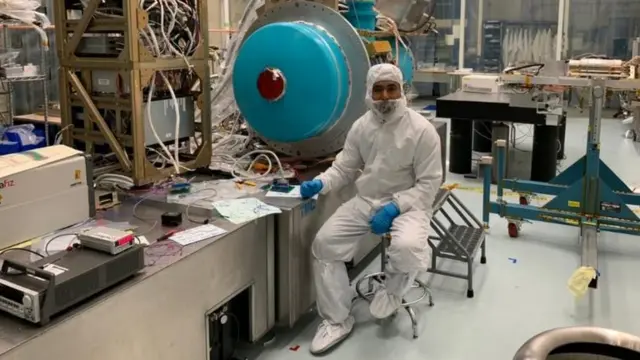
Wia dis foto come from, Berhanu Bulcha
Who be Berhanu Bulcha?
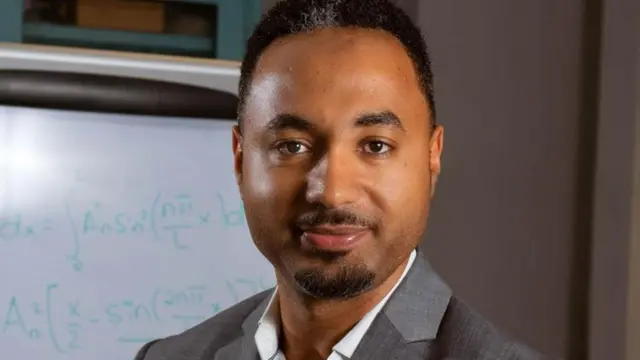
Wia dis foto come from, NASA
Di 38-year-old grow up for di Ethiopian capital, Addis Ababa, but move go di US afta high school to study physics and engineering for Virginia Commonwealth University.
E get to sponsor imself go school.
"Wen I come US, I no get support network, I bin dey support myself. I really dey isolated from di culture I bin grow up in and join dis new culture. Di first tin you go tink of na to work hard and succeed for education," e tok as e dey reflect on im early years for im adopted kontri.
E admit say na risky step im take wen e decide to leave Ethiopia but di opportunities to work with cutting-edge technologies and on exciting research projects dey hard to resist.
Di inspiration to look at di cosmos and wonder wetin dey dia, however, come from closer to home.
E get religious Christian upbringing and tok say im early introduction to di Bible make am begin ask questions about di universe and how tins come about.
For some pipo, strict following of di scripture fit make dem no wan explore different ideas but for Dr Berhanu, e lead am to look beyond imself.
"How God take create di universe dey always surprise me. I bin get passion to know more and di curiosity to know more about wetin di universe look like and how big e be," e tok.
Dat willingness to ask questions and look for answers don lead a young boy wey grow up for Addis Ababa to possibly help solve one of di key barriers to further space exploration.
For am, doubt no dey say hard work plus finding di right mentors dey key to im success.
But e say "di first tin na to get dream, get plan and work towards your dream… definitely challenges go dey but no stop, just continue to work".