Work dey for one of di world most remote islands
Wia dis foto come from, Getty Images
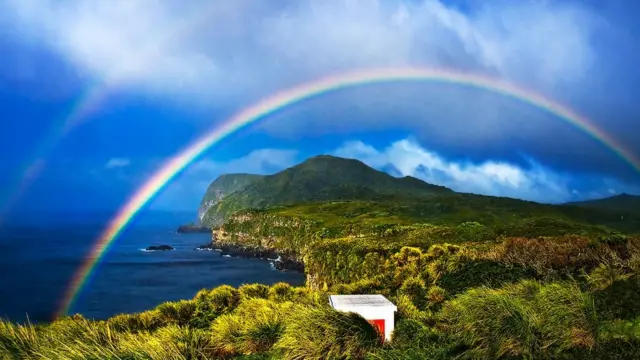
One British wildlife group dey find pesin wey go work on one of di remotest islands for di world for 13 months.
Gough Island, na one British territory for di southern Atlantic Ocean, wey no get permanent population.
E dey around 1,500 miles (2,400km) from di African mainland - and, as airport no dey to reach Gough go involve seven-day boat ride from South Africa.
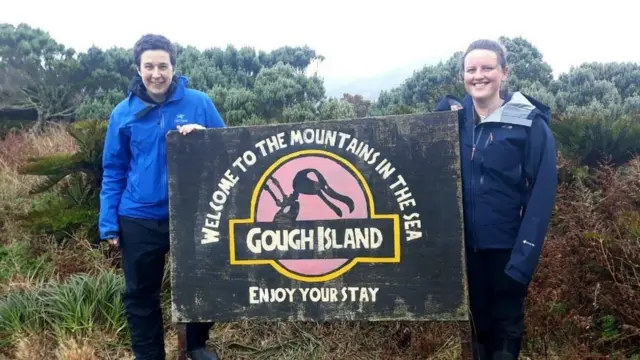
Na journey wey Rebekah Goodwill and Lucy Dorman wey currently dey work on Gough don already complete.
Dem dey among di seven full-time employees - and eight million birds - wey call Gough home.
Di two of dem dey work for di Royal Society for di Protection of Birds (RSPB).
Rebekah year on di island go end for September, so di RSPB dey find new field officer, with a salary of between £25,000 and £27,000.
Di job involve "frequent long days" tracking seabird species, and di candidates gatz adapt well to live for "challenging and remote sub-Antarctic environment".




End of Di one wey oda users dey read well well
Candidates gatz also get "a science degree or equivalent experience for relevant subject", plus "wild bird/animal handling and monitoring experience for di field".
'No fresh food and di weather tough'
Wia dis foto come from, Antje Steinfurth
Rebekah and Lucy warn potential employees to say dem gatz dey brave for tough weather - and dem no go chop fresh food for one year.
"I think Bekah and I, sake of say we be British, think say we dey used to rain," Lucy tok. "But plenty rain dey fall for here."
And for food? wetin you go chop wen you dey more than a thousand miles from di nearest kontri? Get ready for packaged - or frozen food.
"Dis na one thing dem bin stress upon before we come – say for many pipo, lack of food and lack of fresh food dey important," Lucy tok.
Dem dey keep food for two walk-in freezers and dem dey stock am once a year.
"One na full of frozen vegetables and oda one na frozen meat full am and we get plenty tinned frozen fruit and veg," Rebekah tok.
"Dem dey give us one year worth of supply of food during dat two-week takeover time, and we go live on di remaining ones for di rest of di year."
Di takeover time na di period wey dey happun once a year for September, wen some employees on Gough go pack dia things and go home, and new workers go take over.
Di two employees say wit internet on di base, staying in touch dey as easy as ever - and di support of di small team dey make up for challenging moments.
Which work dem dey do
Wia dis foto come from, Rebekah Goodwill
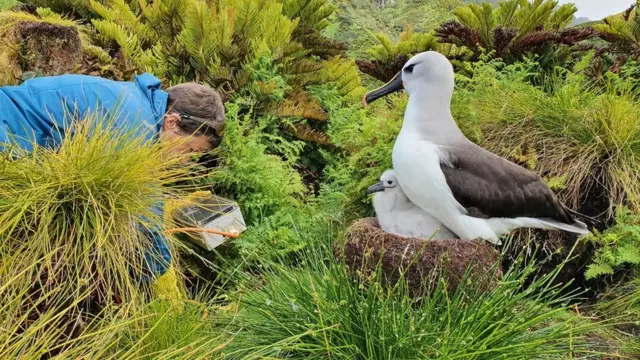
As part of di RSPB International Conservation Science Team, Lucy and Rebekah dey track di movements of various endangered birds, like di Atlantic yellow-nosed albatross, Atlantic petrel and MacGillivray prion.
During di day, dem go brave di weather and enta di field - usually equipped wit waterproof jackets and trousers, and wellington boots - to locate di birds.
Dem dey collect data on chicks wey dey di island, and dia fight against mice, one annoying species, wey dey chop dem.
"Di mice dey chop di seabirds," Lucy tok. "Dem no get any hunters, so di mice on di island, dey get massive impact, particularly on di small chicks."
For 2017-18, di mice come dey very harmful to di chicks dat na just 21% of Tristan albatross chicks survive to fledge. For one critically endangered petrel species wey dey nest in burrows – di MacGillivray's prion - not one single chick survive.
Di RSPB dey suspect say na sailors for di 19th century carry di mice come Gough, and di group dey work to eradicate them.
Di eradication don really reduce dia population - but di RSPB neva completely rid di island of mice.
So, for those wey dey interested to work for one year on Gough - birds, mice, frozen food, and spectacular remoteness included - di deadline to apply na di end of Sunday.