We no fit feed our family again - Nigerians lament high cost of food items
- Author, Annette Arotiba
- Role, BBC Pidgin
- Published
Children no dey left behind for di serious hunger issues wey dey bite hard across Nigeria, West African kontri.
From di north to di south, east to di west, di tori of how pipo no fit afford to eat well again sake of di high cost of food prices for market na di same
Many parents dey lament say e don become increasingly difficult for dem to feed dia small-small children.
Di required essential three square meal don become something of di past for many for di kontri, sake of di ever-increasing cost of food items.
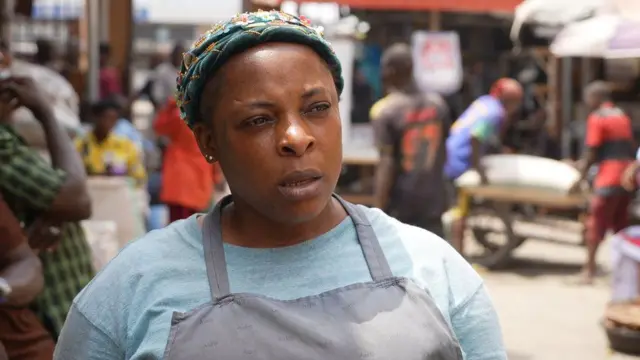
"I get three children. Bifor wit N3000, I go cook pot of soup wey go dey okay for us for some days, but now N10,000 no reach to cook one pot of soup again, one trader for Iddo market, Lagos tell BBC.
Anoda trader wey dey sell yam flour, tok say na once a day she dey chop now. "I no dey chop for morning again, na around 2pm, I dey eat my first meal of di day, by di time I get home for night, I go don tire, I go just drink garri or only water go sleep."
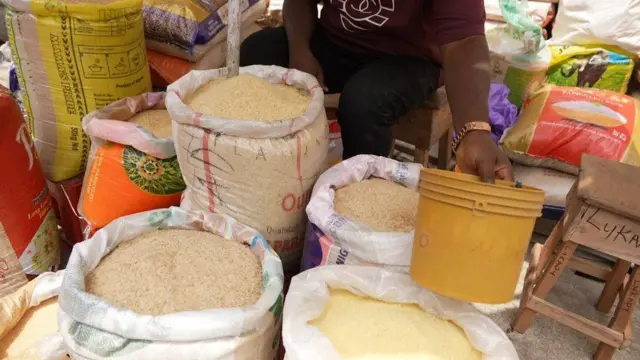
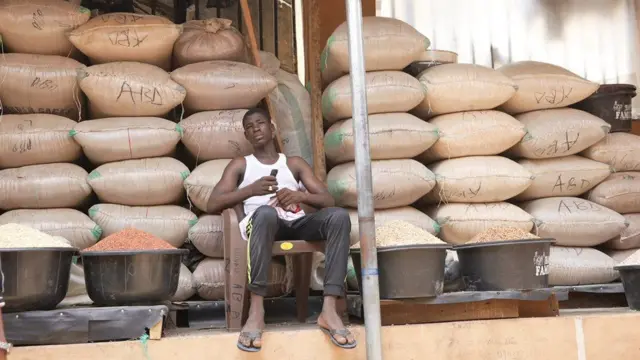
To buy basic food items for Nigeria now don become gold. Prices of common food items like rice, beans, garri, yam, pasta, flour, vegetable oil among odas don skyrocket wey don make families adjust dia feeding habits or turn to alternatives.
Wia dis foto come from, Sani Hamisu
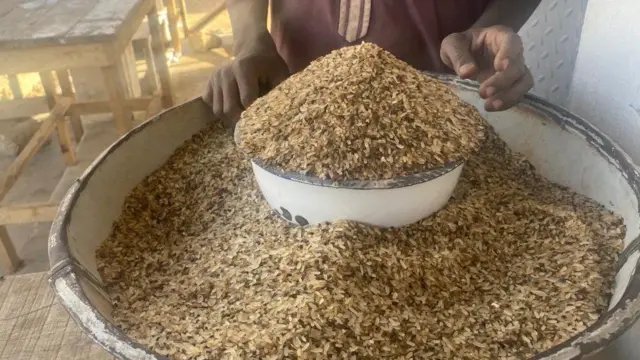
For many northern Nigerians, dem dey turn to rice grains wey millers dey normally sell give farmers to feed dia fish.


End of Di one wey oda users dey read well well
Dem dey call dis kain rice “Afafata” for Hausa language wey mean “battling”, dis one na because dem dey battle to cook and eat di rice as e dey very hard.
"A few years ago, pipo no care about dis kain rice, we dey usually throw am away along wit di rice hulls, but times don change," Isah Hamisu, one rice mill worker for di northern city of Kano, tell BBC.
Even though di grains no good, e don break, e dey dirty and hard, di cheap price dem dey sell afafata don make am more attractive to pipo as e dey help poorer families to fit afford to chop one of di common foods for di kontri.
As rice no dey dey affordable again, some families for southwest dey turn to beans - one food wey no be many pipo favourite and di beans too don become no go area now as di price don go up.
“I neva chop rice in a month because e too cost, di beans wey I turn to as I no fit afford rice again now don cost too. I come market say make I come buy beans but di price don double from di last time wey I come, wey be about five days ago.” Mrs Folashade tell BBC.
Sellers, buyers lament tough times as prices of commodity soar high
Prices of food items and cost of living for Nigeria dey increase for dia fastest rate for nearly 30 years. On top of global pressures, President Bola Tinubu cancellation of di fuel subsidy plus di devaluation of di currency, di naira, don add to di inflation mata wey dey groud.
For about a month now, di price of one standard 50kg (110lb) bag of rice, wey fit help feed family of between eight and 10 don turn to 77,000 naira ($53; £41). Dis na increase of more dan 70% since di middle of last year and e don pass di monthly income of plenty Nigerians.
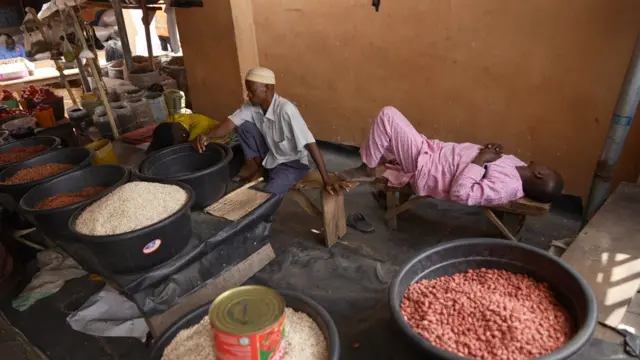
Less commercial activities, pipo wey put hand for jaw and tired faces na common sights for some buzzing Nigerian markets now.
Visit to one market for Lagos state, Nigeria biggest commercial state really show how di rising cost of food items dey show both buyers and sellers shege.
Traders lament say di price of food items too dey go up-up and e dey affect dia sales. Some say dem don even close shop as dem no fit continue in business.
“How many pipo you see wey come buy market, see as market dry? Dis na because money no dey and prices of food to cost. Pipo wey dey buy one bag of rice before, now they buy one derica because of di high cost.”
For buyers, dem say na survival mode activated. “Just buy wetin your money reach. No be cut your coat according to your size again but according to di available material.” One woman wey come buy food items for market tok.
Sake of di high cost of food items and cost of living, some states bin do protest recently.
Earlier dis month for Niger state, central Nigeria, protesters bin block roads and hold placards as dem tok say di rising prices dey choke dem.
Few days, similar protest occur for Kano state for di north-west. Afta di protest, Governor Abba Kabir Yusuf admit say pipo dey starve for im state and say dem gatz find solution.
Nigeria goment response to di rising cost of food items
Di presidency don tok say dem dey do all dem fit about di situation, wey include di distribution of more dan 100 tonnes of grains like rice, millet and maize in di hope say e go reduce di effects of inflation and help lower di market price.
Di Vice president on Tuesday, 13 February for one strategic meeting on climate change, food systems and resource mobilization tok say goment dey plan o establish a National Board Commodity as solution to di rising food inflation for di kontri.
E say to tackle di price volatility, dem don give di board mandate to access and regulate food prices, as well as maintain strategic food reserve for stabilizing prices of important grains plus oda food items.
“Our solution to di food crisis don become immediate, medium and long term strategies. Di short-term strategy na to revitalize food supply through specific interventions like distribution of fertilizers and grains to farmers and households to counter di effects of subsidy removal. Foster collaboration between di Ministry of Agriculture and di Ministry of Water Resources for efficient farmland irrigation, wey go ensure year-round food production.” Oga Shettima tok.
But one of di president adviser, Bayo Onanuga bin make many pipo para recently wen e tok say Nigeria still get one of di lowest costs of living for Africa.
Di increasing price of rice no be new problem.
President Tinubu predecessor, Muhammadu Buhari, bin ban di importation of rice to encourage more Nigerian farmers to grow di crop, but local producers dey unable to meet di demand.
Oga Tinubu don lift import restrictions, but now di shortage of foreign currency and di falling value of di naira don make food, especially rice cost more.
For many kontri pipo dem say if di current situation continue like dis, dem fear say e fit lead to more begging for streets, increase in crime and worse of, fit lead to death, as pipo no go fit afford basic necessities.
Dem call on goment for immediate intervention - mostly find solution to di rise in dollar wey dem claim say na di main reason for di high cost of living.