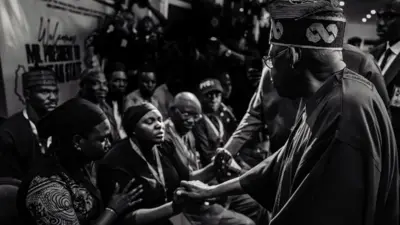
Music legend Fela Kuti na di first African wey go collect Grammys Lifetime Achievement Award
Wia dis foto come from, Getty Images
- Author, Mark Wilberforce
- Read am in 7 mins
Long crowned by im fans as di king of Afrobeat, di late Fela Kuti don finally get recognition from di global music industry.
Di Nigerian star go receive Lifetime Achievement Award at di Grammys- almost three decades afta im die at age 58.
"Fela don dey for pipo heart for such a long time. Now di Grammys don acknowledge am, na double victory," im musician pikin Seun Kuti tell di BBC.
"E dey bring balance to Fela story," e add.
Rikki Stein, long-time friend and manager of di late musician, tok say di recognition by di Grammys na "better late dan neva".
"In di past Africa neva dey rated highly before for dia interest. I tink e don dey change small, small lately," Stein tell di BBC.
Followig di global success of Afrobeats, genre inspired by Fela sound, di Grammys don introduce di category of Best African Performance in 2024.
Dis year, Nigerian superstar Burna Boy sef get nomination for di Best Global Music Album category.
But Fela Kuti go be di first African wey go receive Lifetime Achievement Award, even though na posthumous. Dem present di first award in 1963 to American singer and actor Bing Crosby.
Oda musicians wey go collect di award dis year include Mexican-American guitarist Carlos Santana, Chaka Khan, di American singer wey pipo sabi as di Queen of Funk, and Paul Simon.
Fela Kuti family, as well as friends and colleagues, go attend di Grammys to collect im award.
"Di global human tapestry need dis, no be becos e be my papa," Seun Kuti tell di BBC.
Wia dis foto come from, AFP/Getty Images
Stein tok say e dey important make we recognise Fela as man wey champion for di cause of di wey don "draw life short straw."
E add "no dey castigate any form of social injustice, corruption [and] mismanagement" in government. "So e go dey hard to ignore dat part of Fela legacy," e tell di BBC.
Fela Anikulapo Kuti no be just musician, but im be cultural theorist, political agitator and di real father of Afrobeat - wey dey different from, but eventually lead to, di modern sound of Afrobeats.
E pioneer di Afrobeat genre wit drummer Tony Allen, blending West African rhythms, jazz, funk, highlife, extended improvisation, call-and-response vocals and politically charged lyrics.
Across im career span wey last for about thirty dcades until im die for 1997, Fela Kuti release more dan 50 albums and build body of work wey dey fused wit ideology, rhythm wit resistance, and performance wit protest.
Im music dey vex Nigeria military regimes at dat time.
For 1977, afta e release di Zombie album, wey mock govment soldiers as obedient, brainless enforcers, dem raid im compound for main city, Lagos.
Wia dis foto come from, Redferns/Getty Images
Pipo sabi am as Kalakuta Republic, dem burn di property, residents dey brutalised, and im mother, Funmilayo Ransome-Kuti, later die from injuries wey happun during di assault.
Rather make e run, Fela Kuti respond through music and defiance. E carry im mother coffin to govment offices and released the song Coffin for Head of State, turning grief into protest.
Di musician ideology na blend of pan-Africanism, anti-imperialism, and African-rooted socialism.
Fela Kuti mama get big influence for im life, she help shape im political consciousness, while di US-born singer and activist Sandra Izsadore help refine im revolutionary outlook.
Im parents name am as Olufela Olusegun Oludoton Ransome-Kuti, but e drop Ransome becos e get Western roots.
For 1978, e marry 27 women for one big ceremony, bringing togeda partners, performers, organisers, and co-architects of di cultural and community vision of Kalakuta Republic.
Fela Kuti endure repeated arrests, beatings, censorship and surveillance from di security. Yet di oppression only make im influence grow stronger.
"E no dey do wetin go make am collect award. E dey interested in liberation. Freeing di mind," Stein tell di BBC.
"E no dey fear. E dey determined."
Fela Kuti music journey no be only Nigeria inspire am e also get Ghanaian root.
During di 1950s and 1960s, highlife music wey Ghanaian musicians such as ET Mensah, Ebo Taylor and Pat Thomas start, later become definning sound across West Africa.
Di melodic guitar lines, horn section, dance rhythm, and cosmopolitan identity deeply shape Fela Kuti early musical direction.
E spend time for Ghana to absorb highlife structure, horn play, and dance oriented arrangement before e combine am wit jazz, funk, di Yoruba rhythm, and political stories.
You fit still hear di highlife vibe inside di Afrobeat sweet melody and di way e dey between balance groove and sophistication.
Afrobeat no dey only Nigeria. Na West African, pan-African, and diasporic in origin wit Ghana music imprints in di foundation.
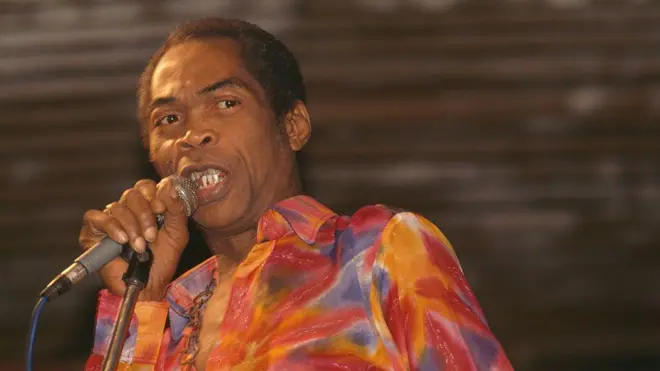
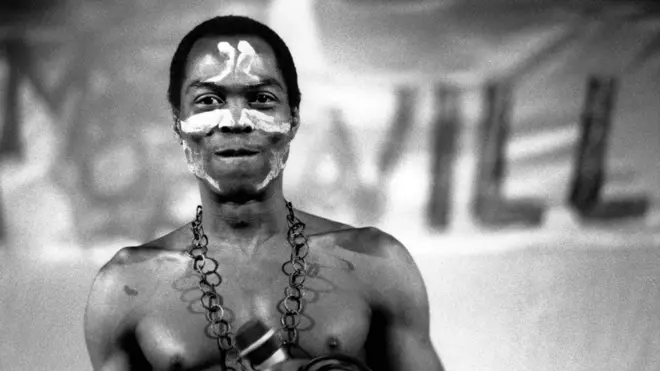
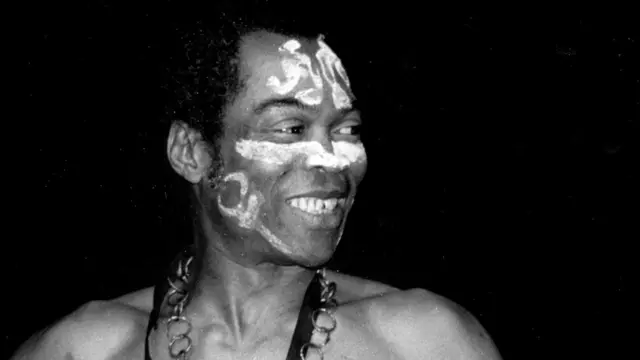
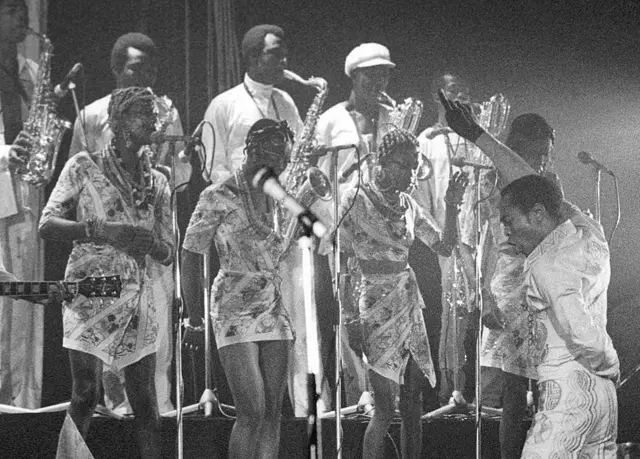
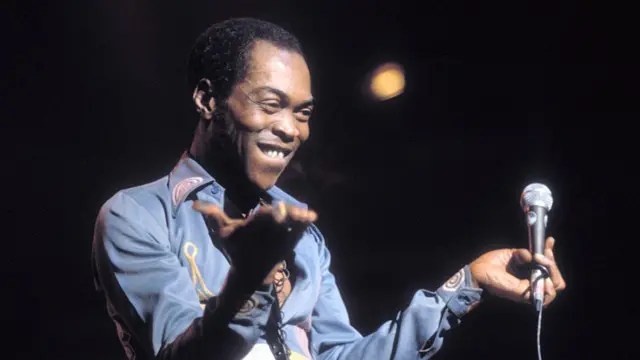
On stage, Fela Kuti na unmistakable figure. E dey mostly in bare-chested or wear di wax-printed fabric wey dey popular for West Africa, im hair dey shape into crisp Afro, saxophone for hand, eyes dey shine wit energy, and e dey lead ova 20 musicians for im band.
Im performance for Afrika Shrine for Lagos na legendary, part concert, part political rally, part spiritual ceremony.
Stein tok say di performance for Shrine dey immersive rather dan conventional.
'Wen Fela play, nobody dey clap,' e tell BBC. 'Di crowd no dey dey separate. Dem be part of am.'
Music no dey spectacle. Na communion.
Wia dis foto come from, Redferns/Getty Images
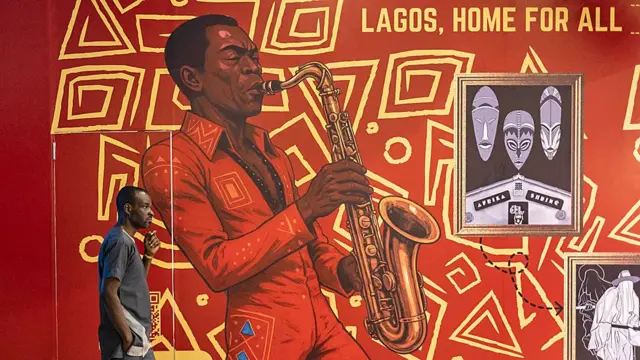
Fela Kuti visual identity dey shaped in part by artist and designer Lemi Ghariokwu, wey create 26 of im album covers between1974 and1993.
"Fela na ancestor for 28 years. Im legacy dey grow by di day. Na immortality," Ghariokwu tell BBC as dem give Fela posthumous award.
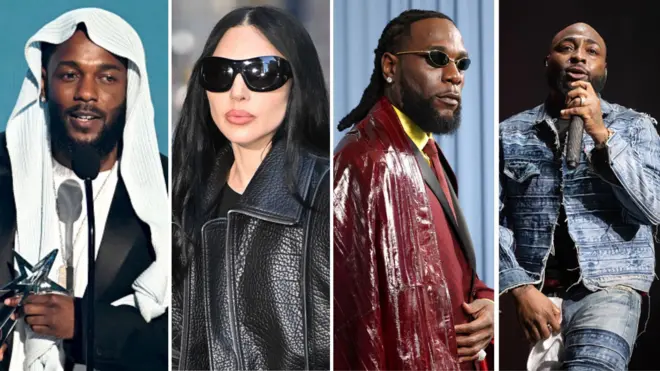
Today, Fela Kuti music still dey popular wit millions around di world, and e dey influence dey audible among modern artists, like Burna Boy, Kendrick Lamar and Sir Idris Elba.
Elba na big fan - di award-winning actor and DJ don gada official vinyl box set, Fela Kuti Box Set 6, and e don compare am to big names like Sade and Frank Sinatra to show say Fela Kuti get im own unique sound.
Fela Kuti don perform for major international festivals for Europe and North America, wey don introduce world audience to modern Africa.
I didn't even realise my dad was famous. That's credit to him. He kept me grounded"
Seun Kuti na just 14 wen im papa die.
"Fela no ever make me feel like say I be pikin," e tok.
"E no hide anytin from me. E tok about everytin openly."
No myth dey ground.
"I no even sabi say my papa dey famous," e tok.
"Na credit to am. E make sure say I dey grounded."
Wetin stay wit am di most no be show off, but discipline, clarity and humanity.
"Di human part of am, leadership, musicianship, fatherhood, na dat be di epitome of who e truly be."
One of Seun Kuti's most revealing thoughts, e dey tok about independence and identity.
"Fela na our dad, but you no fit own am. Fela belong to imself. But we all dey belong to am."
Fela Kuti insist make pipo call am by im name, no by title, even im children. Seun remember wen dem chop im pocket money becos im call am "Pops", dat one teach am lesson to respect.
"E dey always remind us say im dey serve pipo wey pass am."
Dat ethics change Seun evolution from youthful ambition to cultural responsibility.
"I dey make music to collect money bifor. But as I don grow, I dey more learn more about working for my pipo and my art."
Fela Kuti dey lead many bands, most popular na Africa 70 and later Egypt 80, di last one wey im son dey carry forward.
Dem no be conventional backing bands.Dem be musical militias, trained discipline, endurance, and ideological purpose.
Stein remember Fela Kuti serious attention to detail. "E dey tune every instrument personally. Music no be entertainment to am. Na im mission."