'I dey make deadi body look good'
Wia dis foto come from, Richard Kennady
- Author, Pramila Krishnan
- Role, BBC World Service
Warning: Dis tori contain foto of deadi body dem
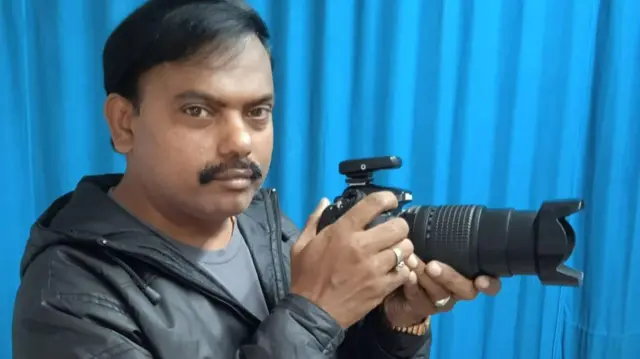
"My job na to put di deadi body on top chair and make am sit straight," Ravindran tok about im first day for work.
"I gatz lift di eyelids to enable di photographer take picture."
Im bin just 14 in 1972, wen im father Srinivasan wey dey run a fotographic studio, despatch him for one assignment.
Richard Kennady bin get similar unnerving experience wen im bin dey just nine. Dem ask am make e hold a white cloth as a screen behind di chair wia di dead pesin bin dey sidon.
"I fear and I dey shake. Dat night I no fit sleep at all," im tell di BBC. "For many nights I get recurring nightmare wia di dead pesin appear. E dey very dreadful."
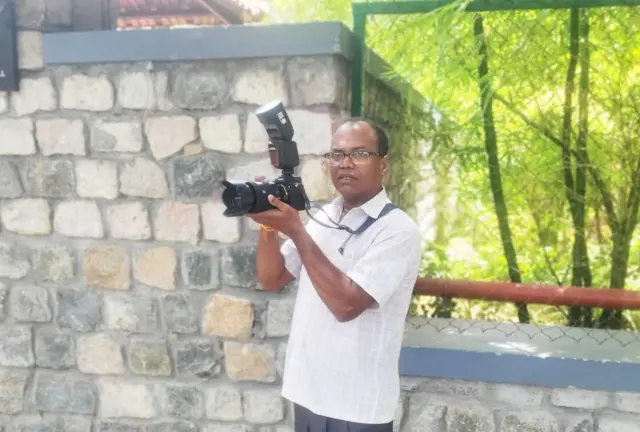
Both men bin get into photography sake of say dia fathers get studios. Between dem, dey don take fotos of over 1,000 deadi pipo.
Dem dey among di reducing number of photographers wey specialise for fotos of di dead pipo for di south of Indian state of Tamil Nadu.
Dem tok to di BBC about dia unusual, unsettling work, wey dey pay well well in di 1970s and 1980s.
Battling fear
Until a few decades ago, many communities for Tamil Nadu bin harbour one belief say to take foto go reduce pesin lifespan. Dis mean say many pipo get dia first fotograph wen dey don died.
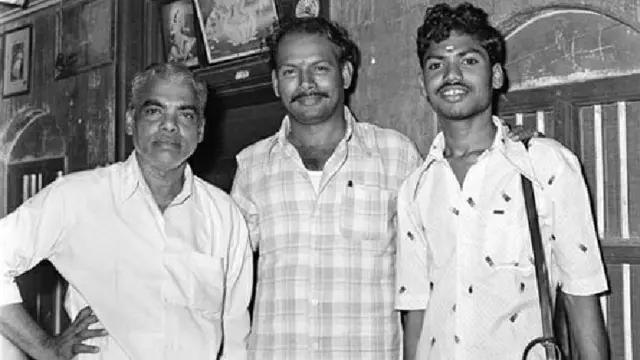
Wia dis foto come from, Ravindran
Ravindran come from Karaikudi, wey dey 400km south of di state capital Chennai. For a teenager, no be sweet work, but im wan drop out of school and na wetin im get as excuse be dis.
"Afta some months of training, I bin go alone to take fotos of dead pipo," e tok.
Ravindran bin gradually develop im expertise, using pillow to support di neck of deadi body wey sidon make e stop di head from bending, im go adjust di clothes and change di background.
"I battle my fear and begin dey like my job. I make deadi body dem look good and real for fotos."
Heart-breaking subjects
Richard even get earlier start. Im go follow im papa go work for Yercaud hills, wey dey about 350km west of Chennai.
Im most difficult experience bin involve to snap one newborn baby wey don die.
''Di parents dey devastated. Di mother dey cry inconsolably."
Afta di arrival of di photographer di mother baff and dress di baby inside a new gown and apply some make-up.
"Di baby be like a doll," Richard bin remember. "Di mother place di baby for her lap and I take di foto. E look as if di baby dey sleep."
"Dat one dey very emotional."
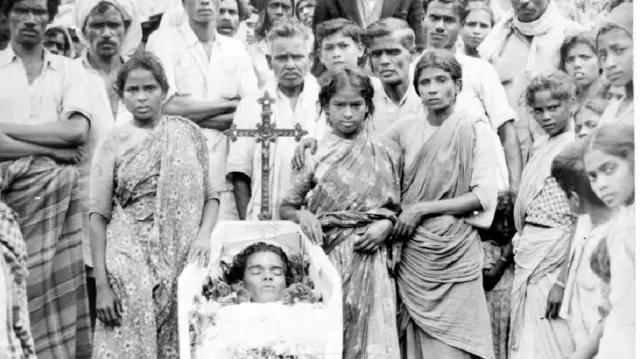
Wia dis foto come from, Richard Kennady
Dem also snap intimate ceremonies like washing di bodi and di decoration wit flowers. While some families dey happy to take one or two fotos, odas dey more demanding.
"I even go di burial ground to capture di moment wen dem dey put di body for ground," Ravindran recall.
Photographers get little time and im gatz develop and print di foto overnight becos families wey dey mourn dia deadi pesin sometimes need framed photograph of di dead for dia rituals for di next day.
Both Ravindran and Richard dey use cameras wey no too dey modern. Na black and white cameras, but dem still do dia job.
Dia customers belong to Hindu and Christian families and some families dey kontinu to keep di framed photographs of di dead for dia prayer rooms.
Ravindran recall snapping only two Muslim men afta death, while Richard no get such experience.
Nightmares
Richard also work for di police department.
Im gatz take pictures of unnatural deaths - victims of crime, suicides and road accidents - many times e gatz shoot for deadi bodi wey dem no package well.
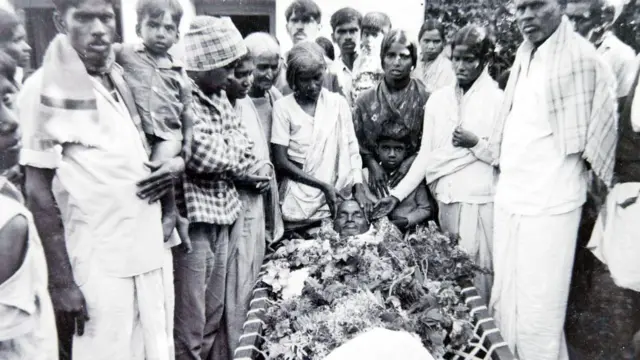
Wia dis foto come from, Richard Kennady
"E dey very disturbing. Sometimes I no fit eat or sleep."
Dem dey use di fotos as evidence for court and help families to get compensation.
Di pay for dis kain work dey good for di photographers: dey fit charge double dia typical fee to take pictures of deadi body dem. Dey also get generous tips from relatives, but e also get stigma for dis kain work.
"Many customers dey reluctant to engage me for any oda jobs," Richard say.
Ravindran Hindu family treat any places wey dey associated wit death as impure, so im gatz undergo mandatory cleansing bifor e go fit enta im house or studio.
"I gatz baff evri time. My dad go even sprinkle some water over my camera bifor I fit take am go inside di studio."
Widespread practice
For di past, di practice to dey take fotos aftA death dey very prevalent for many kontris.
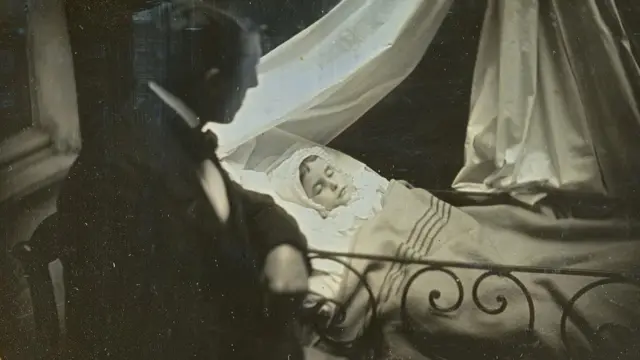
Wia dis foto come from, Heritage Art/Getty
In di mid-nineteenth Century, many families wey dey mourn bin pose wit dia dead children and oda relatives.
To take foto of a deadi body na comforting way for families to remember dia loved ones wey don die for an era wen fotos dey expensive and many pipo no get any pictures of demsef wen dem dey alive.
For di US, na inside homes dem dey take fotos, and dem go place di deadi body on top a block of ice.
Post-mortem fotos dey very important to family members wey no fit travel for di funeral or arrive quick quick.
Portrait of death also dey popular for Victorian Britain.
For cities wey battle disease like measles, diphtheria, scarlet fever, rubella - all of which wey fit dey fatal - death fit come at any time and many pipo fit no get any fotograph wey dem take during dia short lifetime.
A post-mortem foto na sometimes di last chance to get permanent likeness of a beloved child.
Wia dis foto come from, Ravindran
But di practice bin fade away in most part of di world for di 20th Century - as healthcare improve life expectancy - although e dey last longer for Tamil Nadu and oda Indian states such as West Bengal and Odisha as well as for di holy city of Varanasi.
Richard see diz images as one logical extension of earlier portrait wey dey for paintings.
"Bifor di advent of fotography, big landlords dey commission artists to draw dia portraits."
"Photography na like an extension of dat practice wey dey to preserve di memory. Only di rich fit afford to commission a portrait, but photography dey affordable even by di poor," e add.
Approaching di end
But in di late 1980s, cheaper cameras wey anyone fit use don flood di market and di fear to dey appear for fotos begin dey vanish.
Wia dis foto come from, Richard Kennady
"Many go buy small cameras and start dey click fotos," Richard explain.
Wit plenti demand for im services, im switch to cover church events and festivals to add to im income.
Ravindran concentrate on school events and public functions. Im eventually become wedding fotographer.
Im dey for im sixties, e dey thankful to di deadi pipo wey helep am to learn di trade - and overcome im fear of death - but e no want make di practice kontinu wen im time come.
"I no want make anyone take foto of me after my death," im tok categorically.
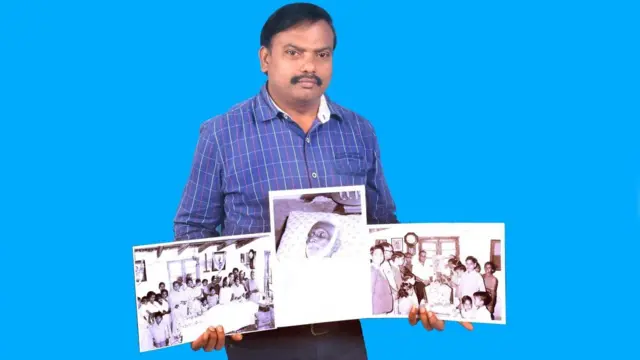
Richard take foto of im grandfather afta e die and im get fotos of three generations of im ancestors. Unlike Ravindran, di 54-year-old still keep a huge collection of fotos of di dead.
"Our family always preserve di fotos of our ancestors. I tell my youngest son say make e take foto after my death and make dat foto dey part of di family heritage."