Lunar New Year: How millions take welcome di Year of the Snake
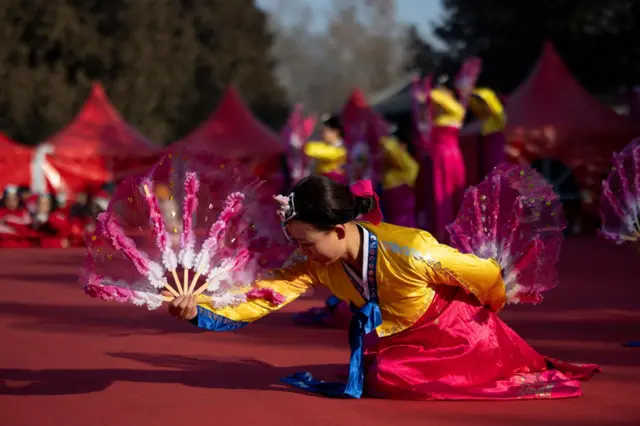
Wia dis foto come from, Andres Martinex Casares/EPA-EFE
Millions of pipo across Asia and di world dey celebrate di Lunar New Year wey dey happun during di first new moon of di lunar calendar.
Na one important event in di year for many in Asia and some Asian communities worldwide, di Lunar New Year represent new start for pipo wey dey celebrate.
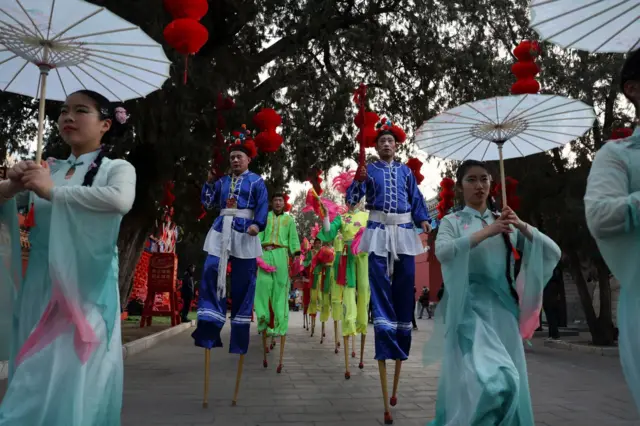
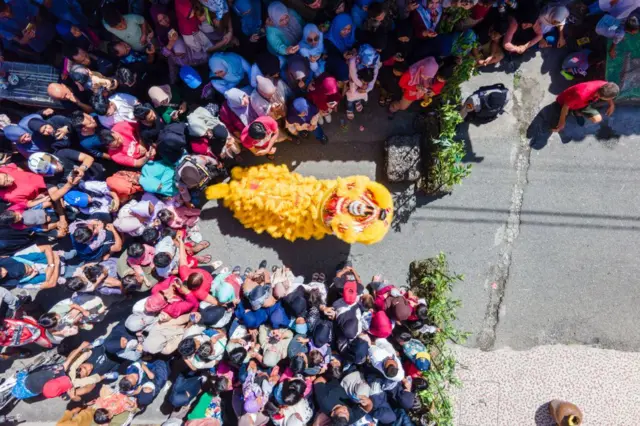
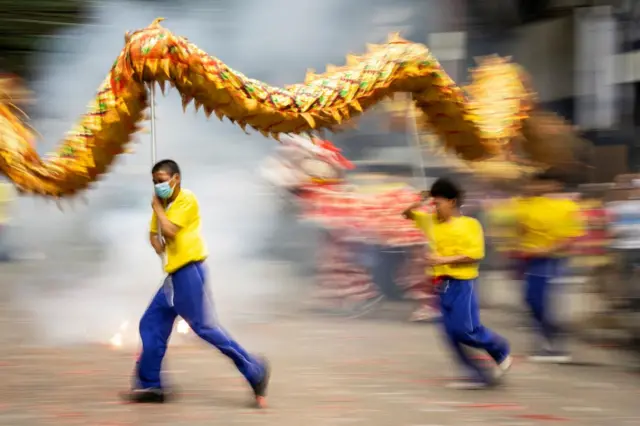
Fireworks, music, fairs, lanterns, dragon and lion dancing dey happun for streets across Asia as celebrations dey last for 15 days.
Di year of di snake dey here
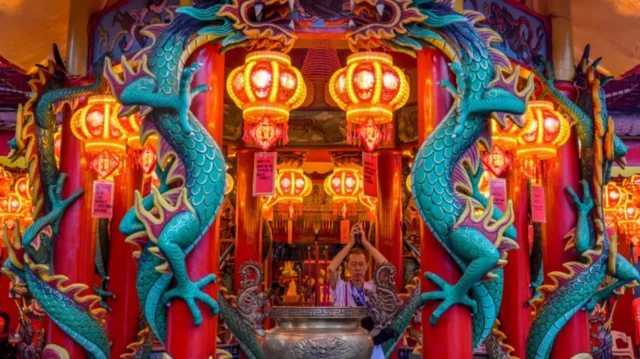
Wia dis foto come from, Getty Images
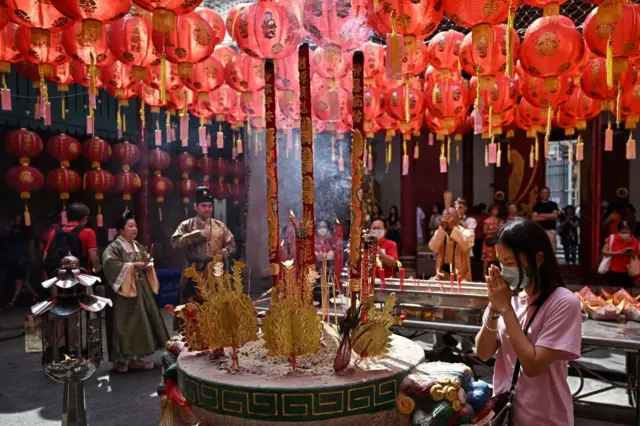
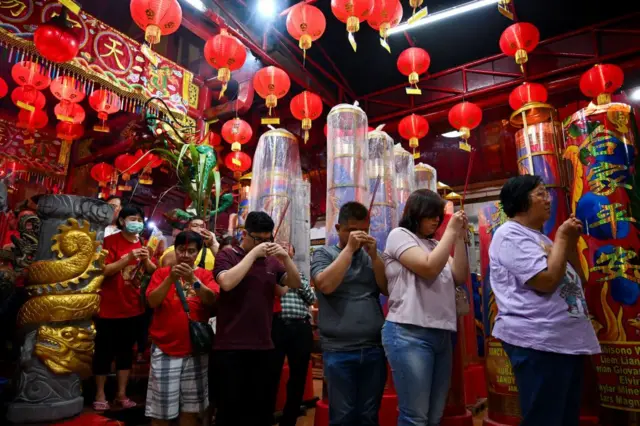
Millions across Asia and di world dey welcome di Year of di Snake wit family, friends, prayers and plenty of food.
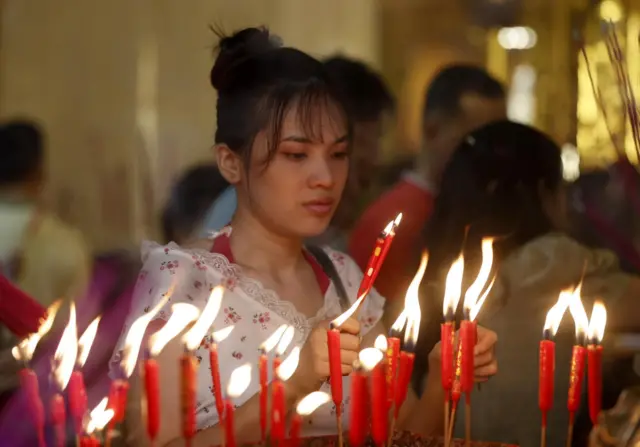
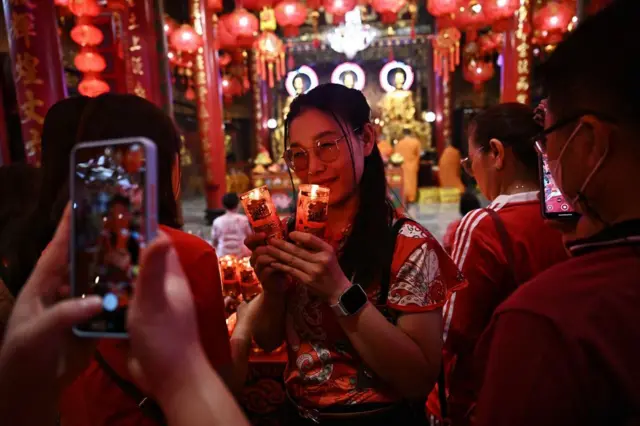
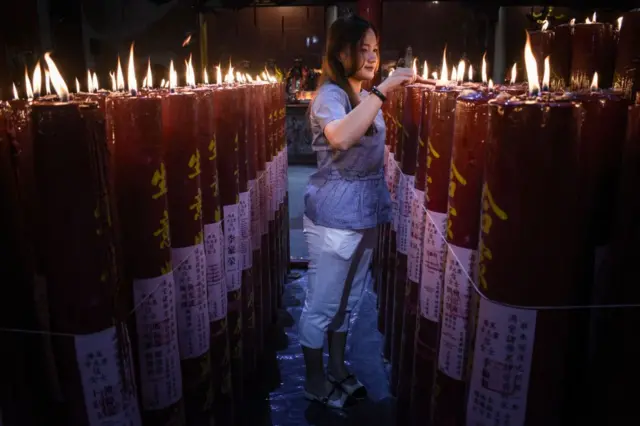
Di Colourful scenes dey play out - dragon dances, offerings of prayers and incense sticks and revelers in dia best red shirts and dresses
Na public holiday for many wey wan celebrate and many don travel ahead of di festivities to reunite wit family.
Gifts, reunions wit friends and family, and plenty of food - dumplings, rice cakes, mandarin oranges and many more go dey. Na dat time again, wen millions around di world welcome di start of di Lunar New Year.
Lunar New Year na busy travelling season for pipo wey no wan celebrate. Estimate of nine billion pipo go travel across China dis year - dis na di world biggest annual mass migration.
Di 40-day travel period, wey pipo sabi as Chunyun, na di one time in China wey pipo dey travel home to see dia family. Even though Chinese New Year dey start on 29 January, many dey comot from dia hometowns as early as 14 January, hoping to avoid di traffic jams and chaos wey dey happun every year.
In South Korea, ova two million passengers go pass through di kontri airports ova a nine-day holiday period, wey dey longer dan di usual three days.
While in di past pipo go return to dia hometowns for family gatherings, more South Koreans dey travel overseas.
Wia dis foto come from, Florence Lo/Reuters
How di Chinese dey chose animals for di Chinese zodiac?
Wia dis foto come from, Lillian Suwanrumpha/AFP
Many several versions of di legend behind di Chinese zodiac dey, but dem take similar forms. Dis na di story:
Di heavenly ruler, wey dem sabi as Jade Emperor, organise animal race for im birthday to decide how dem go name di year.
As di race start, di main hurdle dey obvious: river wit ogbonge currents.
Di Rat, wey no fit swim, ask di Ox if e fit ride across di river. Di kind Ox obey, but as dem approach di end point of di sea, di Rat jump ahead of di Ox and run across di finish line, coming in first place. Di Ox become second.
Di Tiger come in third and di Rabbit, wey jump on stones and float to di end of di sea on log, come fourth.
Di Dragon, wey delay becos e stop to help some villagers along di way, carry fifth place.
Shortly afta, di Horse cross di finish line. But Snake appear from di Horse hoof, wia e dey hide. Di Horse shock and di Snake become sixth place. Di Horse get seventh.
Di Goat, Monkey and Rooster work togeda to cross di river, coming in eighth, ninth and 10th.
In 11th na Dog, wey dey distracted as e dey play in di river water.
Lunar New Year or Chinese New Year?
Na several ethnic communities across di world dey celebrate di festival, wia pipo sabi am as Chunjie (Chinese), Seollal (Korean) and Tet (Vietnamese), among oda names. In English, dem dey refer am to Lunar New Year, afta di lunisolar calendar wey dis communities dey traditionally follow.
But one online campaign to call am Chinese New Year, by some Chinese dey. Dem dey argue say di festival, and many of dia traditions, originate from China and wen dem call am something else e dey disrespect di cultural roots. "Di [erasure] of 'Chinese' from di festival name go diminish di cultural importance, "one campaigner, for Xiaohongshu tok.
In turn, odas don argue say Chinese New Year no be neutral term and e dey disrespectful to Koreans, Vietnamese, and oda communities wey dey celebrate di festival.
Both side dey accuse each oda of "cultural appropriation".
More fotos from di celebration
Wia dis foto come from, Nyein Chan Naing/EPA-EFE
Wia dis foto come from, Lillian Suwanrumpha/AFP
Wia dis foto come from, Juni Jriswanto/AFP
Wia dis foto come from, Chaideer Mahyuddin/AFP
Wia dis foto come from, Eloisa Lopez/Reuters
Wia dis foto come from, Timur Matahari/AFP
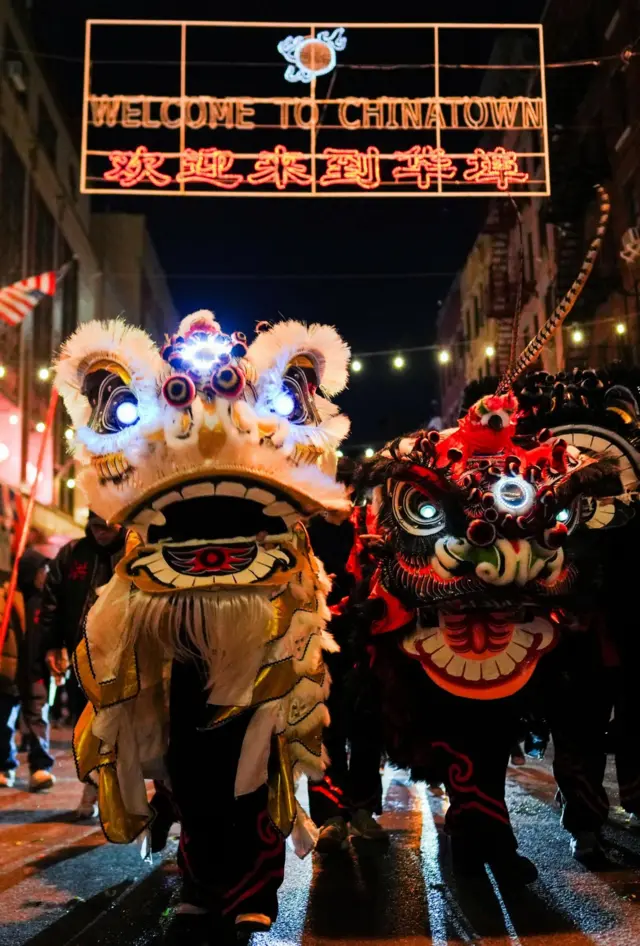
Wia dis foto come from, Adam Gray/Reuters
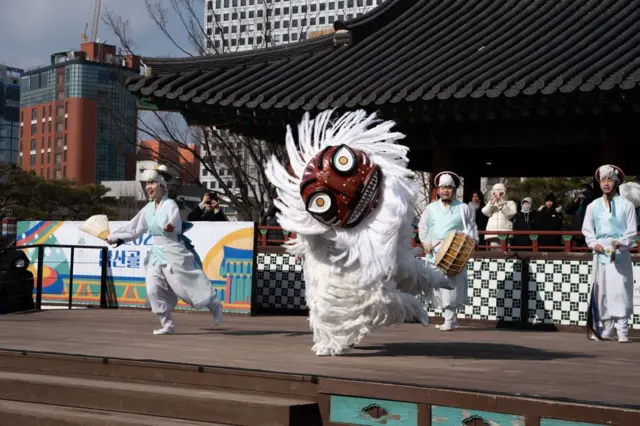
Wia dis foto come from, Hwawon Ceci Lee/Anadolu via Getty Images
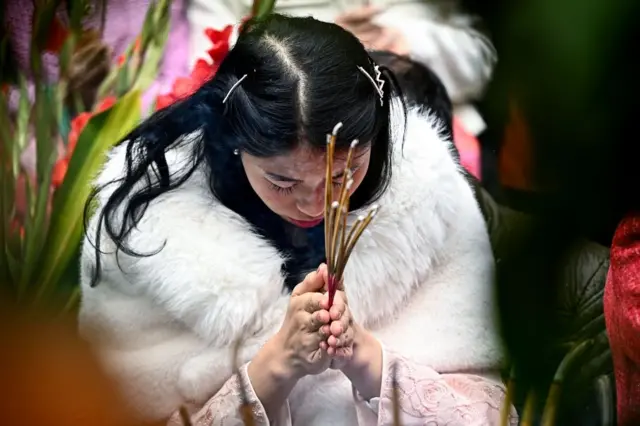
Wia dis foto come from, Nhac Nguyen/AFP