Why Nostradamus prophecies still dey popular
Wia dis foto come from, Getty Images
- Author, Global Disinformation Unit
- Role, BBC World Service
- Published
- Read am in 4 mins
After di death of Pope Francis, online search for di 16th Century French astrologer Nostradamus bin rise. Dis no be di first time im prophecies don come out during major world events. Why e be say interest still dey for dis soothsayer today?
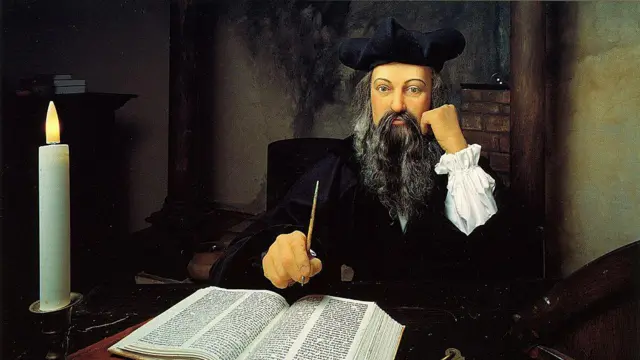
Michel de Notredame, known as Nostradamus, na French physician wey bin treat plague victims. E also be amateur astrologer wey write Les Prophéties, wey dem publish for 1555. E feature 942 cryptic quatrains (four-line poems) wey e claim say dey foretell di future, often about catastrophic events.
Frequently described as vague and lacking context, one of dis poems wey dem translate refer to di "death of a very old Pontiff", wey some social media posts and online articles bin link am to di death of Pope Francis.
However, dozens of popes don die since 1555, so e no dey clear why dis one go relate to Pope Francis.
Wia dis foto come from, Getty Images
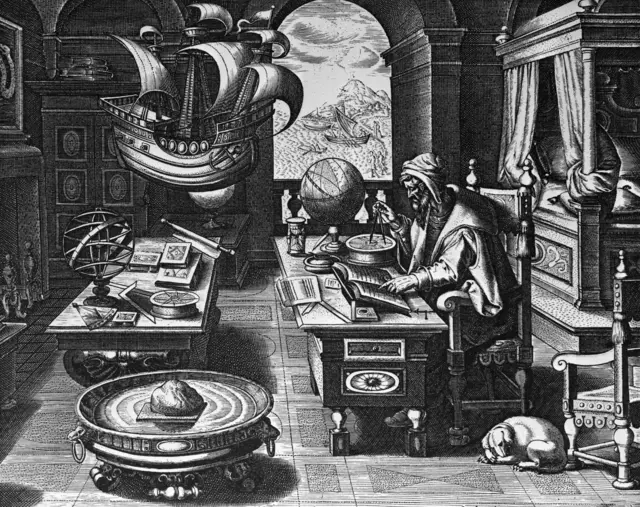
Astrology - a practice without scientific backing wey claim say di stars fit influence human events - bin dey popular in di 16th Century.
Astrological boutiques pop up evriwia, with practitioners wey dey offer advice on evritin from careers to relationships and health.
Among dem na Nostradamus, wey bin dey run a popular astrology service, and interpret horoscopes for di rich and powerful.
However, e no get formal training in astrology, wey be academic discipline at dat time, and some of im contemporaries dismiss am as a charlatan. Despite dis, im short cryptic poems bin be big hit with di public at di time and become bestsellers.
Di 16th Century bin be a pretty miserable period for most Europeans, wey bin dey face wars, crop failures and famine, while plague bin dey worry many cities.
Inside such chaos, Nostradamus prophecies offer both a warning and a strange sense of comfort.
"Collective anxiety bin dey high," na so Dr Michelle Pfeffer, a historian of science and religion at Magdalen College, University of Oxford tok.
"In times of great uncertainty like dis, pipo dey find answers, dem dey look for guidance, and dem dey look for reassurance say a greater plan dey in place."
Like pipo today wey fit turn to horoscopes, followers of Nostradamus at di time find im work as a way to make sense of a troublesome world and a sense say change dey come.
Hundreds of years later, im supporters claim say im bin don predict many historical events, including both world wars, di nuclear bombings of Hiroshima and Nagasaki, di rise of Hitler and di outbreak of Covid-19, despite say im no ever name all dis events.
Nostradamus prophecies dey written in "extremely obscure terms wey fit any conditions", na so Joëlle Rollo-Koster, a professor of medieval history for di University of Rhode Island tok. "Wen you dey obscure, ambiguous, and dey vague enough, anybodi fit find a match."
Yet despite all dis, im name and prophecies don endure for public imagination.
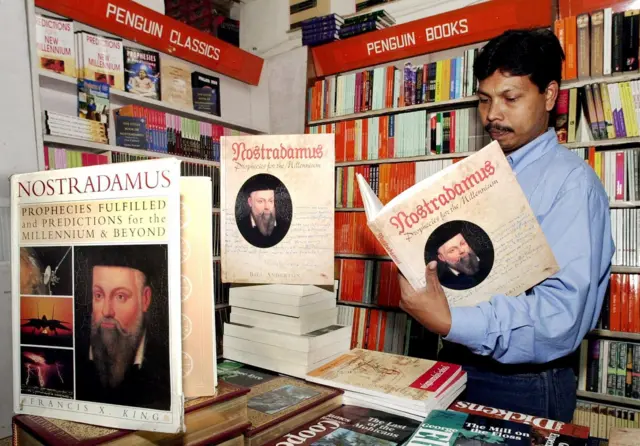
In addition to di timeless quality of many of im predictions - becos only a few get specific dates - books wey dey interpret Nostradamus writings don sell-out in big quantities. E get more dan 100 different titles in English alone.
New publications wey dey interpret im prophecies to match global news events help to secure im position for di public consciousness in di 20th Century.
Following di September 11 attacks, Nostradamus books shoot up for bestseller lists as im followers bin link im prophecies to di attacks.
Di New York Times report say a viral email after di attacks bin combine pieces of different passages from Nostradamus and words wey no even be im own to create a provocative text wey suggest say im bin don foretell wetin go happen. Di text bin include di words: "Fire dey approach di great new city/ In di city of York, dia go be a great collapse."
Oda events supporters don claim say im predictions include na di Apollo Moon landing, di Challenger space shuttle disaster and even Queen Elizabeth II death.
Today, e dey likely say most pipo no dey look into di original texts, but dem dey come across am for online articles or social media memes.
Wia dis foto come from, Getty Images
Oda prophecies about di papacy don dey resurface online again.
Di prophecy of di Popes, attributed to a St Malachy, be sometin wey some pipo don dey read to suggest say Pope Francis fit be di last ever pontiff. Scholars don question di true origins of dis text and say e dey created for political reasons.
"Prophecy dey interesting and fascinating and some pipo dey like dis kain ideas wey dey outside di mainstream. Na part of who we be," na so Joseph Uscinski, a professor of political science for di University of Miami tok.
"Sometimes, entertainment dey drive pipo towards beliefs, sometimes to just adopt ideas wey dey comfortable or comforting."
For an era wey bin dey marked by uncertainty, no be surprise say Nostradamus and oda prophecies still remain popular, na so experts tok.
"In troubled times astrology and divination [wey seek to foresee or foretell future events or discover hidden knowledge] dey get big appeal," Dr Pfeffer tok.
"Humans no always dey good to dey deal with uncertainty, and astrologers and prophets don dey valued throughout history becos dem fit help pipo to make tough decisions, but dem fit also comfort pipo by suggesting say a bigger plan dey play out."