Afghanistan's female TV presenters don begin cover dia faces
Wia dis foto come from, Getty Images
- Author, Joseph Lee
- Role, BBC News
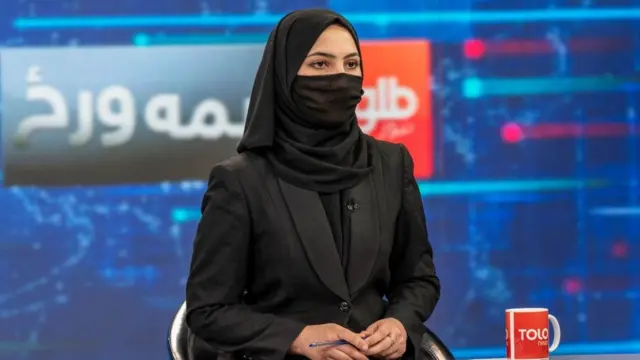
Women presenters and reporters on TV channels in Afghanistan go on air wit dia faces covered on Sunday, in line wit Taliban order.
Di day before, some of dem bin defy di edict and keep dia faces visible.
One presenter say women wey dey work in TV don resist but dia employers bin come under pressure.
After dem seize power last year, di Taliban bin don increasingly imposed restrictions on women's lives for recent weeks.
Wearing hijabs and face-covering veils, women bin present and report on news bulletins and oda programmes across popular channels such as TOLO news, Ariana Television, Shamshad TV and 1TV.
TOLOnews presenter Farida Sial tell di BBC say: "E dey OK say we be Muslims, we dey wear hijab, we hide our hair, but e dey very difficult for a presenter to cover dia face for two or three hours consecutively and tok like dat."
She say she wan make di international community put pressure on di Taliban to reverse di edict.
"Dey wan erase women from social and political life," she tok.
End of Di one wey oda users dey read well well
Earlier di Taliban's Ministry for di Prevention of Vice and the Promotion of Virtue order say all women must wear a face veil for public, or risk punishment - wey dem extend to TV presenters from Saturday.
After some women initially bin refuse to comply, a Taliban official say dem go tok di managers and guardians of di presenters, wey face di prospect of being penalised.
Sonia Niazi, a presenter wit TOLOnews, tell di AFP news agency: "We resist and dey against wearing a mask."
But she say dem pressure di channel and tell say di female presenters must be moved to oda jobs or sacked if dem no gree.
Khpolwak Sapai, di channel's deputy director, say inside one post Facebook "We dey in deep grief today."

Another female Afghan journalist, wey asked to be anonymous, tell di BBC: "Today be another black day for di women of my kontri."
And a senior TV executive say many female presenters fear di next stage go be to take dem off air completely.
Most Muslims around di world no consider women covering dia faces for public to be a mandatory part of di religion, and di Taliban first appeared to be adopting a more flexible approach after dem seize control of di country in August last year.
But in recent weeks, dem don imposed series of restrictions on women's lives, wey include assigning separate days for dem to visit public parks and barring dem from making longer journeys without a male guardian.