BBC v BuzzFeed - which platform will win the election?

David Hayward
is a video consultant. Twitter: @david_hbm
It’s a question that could symbolise the battle between the old and the new: the traditional newspapers and broadcasters and the new kids on the block. And this was the focus of one of the more lively debates at the #Polis2015 international journalism conference.
This year’s general election is set to witness the first fully digital election campaign. It is of course wider than the two organisations highlighted here. As the chair Alastair Stewart put it: “It’s about mainstream versus social media.”
The #Polis2015 panel reflected this with representatives from the big beasts and the brave new world: BBC Today editor Jamie Angus; Chris Birkett, director of the Digital Debate Campaign; Times political correspondent Lucy Fisher; Buzzfeed UK’s deputy editor Jim Waterson; and Helen Lewis, deputy editor of the New Statesman.
The Today man kicked off with some impressive statistics. The day before the discussion the BBC News website recorded its highest number of unique users: an impressive 23 million in one day.
He admitted a large part of this could be the result of Zayn Malik leaving One Direction and the tragic crash of the Germanwings aircraft in the French Alps. It does however illustrate the amount of traffic coming to the BBC.
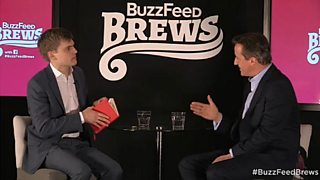
He contrasted this with the 10,000 people who watched Jim Waterson’s BuzzFeed Brews interview with the prime minister on 16 March (pictured top). In the numbers game it appears the BBC still wins. Round one to the old guard. Or was it?
Waterson hit straight back, saying BuzzFeed has had more than 23 million unique users in one day, several times.
He also argued that his Cameron interview should not be seen as a one-off event. What mattered was the number of people who engaged with the story in total. The interview was reversioned and shared across all platforms and social media, reaching a far wider audience than those who watched the live-stream. That’s a very different event to the traditional BBC interview - a new way of treating political reporting.
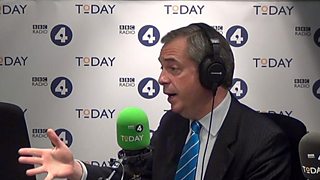
Helen Lewis entered the fray claiming the numbers game was irrelevant: you’re not comparing like with like. BuzzFeed makes news accessible to a whole new audience. It builds a base on entertainment and puts news on top. It does however have a credibility problem. People love its great viral content but it’s not trusted in the same agenda-setting way as the ‘8.10 interview’ on the Today programme (where UKIP’s Nigel Farage, below, recently faced an election grilling from presenter Mishal Husain).
New school gets to new people - but is not trusted in the same way as the old school.
Lucy Fisher argued for the power and importance of the pure journalism carried out by her and her colleagues at the Times and the quality press. They will do the digging and get the old-fashioned exclusive stories. People want curation as opposed to the white noise of Twitter.
Jim Waterson countered that BuzzFeed is investing heavily in quality journalism. It has reporters in Syria and Iraq and is recruiting foreign correspondents. In the past couple of months it has hired high-profile and respected journalists including the former Sunday Times assistant editor Heidi Blake.
This is essential to its business model, as Waterson explains: “You can get 38 million hits for putting a dress on the front page and asking people what colour it is, but you don’t get the advertisers. They will only go to organisations with credibility.”
Chris Birkett represents an interesting place. Five years ago he helped to change the political campaign through his involvement in the leaders’ debate. This year he hopes to change it again by securing a digital leaders’ debate streamed live on social media.
He also argued against it being a numbers game: it’s about setting the agenda. The leaders’ debate did that in 2010, followed by the notorious ‘bigoted woman’ story. There will no doubt be a social media moment that defines this election campaign. We don’t know what it is yet, but it will happen.
His view was that we won’t be able to tell which platform has won until the turnout is calculated. If there is a noticeable increase in the younger vote then new media and BuzzFeed will be the victors. If this does happen then democracy will also win. On this the whole panel agreed.
We are of course not talking about a clear fight between the new and old; social media and the mainstream. Both sides have been influenced by each other and they freely admit this.
The Today progamme has had to adapt the way it engages with the audience; social media is an essential part of all news operations. The BBC and the traditional media are not investing in digital as an obligation. It’s because platforms are changing and they need to do this to survive.
The influence of BuzzFeed has been to force the mainstream media to sharpen its storytelling and newsgathering techniques.
The two sides are different, but what they have done is force an entirely new engagement with politics - and with this election. The Times, New Statesman and the BBC appeal to a very different audience than BuzzFeed and Vice News. This is very important because if their reporting of the campaign is successful this could be the most significant of a generation. Making politics engaging and appealing to a younger audience can only be good for the democratic process.
So the #Polis2015 panellists’ single prediction for the election campaign:
- Jim Waterson: This is the election that the population will hate political journalists
- Helen Lewis: There will be a huge amount of anti-media, anti-London sentiment
- Jamie Angus: There will be many social media stories like the Emily Thornberry white van moment
- Lucy Fisher: This is about 650 by-elections, not the national picture
Chris Birkett just hoped it would be the last election where he had to sit across the table from political parties trying to negotiate a leaders’ debate.
This election will be complex, simple, social. So how do we cover it?
#GE2015: Polling has never been nearly this social
Election terminology explained, because we don’t all speak ‘Westminster’
Election explainers to make your campaign coverage go with a swing
