How BBC Sport played a blinder to grow Facebook referrals by a whopping 6,000%

Chris Hurst
is digital development editor, BBC Sport
It’s almost two years since BBC Sport appointed its first dedicated social media team as part of our response to changing audience behaviour, especially among the young. Since then the way we have used social media across our multiplatform coverage has rapidly evolved.
Be it the depth and breadth of our social accounts for sport, the way we curate and create content to strengthen our journalism, or how we integrate social media into our live event and broadcast coverage, we are delivering more effectively than ever before on social media.
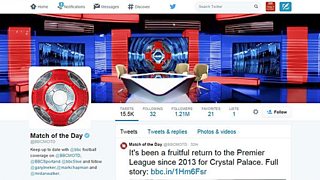
During this time some of BBC Sport’s biggest social media accounts have enjoyed significant growth, with @BBCSport growing from 1 million to more than 3.4 million followers on Twitter and the @BBCMOTD fan base (below) increasing by almost 300%.
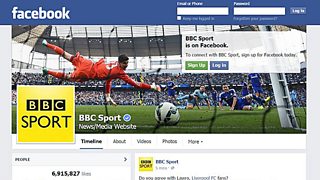
However it’s on Facebook where we have seen the most significant increase. Back in May 2013 the BBC Sport Facebook page had 150,000 fans. Today it’s almost 7 million - the largest of any UK sports broadcaster. The BBC Match of the Day account is close to reaching 3 million.
This growth in audience reach is important, particularly when we are attracting a demographic the BBC generally finds it harder to reach, with 60% of fans on the BBC Sport Facebook page aged 24 or under. However, one of the biggest challenges was engagement and how we could encourage these younger audiences to come from social media to the BBC website.
After the football World Cup we carried out some research which reinforced our belief that we needed to make our accounts more fun and engaging. Our target audience wanted the Match of the Day account, for example, to be ‘knowledgeable’, ‘cheeky’, ‘irreverent’ (hardly surprising given that the page audience is predominantly from the UK, under-24 and male, with Facebook connection analysis suggesting they’re likely to enjoy light-hearted entertainment pages).
So during the past few months we’ve gradually been evolving our content strategy on the page: looking at how often we post, the type of content we post at different times of day, and the style in which we post.
We’ve also attaching more importance to interactivity through the use of regular Q&A sessions with our football pundits and replying to fans more than ever before.
Through more effective use of our social media team, careful use of analytics, but with no extra resources, we have seen a dramatic increase in engagement and social media referrals.
Comparing September 2014 with January 2015, there has been an increase in referrals in excess of 6,000% from the Match of the Day Facebook page to the BBC Sport website.
Some interesting trends are also emerging around what’s driving this surge in referrals:
- The top 10 referral posts in December averaged 6.2 words per caption in our link posts
- In January, five out of our top 12 referrals posts had a quote in the caption
- The time of day when individual posts generated the highest number of referrals was 11pm-midnight.
It was also interesting to see that the content behind the greatest number of referrals wasn’t always related to the Premier League. It was actually in relation to the fun and fascinating stories that emerge in the lower leagues and across the world.
This has allowed the BBC to showcase our range of football journalism to a new and younger audience, and also fulfil our public service remit to serve a younger audience better - be that showcasing quality journalism from the likes of BBC sports editor Dan Roan, our coverage of women’s sport or driving public participation through the work of Get Inspired.
During this time we were also working with the Football Association, as part of our promotion of the FA Cup, to embed very select action clips on to Facebook. These have proved to be a huge hit, driving millions and millions of video views.
As a result, in January, to coincide with our third and fourth round coverage, we were able to achieve our highest ever reach and engagement levels on the Match of the Day page. At the same time, we had our highest number of social referrals back to the website - a dream scenario for any social media editor and fantastic promotion for the FA Cup.
Through reaching these new audiences via social media, we also finally smashed our London 2012 Olympics record for the BBC Sport website. On the day of the Australian Open men’s final, we had a new record 10.6 million global browsers in a single day.
The specifics of individual Facebook pages and the ever-evolving Facebook algorithm mean some of these lessons on what drives referrals may not be relevant for all pages - or even our own accounts in a few months’ time. But the principles of having a clear strategy, objectives and tactics for your page are certainly applicable to all social media managers, whatever your genre.
The importance of studying your analytics on a daily basis cannot be overstated. But I’d say there’s also merit in being prepared to take some calculated risks, based on good intuition, in changing your editorial offering on social media.
Engaging social media audiences
How to use web analytics tools
Our section on digital journalism
Our section on sports journalism
Read some of our other blogs by social media experts:
