Joining methods
There are many different joining methods for fixing metal in place. Non-permanent methods include nuts and bolts, screws and A metal plug used to hold sheet material together. They expand when the central plug is pulled upwards through the body of the rivet.. Whilst many would consider a rivet a permanent method of joining, it is possible to drill out an old rivet so that a new one can be used.
Permanent methods of joining metals are listed in the table below:
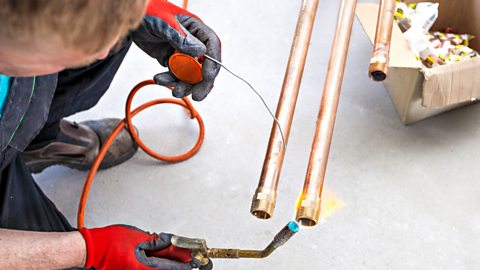
| Soft soldering | Used to solder printed circuit boards (PCBs) and electronic components. Plumbing application where copper pipes are joined together. |
| Brazing | Used for joining steel by melting a brass rod on the hot steel. As the brass melts, it forms a joint. Brazing is a slow and safe way to learn about joining metal with heat. |
| Gas welding/Oxyacetylene welding | Oxygen and acetylene are used to produce a flame with a temperature of over 3,000°C. A filler rod is melted so that pieces of metal can be joined together. Gas welding/Oxyacetylene welding is faster than brazing and can also be used to cut metal. |
| Arc welding | Heat is produced by a high current that is passed down the filler rod. When the filler rod melts, it fuses the pieces of metal together. Arc welding is fast and portable. |
| Soft soldering |
| Used to solder printed circuit boards (PCBs) and electronic components. Plumbing application where copper pipes are joined together. |
| Brazing |
| Used for joining steel by melting a brass rod on the hot steel. As the brass melts, it forms a joint. Brazing is a slow and safe way to learn about joining metal with heat. |
| Gas welding/Oxyacetylene welding |
| Oxygen and acetylene are used to produce a flame with a temperature of over 3,000°C. A filler rod is melted so that pieces of metal can be joined together. Gas welding/Oxyacetylene welding is faster than brazing and can also be used to cut metal. |
| Arc welding |
| Heat is produced by a high current that is passed down the filler rod. When the filler rod melts, it fuses the pieces of metal together. Arc welding is fast and portable. |
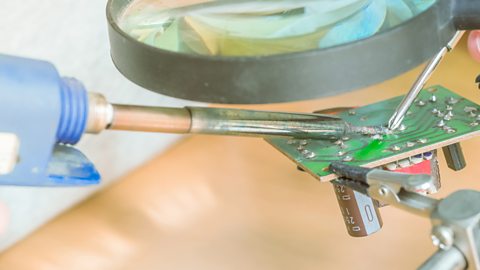
Image caption, Soft soldering electronic components
1 of 2
Each material group has its own preferred set of standard components to fasten and join them together - metal is no exception. A metal plug used to hold sheet material together. They expand when the central plug is pulled upwards through the body of the rivet., nuts, bolts and screws are all common standard components to fix metal into place.
A rivet is often used to hold sheet material to another metal structure, eg some ‘off-road’ cars have their body held to the structure using a rivet. Nuts and bolts work by tightening a nut along a threaded bolt so that the sheet material is Made smaller by squeezing together. in place. Screws work in a very similar way - as a screw is turned it drives deeper into one material as it compresses another in place.
