Social and ecological issues
When considering the ecological and social implications of using metal, its A resource that cannot be replaced when it is used up, such as oil, natural gas or coal. nature is the main concern. Metal cannot be grown and is a Resource that can only be used once and is in limited supply. For example, oil is a finite resource. - there is only a certain amount within the Earth’s The outer layer of the Earth on top of the mantle..
To create A chemical element often used for making drinks cans., the ore A rock that can be used to make aluminium. is mined as it contains aluminium hydroxide minerals. The bauxite is A substance that has been separated from other substances is said to be purified. so that A chemical reaction with aluminium and oxygen. is produced, and the aluminium is The process of obtaining a metal from a mineral, usually by reduction or electrolysis. from this through The decomposition (breakdown) of a compound using an electric current.. Huge amounts of energy are used to extract aluminium and convert it into a usable material. Recycling it requires some energy to make it usable again, but nowhere near as much.
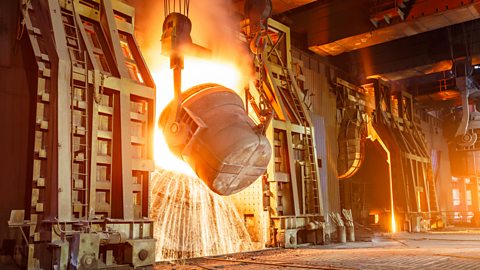
Steel is made in very large, high-temperature furnaces. Its production uses a lot of energy and contributes approximately 7 to 9 per cent of the world's The gases responsible for global warming - carbon dioxide, methane, nitrous oxide and CFCs (chlorofluorocarbons).Substances that are given off, especially in the form of gas..
Whenever environmental impact is being reduced, ‘The 6 Rs’ can be called on to ensure an in-depth analysis has been done. The 6 Rs can be considered by the designer, the A person or company that makes something from raw materials or from an assembly of component parts. and the customer.
Considering the 6 Rs when designing food packaging
The 6 Rs
The term ‘the 6 Rs’ can be applied to the design of new products or when a product is finished with, used up or no longer wanted. Here are some questions to prompt 6 Rs thinking:
- To make decisions that decrease the amount of waste produced - one of the 6 Rs. - Can the amount of metal used be reduced? Can the metal be bought locally to reduce product miles?
- To use a product again rather than replacing with a new one - one of the 6 Rs. - Can the metal be reused for another purpose once a product is finished with?
- To break down and process so a new material is produced - one of the 6 Rs. - Can the metal be disposed of correctly so that it can be recycled?
- To change the design of a product to be more environmentally friendly - one of the 6 Rs. - Can the way a product is made be redesigned so that less metal is used?
- To avoid using a product to save on waste - one of the 6 Rs. - Refusing to use metal could be a consideration; could a material that is sustainable be used instead?
- To fix a broken product - one of the 6 Rs. - When a product is broken, can it be repaired rather than discarded?
