Sources and origins
Most A polymer is a large molecule formed from many identical smaller molecules (monomers). Polymers can be natural or synthetic. Plastics are long chains of polymers. are obtained from Mixture of hydrocarbons, mainly alkanes, formed over millions of years from the remains of ancient dead marine organisms. often found deep within the Earth’s The outer layer of the Earth on top of the mantle.. They are called synthetic plastics and are chemically manufactured. They are often referred to as plastics as they exhibit plastic properties. The crude oil is accessed by drilling, which can be a costly and messy process.
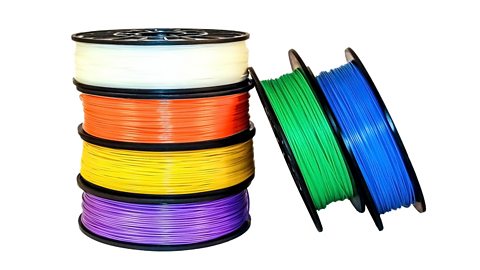
Some polymers can be derived from natural sources, such as plants. The most common plant-based polymer used in schools is A biodegradable thermoplastic from renewable resources, such as corn starch., which is commonly used in a 3D printer. PLA is obtained from corn starch - the corn is A process that consumes sugar in the absence of oxygen with the production of acids and gases. to produce lactic acid, which is The joining of monomers to produce a polymer. to produce polylactic acid.
Plastics from renewable sources, such as corn starch. are being continually developed to combat the environmental concerns related to the non-biodegradable properties of plastic polymers.
The process used to produce the common polymer A common plastic used for packaging, bags and bottles.:
- crude oil is drilled and pumped to the surface of the Earth
- the oil is transferred to an oil tanker and shipped to an oil A place where distilling (a process to separate a substance from a liquid) is done.
- the oil is heated to break it down and obtain different products through a process called In fractional distillation a mixture of several substances, such as crude oil, is distilled and the evaporated components are collected as they condense at different temperatures.
- a chemical called A chemical that is distilled from crude oil., a mix of A compound that contains hydrogen and carbon only. used for the production of many different plastic polymers, is vented off from the distillery column - a long vertical tube where the oil is separated into different components
- this then undergoes a process called The breaking down of large hydrocarbon molecules into smaller, more useful hydrocarbon molecules by vaporising them and passing them over a hot catalyst. so that individual hydrocarbons, called Small molecule, usually containing a C=C bond, that can join end to end with other monomers to form a polymer molecule., are produced
- monomers undergo The process of joining of monomers to produce a polymer., which links monomers together to make a polymer chain - the monomer A monomer used to produce polythene. is polymerised to make polythene
When crude oil is heated, many different chemicals are vented off from the heating column. The thick and dense material A mixture of hydrocarbons obtained from crude oil distillation, used to cover road surfaces., used for road surfacing, is vented off from the hottest part of the column at the base. Lighter, less-dense gas and petrol are vented at the cooler part of the column towards the top.
Polymerisation process
Some small molecules, called monomers, can join together to make very long molecules, called polymers - this process is called polymerisation. Many polymers are made from chemicals obtained from crude oil, eg molecules of ethane can join together to make polythene.
By polymerising other small molecules, a wide variety of different polymers can be made that have many uses.
