Properties
Polymers are categorised into Also called ‘thermoplastic’. Can be reformed when heated, and therefore can often be recycled., also called An alternative name for thermoforming polymers., or Also called ‘thermoset’. Can only be formed once as it cannot be reheated and therefore cannot be recycled., also called An alternative name for thermosetting polymers.. Thermoplastics can be heated and shaped many times, whereas thermoset plastics can only be heated and shaped once.
Each type of plastic has different working properties:
Thermoplastics
| Thermoplastic | Strengths and weaknesses | Working properties |
| Acrylic - used in car headlights and as a glass alternative | Durable, water-resistant and available in many colours - but is easily scratched and not easily recycled | Stiff, hard but scratches easily, durable, brittle in small sections, good electrical insulator, machines and polishes well |
| Low density polythene - used in plastic bags, toys and gas pipes | Lightweight, resistant to chemicals, cheap to produce and translucent - but has low stiffness | Tough, good resistance to chemicals, flexible, fairly soft, good electrical insulator |
| High density polythene - used in bulletproof vest inserts and containers | Very strong, easy to clean and very stiff - but expensive to produce | Hard, stiff, able to be sterilised |
| Polyvinyl-chloride (PVC) - used in flexible hoses and as a cable insulator | Flexible, can be coloured and is chemical resistant - but it is soft and there is high pollution from its manufacture | Flexible, fairly soft, brittle |
| Polypropylene - used in rope and reusable food boxes | Does not absorb water, easy to colour, lightweight and food safe - but is stiff and not very flexible | Light, hard but scratches easily, tough, good resistance to chemicals, resists work fatigue |
| Polycarbonate - used in electronic components | Strong, tough, easily worked and transparent - but has low scratch resistance | Strong, hard but scratches easily, durable |
| Styrofoam - used for building insulation | Cheap to produce, lightweight, floats and insulates sound and heat - but not very strong and only blue or white in colour | Light, good insulator to heat and water |
| High impact polystyrene (HIPS) - used in toys, packaging and fridge linings | Available in many colours, lightweight and strong - but not as durable as other polymers | Light, hard, stiff, transparent, brittle, with good water resistance |
| Nylon - used in clothing and for mechanical parts, eg gears | Durable, self-lubricating and chemical resistant - but not easily recycled | Creamy colour, tough, fairly hard, resists wear, self-lubricating, good resistance to chemicals and machines |
| Thermoplastic | Acrylic - used in car headlights and as a glass alternative |
|---|---|
| Strengths and weaknesses | Durable, water-resistant and available in many colours - but is easily scratched and not easily recycled |
| Working properties | Stiff, hard but scratches easily, durable, brittle in small sections, good electrical insulator, machines and polishes well |
| Thermoplastic | Low density polythene - used in plastic bags, toys and gas pipes |
|---|---|
| Strengths and weaknesses | Lightweight, resistant to chemicals, cheap to produce and translucent - but has low stiffness |
| Working properties | Tough, good resistance to chemicals, flexible, fairly soft, good electrical insulator |
| Thermoplastic | High density polythene - used in bulletproof vest inserts and containers |
|---|---|
| Strengths and weaknesses | Very strong, easy to clean and very stiff - but expensive to produce |
| Working properties | Hard, stiff, able to be sterilised |
| Thermoplastic | Polyvinyl-chloride (PVC) - used in flexible hoses and as a cable insulator |
|---|---|
| Strengths and weaknesses | Flexible, can be coloured and is chemical resistant - but it is soft and there is high pollution from its manufacture |
| Working properties | Flexible, fairly soft, brittle |
| Thermoplastic | Polypropylene - used in rope and reusable food boxes |
|---|---|
| Strengths and weaknesses | Does not absorb water, easy to colour, lightweight and food safe - but is stiff and not very flexible |
| Working properties | Light, hard but scratches easily, tough, good resistance to chemicals, resists work fatigue |
| Thermoplastic | Polycarbonate - used in electronic components |
|---|---|
| Strengths and weaknesses | Strong, tough, easily worked and transparent - but has low scratch resistance |
| Working properties | Strong, hard but scratches easily, durable |
| Thermoplastic | Styrofoam - used for building insulation |
|---|---|
| Strengths and weaknesses | Cheap to produce, lightweight, floats and insulates sound and heat - but not very strong and only blue or white in colour |
| Working properties | Light, good insulator to heat and water |
| Thermoplastic | High impact polystyrene (HIPS) - used in toys, packaging and fridge linings |
|---|---|
| Strengths and weaknesses | Available in many colours, lightweight and strong - but not as durable as other polymers |
| Working properties | Light, hard, stiff, transparent, brittle, with good water resistance |
| Thermoplastic | Nylon - used in clothing and for mechanical parts, eg gears |
|---|---|
| Strengths and weaknesses | Durable, self-lubricating and chemical resistant - but not easily recycled |
| Working properties | Creamy colour, tough, fairly hard, resists wear, self-lubricating, good resistance to chemicals and machines |
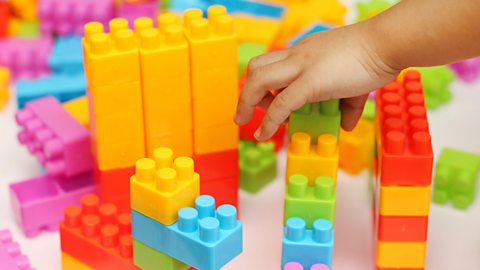
High impact polystyrene (HIPS) toy
Thermosets
| Thermoset | Strengths and weaknesses | Working properties |
| Urea formaldehyde - used in electrical fittings and as an adhesive | Rigid, durable, heat resistant and a good insulator - but brittle and available in limited colours | Stiff, hard, strong, brittle, good electrical insulator |
| Melamine formaldehyde - used in tableware and for bottle caps | Durable, scratch resistant, hard, opaque and food safe - but not microwave safe and available in limited colours | Stiff, hard, strong, resists some chemicals and stains |
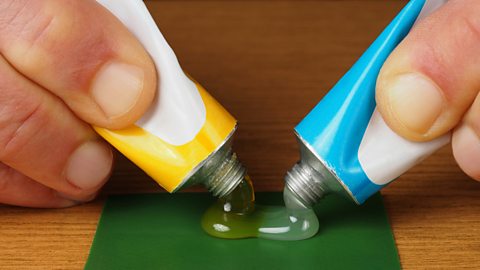
| Epoxy resin (ER) - used as a glue, and racing car body parts mixed with carbon fibre | High strength, good chemical resistance and can be reinforced - but expensive | Good electrical insulator, hard, brittle unless reinforced, resists chemicals well |
| Thermoset | Urea formaldehyde - used in electrical fittings and as an adhesive |
|---|---|
| Strengths and weaknesses | Rigid, durable, heat resistant and a good insulator - but brittle and available in limited colours |
| Working properties | Stiff, hard, strong, brittle, good electrical insulator |
| Thermoset | Melamine formaldehyde - used in tableware and for bottle caps |
|---|---|
| Strengths and weaknesses | Durable, scratch resistant, hard, opaque and food safe - but not microwave safe and available in limited colours |
| Working properties | Stiff, hard, strong, resists some chemicals and stains |
| Thermoset | Epoxy resin (ER) - used as a glue, and racing car body parts mixed with carbon fibre |
|---|---|
| Strengths and weaknesses | High strength, good chemical resistance and can be reinforced - but expensive |
| Working properties | Good electrical insulator, hard, brittle unless reinforced, resists chemicals well |
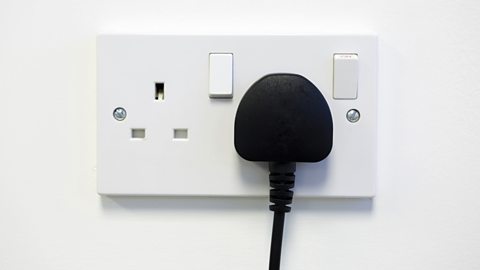
Image caption, Urea formaldehyde in plug sockets
1 of 2
End of image gallery
