Properties
Metals are grouped into the following categories or classifications:
- ferrous - contain iron, rust easily and are magnetic, eg iron and steel
- non-ferrous - do not contain iron, do not rust and are not magnetic, eg copper and aluminium
- alloys - a mixture of more than one metal, eg bronze or brass
- smart - react to certain stimuli and change shape and revert back, eg shape-memory alloys (SMAs)
Ferrous metals
| Ferrous metal | Strengths and weaknesses | Uses |
| Cast iron | Cheap to produce, easy to cast, is rigid, has high compressive strength, machines and absorbs vibrations well, has low tensile strength, it is brittle and cannot be forged | Pans, brake discs, large castings |
| Mild steel | High strength, lower cost of production, malleable, ductile and easily machined, but a coolant that prevents chip welding is needed to machine | Structural sections and meshes, forgings, sheet, plate, rods and bars |
| Medium carbon steel | Machines to a quality surface finish, can be hardened by heating, has higher strength and toughness than mild steel but more expensive than mild steel | Gears, drop hammer dies, wood saws, hammer heads |
| High carbon steel | Very wear resistant, even harder than medium carbon steel and more brittle, can be heat treated to make it harder and tougher but it is less ductile and tough, does not cold form (bend without heating) well and has very limited supply forms | Files, metalwork tools, chisels, drill bits |
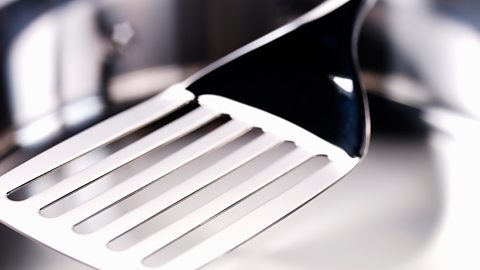
| Stainless steel | Resistant to corrosion, tough, strong and wear resistant, but it is expensive and hard to work due to rigidity | Cutlery, kitchenware, sinks, surgical equipment |
| High speed steel | Extremely hard and can withstand high temperatures, easy to machine when annealed (a heat treatment to make the metal more workable) and it is resistant to ‘wear and tear’, but it is more expensive than high carbon steel | Metal cutting and power tool cutters |
| High tensile steel | Excellent strength, really tough and abrasion resistant but expensive | Gears, engine components |
| Ferrous metal | Cast iron |
|---|---|
| Strengths and weaknesses | Cheap to produce, easy to cast, is rigid, has high compressive strength, machines and absorbs vibrations well, has low tensile strength, it is brittle and cannot be forged |
| Uses | Pans, brake discs, large castings |
| Ferrous metal | Mild steel |
|---|---|
| Strengths and weaknesses | High strength, lower cost of production, malleable, ductile and easily machined, but a coolant that prevents chip welding is needed to machine |
| Uses | Structural sections and meshes, forgings, sheet, plate, rods and bars |
| Ferrous metal | Medium carbon steel |
|---|---|
| Strengths and weaknesses | Machines to a quality surface finish, can be hardened by heating, has higher strength and toughness than mild steel but more expensive than mild steel |
| Uses | Gears, drop hammer dies, wood saws, hammer heads |
| Ferrous metal | High carbon steel |
|---|---|
| Strengths and weaknesses | Very wear resistant, even harder than medium carbon steel and more brittle, can be heat treated to make it harder and tougher but it is less ductile and tough, does not cold form (bend without heating) well and has very limited supply forms |
| Uses | Files, metalwork tools, chisels, drill bits |
| Ferrous metal | Stainless steel |
|---|---|
| Strengths and weaknesses | Resistant to corrosion, tough, strong and wear resistant, but it is expensive and hard to work due to rigidity |
| Uses | Cutlery, kitchenware, sinks, surgical equipment |
| Ferrous metal | High speed steel |
|---|---|
| Strengths and weaknesses | Extremely hard and can withstand high temperatures, easy to machine when annealed (a heat treatment to make the metal more workable) and it is resistant to ‘wear and tear’, but it is more expensive than high carbon steel |
| Uses | Metal cutting and power tool cutters |
| Ferrous metal | High tensile steel |
|---|---|
| Strengths and weaknesses | Excellent strength, really tough and abrasion resistant but expensive |
| Uses | Gears, engine components |
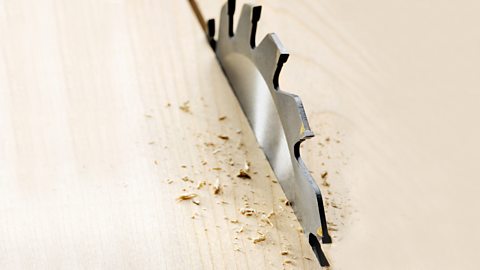
Image caption, Medium carbon steel wood saw
1 of 2
End of image gallery
Non-ferrous metals
| Non-ferrous metal | Strengths and weaknesses | Uses |
| Aluminium | Lightweight, ductile, a good conductor of heat and electricity, malleable and corrosion resistant, but soft and more expensive than steel | Kitchen equipment, window frames, greenhouse frames, cooking pans |
| Copper | Malleable, ductile, a good conductor of heat and electricity and resistant to corrosion, but it is brittle and can bend easily | Electrical cables and conductors, water and heating pipes |
| Pewter | Lead-free alloy, polishes to a mirror-type finish, can be cast easily, has a low melting point and can be reheated but it is very soft and not hardwearing | Jewellery, drinking tankards |
| Silver | One of the precious metals, it is soft, very ductile, easily worked and has very low tensile strength, but it can tarnish and is expensive | Jewellery, decorative tableware and ornaments, electrical/electronic engineering |
| Non-ferrous metal | Aluminium |
|---|---|
| Strengths and weaknesses | Lightweight, ductile, a good conductor of heat and electricity, malleable and corrosion resistant, but soft and more expensive than steel |
| Uses | Kitchen equipment, window frames, greenhouse frames, cooking pans |
| Non-ferrous metal | Copper |
|---|---|
| Strengths and weaknesses | Malleable, ductile, a good conductor of heat and electricity and resistant to corrosion, but it is brittle and can bend easily |
| Uses | Electrical cables and conductors, water and heating pipes |
| Non-ferrous metal | Pewter |
|---|---|
| Strengths and weaknesses | Lead-free alloy, polishes to a mirror-type finish, can be cast easily, has a low melting point and can be reheated but it is very soft and not hardwearing |
| Uses | Jewellery, drinking tankards |
| Non-ferrous metal | Silver |
|---|---|
| Strengths and weaknesses | One of the precious metals, it is soft, very ductile, easily worked and has very low tensile strength, but it can tarnish and is expensive |
| Uses | Jewellery, decorative tableware and ornaments, electrical/electronic engineering |
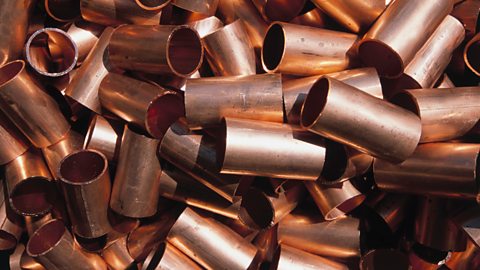
Copper pipes
Alloys
| Alloy | Strengths and weaknesses | Uses |
| Bronze - mix of copper (90-95%) and tin (5-10%) | Harder/tougher than brass, corrosion resistant, easily machined, it casts well and is malleable, but it is soft so can scratch easily | Sculptures, statues, ornaments |
| Brass - mix of copper (65%) and zinc (35%) | Corrosion resistant and harder than copper, it is malleable, ductile and a good conductor of heat and electricity but can scratch easily | Ornaments, musical instruments |
| Duralumin - mix of aluminium (94-98%) and copper (2-6%) | Stronger than pure aluminum, it is lightweight, malleable and machines well, but it is soft and can bend easily | Aircraft, speedboat and automobile frames, surgical and orthopaedic work |
| Alloy | Bronze - mix of copper (90-95%) and tin (5-10%) |
|---|---|
| Strengths and weaknesses | Harder/tougher than brass, corrosion resistant, easily machined, it casts well and is malleable, but it is soft so can scratch easily |
| Uses | Sculptures, statues, ornaments |
| Alloy | Brass - mix of copper (65%) and zinc (35%) |
|---|---|
| Strengths and weaknesses | Corrosion resistant and harder than copper, it is malleable, ductile and a good conductor of heat and electricity but can scratch easily |
| Uses | Ornaments, musical instruments |
| Alloy | Duralumin - mix of aluminium (94-98%) and copper (2-6%) |
|---|---|
| Strengths and weaknesses | Stronger than pure aluminum, it is lightweight, malleable and machines well, but it is soft and can bend easily |
| Uses | Aircraft, speedboat and automobile frames, surgical and orthopaedic work |
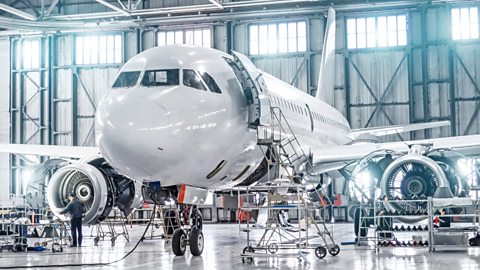
Duralumin aircraft
