Properties
Many Associated with business and profit. made products are made from paper, board or card. Each material used will be chosen because it will have specific How materials behave in different environments when subjected to changing conditions, eg force or temperature changes. that suit the intended use.
Often advertising flyers are posted through doors to make a potential In business, a consumer is a person who uses a product and may also buy it. aware of a service or event. Flyers are normally A4 (210 × 297 mm) or A5 (148 × 210 mm) sheets of paper that have been either self-made using a photocopier or professionally printed on expensive glossy paper.
Birthday cards are made from thick High-quality white card. that is A method cutting paper or card by pushing a blade through the material. and An indented scratch to allow paper or card to fold with ease.. Most greetings cards are mass produced or made in smaller batches, depending on style of the card. Some cards can be handmade and even custom designed to order.
The method of manufacture changes depending on how many are being made. If a greetings card is to be made in When the same product is manufactured many times., then A commercial printing method that uses four colours, cyan, magenta, yellow and black (CMYK). printing would be a suitable printing method. Offset lithography prints large numbers of paper or card-based products at high speed. Offset lithography prints small dots in four main colours that overlay each other to create the full The colours that are visible to the human eye.. Ink is transferred (The way ink is transferred from a plate.) from a metal plate to a rubber roller - the paper or card never comes into contact with the image on the plate.
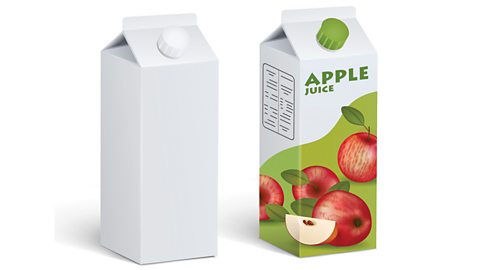
Many food containers and packages are made from paper or board-based materials. Tetra Brik is a popular card-based packaging that is used for many liquids such as fruit juice and milk. It often has a rectangular or square shape to the base that makes it ideal for transit in larger boxes. Most of the material is made from a paper-based board that is Inexhaustible and replaceable., and Tetra Brik can be recycled.