World of Wellbeing is the vodcast series that's all about how to look after you and your mind.
In this episode, wellbeing and education influencer Kit Brown and Dr T explain how to navigate life's ups and downs and how to cope with unexpected changes.
Kit Brown:
I felt like my whole world had fallen down you know, and I couldn't see past that disappointment, that upset you know, this is everything I've worked my whole life for.
Hi guys, I'm education and wellbeing TikToker, Kit Brown.
Dr T:
And I'm Dr T, psychiatrist for under 18s.
Kit Brown:
Welcome to World of Wellbeing from BBC Bitesize, where we talk about how to look after you and your mind.
So Dr T, what's on your mind today?
Dr T:
Do you know what, Kit?
I've been thinking about big changes, unexpected changes.
You know, maybe you're moving school and you're being moved away from your friends or someone’s sick or even passes away.
Have you ever been affected in this way?
Kit Brown:
Yeah, absolutely.
I think for me, I've been through one of the biggest changes in my life quite recently, I lost my grandad who was ultimately a father figure for me growing up.
You know, he was essentially my dad you know, and he raised me alongside my mum.
So losing someone so close to me and such a huge part of my life, I really found myself in a really tough position.
And you know, it still hits me to this day and it will do going forward.
But it's all about working out ways to kind of overcome that and navigate those different emotions that I'm going to go through.
Dr T:
I'm sorry to hear that.
You know, there's a science behind what we're talking about.
When we go through loss, it puts our brain in a spin because our brains love certainty and predictability, and then we get all disrupted and to try and move forward we can go into solution focusing gear which is all about “How do I fix this?”
But there's also another gear.
The acceptance and commitment gear, which is about trying to accept the reality as it is and then think, “How do I navigate it?”
So I don't know about you Kit, but I'm a fixer.
When there's a problem, I want to find a solution.
Do you know what I mean?
Kit Brown:
Yeah, I want to fix it right there and then.
Dr T:
Right.
But there are some things in life that can't be fixed.
It might be a breakup, it might be a bereavement.
But then when we try and fix things that can't be fixed in a typical way, it's like pushing up against a wall that cannot be moved.
And that's frustrating, it's tiring, and you just feel fed up.
Kit Brown:
So there are loads of things that can take you by surprise in life, aren't there?
And if I think about my own personal experience, my biggest one is my football journey.
If I think back to when I was 16, roughly in school, I was missing days of the week throughout school to go and play football and train, and I was adamant that at the end of that season
I was going to become a professional footballer,
I was going to get my contract.
I think everyone at school was adamant that that was going to happen as well.
So when I walked into that meeting, you know at the end of the season, an injury riddled season and I was told, “We're not going to give you a contract. You're not good enough.”
I felt like my whole world had fallen down you know, and I couldn't see past that disappointment, that upset you know. This is everything I'd worked my whole life for.
So I guess my question to you is, how do we navigate those tough moments?
And is there a way that we can move towards that acceptance stage to manage better?
Dr T:
Well look, number one, we have to be kind to ourselves. When we're going through something like what you just described, it’s a big deal and often we are our worst critics.
But if we were to talk to a friend about it if they were going through it, we would tell them to, you know sit back, relax, please take time to look after yourself.
So that's the first step.
Number one is be kind yourself.
And the second thing is that adjustment, mental adjustment takes time.
And to process your thoughts, your feelings, your emotions.
“How do I feel about this situation?
What does that mean about me?”
That takes time.
So time and self care, so important.
Kit Brown:
Now Dr T, after I lost my grandad I felt that a really good coping mechanism for me was to get it out and speak about my emotions with those around me.
It's still something that I'm probably not the best at and still something that I've identified within myself that I need to improve on.
But every time I do open up and speak about how I’m feeling, it feels like a weight off my shoulders.
Dr T:
So that's a way of verbally processing the emotions that are pent up and they’re bouncing around in our mind.
It does help calm our brain down.
Now we can talk to someone that we trust, that might be a trusted friend, family member, someone that can help us process our emotions, sometimes even a professional.
But if you don't have someone to talk to, you could also process your thoughts in the form of journalling.
Now I journal, I like to put pen on paper.
It helps me become aware of what I am thinking about.
Another thing you can also do is get creative, get active.
Do you do something like that to help you with adjusting to emotions?
Kit Brown:
Yeah, I love to exercise.
For me, exercising in any form is a way to really kind of unload those emotions and whether it's playing football or taking up a new hobby.
I've recently got into playing padel with my friends which has been a lovely, lovely release.
So much fun.
Dr T:
Oh, it sounds fun.
Kit Brown:
Oh, it’s great.
But it's such a nice way to just step away from what you're dealing with at that point.
Dr T:
Exercise is great on so many levels.
It gets you out of the house, you change up your environment, often you're surrounded by other people and it also helps with endorphin release.
So you're going to physically and mentally feel better.
Exercise is a great shout.
And if sport isn't your thing, then there are other ways that are healthy emotional outlets, you know so you can process what you're going through.
And that could be something creative, it could be a new skill, it could be music, it could be socialising, starting a new hobby.
So there are ways to give your brain a break from doing all the hard work of adjusting to a very significant change.
Kit Brown:
So how can I cope when things are out of my control?
Dr T:
We want to control the controllables.
That's what I always say.
So it's about turning your attention to what are the things that I can do that are going to help me and also park or accept the circumstance as it is, as part of your reality that you're going to try and navigate.
Kit Brown:
So we could maybe control our routine.
Dr T:
Yeah, exactly.
Control that routine.
Even book things in for the weekend.
Something to look forward to.
It's about getting your sense of autonomy back.
Kit Brown:
Do you know what?
I'm going to do that right now.
I'm going to book in a film night with my friends this weekend and I think that's going to be a good first step to take.
Dr T:
Nice.
Kit Brown:
Thanks so much for being with us.To listen to more episodes of the BBC Bitesize World of Wellbeing podcast, head to BBC Sounds.
Don't forget to subscribe and share them with your mates.
Or search BBC Bitesize Study Support to watch them on our website.
Bye!
Dr T:
Bye!
If you've recently been affected by a big change in your life and are struggling to cope on your own, talk to a trusted adult like your parent, teacher or guardian.
It can really make a difference.
If you'd like extra support and advice for any of the issues raised in this vodcast, search for BBC Bitesize Action Line for young people, where you will find contacts for organisations who can really help you.
Speaking as part of Series 2 of the World of Wellbeing vodcast, Dr T shares his advice on how to deal with change and unexpected challenges you might experience in life.
Dealing with change
Have you ever had to deal with any big unexpected changes?
Dr T tells us: "Maybe you're moving school and you're being moved away from your friends, someone in your life is sick or even passes away.
If you've ever been affected by this and experienced a loss, this can put your brain in a spin because as a human being, your brain loves certainty and predictability. When this all gets disrupted, it can be quite stressful and sad."
The two coping gears
When you go through unexpected changes or challenges in life, to help you navigate how to deal with it, think of two gears your brain can choose between.
- The solution-focused gear - This is all about, 'how do I fix this?' 'How do I get back to normal?' I don't know about you, but I'm a fixer. When there's a problem, I want to find a solution and this can be quite a common thing people try to do.
But then there's also…
- The acceptance and commitment gear - Unfortunately, there are some things in life that can't be fixed. For example, this might be a breakup, or a bereavement. But then when we try and fix things that can't be fixed in a typical way, it's like pushing up against a wall that cannot be moved. The acceptance and commitment gear involves really working on moving forward based on accepting the situation as it is.
And that's frustrating, it tires your brain out, and you just feel fed up.
Tips for navigating big changes

There are lots of things you can do in life to help you manage better and move towards the 'acceptance and commitment gear', according to Dr T.
Be kind to yourself - When you're going through a tough time, it’s a big deal and often you might be your own worst critic. But think about what you would say to a friend in this situation? If your mate was going through it, you would likely tell them something like, 'try to relax' and 'please take time to look after yourself'. Listen to some of this advice.
Take the time you need - Processing your thoughts, feelings and emotions all takes time so it's important to look after yourself and prioritise self-care. Surround yourself with good people by meeting up with your friends, keep yourself active and sometimes avoiding social media and particular people on socials can help.
Process your emotions by talking to someone - Verbally processing your 'pent up emotions' by talking to a trusted person, like a friend, family member or a trusted adult like a professional, can help calm your brain down.
Journalling - If you don't have someone to talk to and are struggling with your emotions, you could process your thoughts in the form of journalling. Dr T says: "I journal and like to put my thoughts down on pen on paper because it helps me to become aware of what I am thinking about."
Getting active - Exercise can really help as it boosts the production of chemicals called endorphins in your brain which boosts your mood.
Being creative - Try and find healthy, creative outlets to help you process your feelings and emotions, like drawing or starting a new hobby. This can really help your brain process emotions and give it a break from overthinking and adjusting to big changes.
How to stop worrying about things you can't control
When life feels a lot and unpredictable, try to 'control the controllables'.
In these moments, try to turn your attention to the things you can do to help you get that sense of autonomy back and accept the circumstance as it is. For example, try and control your routine by giving you something to look forward to. Why not book in a film night with your friends on a weekend. This will be a great first step to take.
It's also good to try and visualise the event or thing you're looking forward to. Can you draw a picture or put a picture up on your wall so you can see this activity? This can really help.
Watch more Series 2 World of Wellbeing
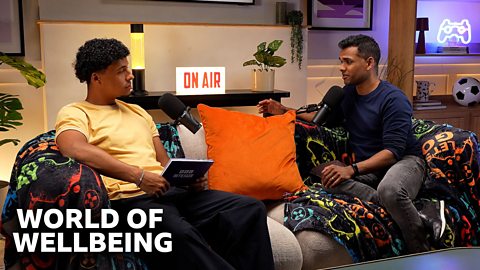
World of Wellbeing: What is toxic masculinity?
Wellbeing and education influencer Kit Brown and Dr T break down what toxic masculinity means, how it manifests and discuss toxic vs healthy masculinity.
World of Wellbeing: How to find yourself
Wellbeing and education influencer Kit Brown and Dr T find out why your brain is wired to want to belong and how to figure out your values, what's important to you and find your people.

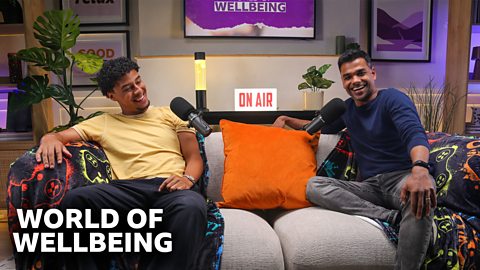
World of Wellbeing: What is wellbeing and how to tell if yours is good or bad?
Wellbeing and education influencer Kit Brown asks Dr T what is wellbeing? They reflect on their own wellbeing struggles and learn practical tools to improve their wellbeing.

If you need support
You should always tell someone about the things you’re worried about. You can tell a friend, parent, guardian, teacher, or another trusted adult. If you're struggling with your mental health, going to your GP can be a good place to start to find help. Your GP can let you know what support is available to you, suggest different types of treatment and offer regular check-ups to see how you’re doing.
If you’re in need of in-the-moment support you can contact Childline, where you can speak to a counsellor. Their lines are open 24 hours a day, 7 days a week.
There are more links to helpful organisations on the BBC Bitesize Action Line page for young people.
Catch Up on Series 1 of World of Wellbeing
How to stop worrying? video
Ami Charlize and Radio 1’s Dr Radha chat through what you can do if you're feeling worried or anxious.
Self care ideas from Dr Radha. video
Ami Charlize and Radio 1’s Dr Radha chat about the benefits of practising self care.

What is friendship? video
Ami Charlize and Radio 1’s Dr Radha talk friendship fall-outs and growing apart.