World of Wellbeing is the vodcast series that's all about how to look after you and your mind.
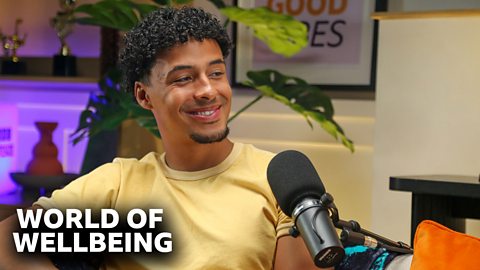
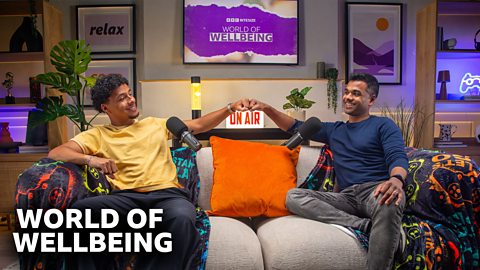
In this episode, wellbeing and education influencer Kit Brown and clinical psychiatrist Dr T break down what toxic masculinity means, how it can manifest into harmful thoughts and behaviours and identify some signs of toxic behaviour to look out for.
Kit Brown:
Growing up as a young footballer, I wanted to be strong and fit.
Is there anything wrong with that?
Dr T:
No. That's brilliant.
It's great to have aspirational goals.
I guess what we're saying is that it becomes harmful to the boy or the man when they feel under pressure to conform to this being the only standard of being a man.
Kit Brown:
Hi guys, I'm education and wellbeing TikToker, Kit Brown.
Dr T:
And I'm Dr T, psychiatrist for under 18s.
Kit Brown:
Welcome to World of Wellbeing from BBC Bitesize, where we're going to talk about how to look after you and your mind.
So Dr T, today we're talking about a hot topic in the media at the moment.
Toxic masculinity.
But what is it?
Dr T:
It's a hotly debated phrase, it's worth talking about because it's trending in social.
But let's try and break it down.
When we talk about masculinity, we're describing behavioural and psychological traits that we typically see with men and boys.
Kit Brown:
So what does ‘toxic’ masculinity mean?
Dr T:
Well, toxic means harmful.
And so in toxic masculinity, we're talking about some of these male traits, like strength and ‘goal focussed-ness’ dialled in a styled way up to the point that that could look like arrogance and unkindness, but also out of balance.
So we don't see the gentleness, the empathy, the love, the care.
And this can also shape an unbalanced perception of what it means to be a man, and can also put boys and men under pressure to be a certain way.
Kit Brown:
So growing up as a young footballer, I wanted to be strong and fit.
Is there anything wrong with that?
Dr T:
No. That's brilliant.
It's great to have aspirational goals.
I guess what we're saying is that it becomes harmful to the boy or the man when they feel under pressure to conform to this being the only standard of being a man.
So Kit for example, let's take the phrase ‘man up.’
OK, what does that mean to you personally?
Kit Brown:
Well, this is one that I heard a lot growing up, especially in a football changing room.
I heard, ‘man up.’
‘Boys don't cry.’
These things which actually I don't think are very helpful at all.
You know, it kind of gave me an impression that to be a man, I wasn't able to express my emotions.
I wasn't able to really feel things.
I had to just get on with it.
Dr T:
Absolutely. I mean, there are lots of stereotypes out there.
And let's be honest, not all of them are helpful and they can be misleading.
But at the end of the day, we're really looking for a balance of traits that contribute to us being decent human beings, regardless of gender.
Kit Brown:
Absolutely and I think if I’d have listened to those views, I probably wouldn't have ended up as a primary school teacher.
You know, a job that is typically, historically considered as a woman's job, as wrongly as that may be.
You know, if I had listened to that stereotype, I probably wouldn't have even ended up doing what I'm doing.
Now, I'd like to think I'm quite a good teacher and I'm definitely passionate and love what I do, but I think that all started with me breaking down a stereotype and challenging a barrier that was already there.
Dr T:
So when people say that boys and men should be tough and strong and girls should be gentle and kind, that's not the complete picture.
It's a very kind of black and white view.
It sort of splits things apart, when in reality, to be a decent human being, you need all of these traits.
And when there are these restrictions, it can make boys feel like they don't have the freedom to have feelings or are able to express their emotions.
In fact Kit, let's check out how these guys are feeling.
Boy 1:
I feel like there's a lot of weight on your shoulders.
Boy 2:
On social media, masculinity is expressed to you as having loads of money, being really strong, being tall and that can't be everyone.
And when you try and be like that, then girls say to you they want an emotional person.
You just don't know what the hell a man even is in today's society.
Dr T:
And so that is from the BBC Radio 4 podcast, About The Boys.
These are real young lads opening up.
Good on them, right?
Kit Brown:
Yeah.
And I think that pressure to hide your emotions, you know act hard, must be completely exhausting, you know?
And for some people, it must be quite a sense of anxiety there to deal with those pent up emotions.
Dr T:
You’re right, these pent up emotions when they are not processed can convert into coping mechanisms that are actually harmful.
Bad habits, things that are bad for your health, and even disruptive or harmful behaviour to others, or doing things that we just shouldn't.
Kit Brown:
So where are these unhealthy ideas and beliefs coming from?
Who may be affected by them and find them appealing?
Dr T:
Good question.
So these traditional unbalanced views of what it means to be male have been around for a long time.
But in the times we live in now, of course Kit, with social media ideas can be amplified very very quickly.
Now, social media is not all bad.
We can spread good ideas.
We're doing that right now, trying to model what it means to be a man in a healthy way.
But you'll hear some influencers share some very unhealthy and unbalanced views of what it means to be a man, to the point that the narrative is ‘men rule and women don't count.’
So this kind of thinking is called misogyny, which is a disrespect, dislike or hatred of women.
Kit Brown:
Yeah, I've seen a lot of that content online and I believe that sometimes it's hidden in jokes.
Or maybe dressed up as advice, but underneath it all it's just not respectful, and that's never OK.
Dr T:
Yeah, you're absolutely right.
And I think it's important to remember that trying to find your place in the world is complicated enough.
But when we were given these templates online as to what it means to be male, then this can be very confusing and even start to influence our view of masculinity and even attract us to those things.
Kit Brown:
So Dr T, EastEnders ran a really interesting storyline on misogyny, which saw Joel misleading Tommy down a really dark path with some toxic thinking.
I think it was really powerful because it highlighted and showed how easily we can be affected by these ideas and how important it is to really challenge them when we feel safe to do so.
But it's not just boys that feel this pressure, right?
You know, young girls and women are swept up in social media and feel the pressure to live up to these influencers and their idealised body and beauty image.
Dr T:
Yeah, you're absolutely right.
That's why it's so important to kind of fact check, where do these ideas come from?
Do your research.
Remember, it's OK to be unsure.
It can be very confusing.
So feel free to ask questions and get support.
I remember you could talk to someone, a trusted adult if it doesn't feel right.
Kit Brown:
So going back to basics, what are some of the signs of toxic behaviour or thinking that we can look out for?
Dr T:
So it's things like putting other women down, showing no emotion and also men insulting other men, calling them weak and not manly for being emotionally dialled in, for being kind, which actually are really important parts of being a man.
Kit Brown:
So if we flip it on its head, healthy attitudes towards masculinity are things like being authentic and honest about how you feel.
Dr T:
100% Kit.
Healthy, wholesome masculinity looks like love and respect.
It looks like strength and kindness together, and it also looks like building those around you up instead of tearing them down.
Kit Brown:
And it's all about being your real self, not conforming to a rigid view of what others think a real man should be.
Dr T:
Exactly.
So before we go Kit, we've got a quick exercise to do.
You've got some scenarios that you can read through for us and we're going to see if we can spot if there are some harmful behaviours and views.
And as you read them out, we’ll work out if they're OK or not OK.
Kit Brown:
Example one. Someone you know says, “All women are weak and need looking after.”
I'm going to go ahead and say this is not OK.
Dr T:
No, it's an over generalisation.
It's actually misogynistic to say “All women are weak.”
I mean it's patronising.
It's talking down. It's not OK.
Kit Brown:
Number two. You're telling your mate that you like the gym and want to improve your fitness by getting bigger muscles.
Is this OK or not OK?
I'm going to say this is OK, because it's about wanting to get fitter and stronger.
Dr T:
Yeah, nothing wrong with that.
As long as we're not saying that “You're not a man for not having big muscles.”
I think that's very OK.
Kit Brown:
Yeah.
I mean, if it makes you feel manly, then great.
But that's not the only idea of what being a man is.
And it doesn't make you more or less of one.
Dr T:
Right.
Kit Brown:
Number three. You see a TikTok saying it's a man's job to dominate or control, and women don't know what they want.
This one is not OK.
I think it's really critical and actually disrespectful of women.
Dr T:
That’s right. These are outdated and unhelpful views.
And if you feel like it's safe to do so, you can challenge that view then and there.
But if it doesn't feel safe, if it feels like it could escalate, it could turn into an argument, then it may be better to go and talk to a trusted adult to figure out a way to move forward.
So being a boy or a man shouldn't mean having to follow a set of rules that hurts you or others.
So Kit, who do you want to be?
Kit Brown:
Do you know what Dr T?
I want to be a man who doesn't fit in with the stereotype or a cliché.
I want to be someone who’s real, respectful, kind, caring, in touch with his emotions, able to speak out, and who is someone who is unapologetically himself.
That's who I want to be.
Thank you all for navigating this tricky topic with us today.
To listen to more episodes of the BBC Bitesize World of Wellbeing podcast, head to BBC Sounds.
Don't forget to subscribe and share them with your friends.
Or search BBC Bitesize Study Support to watch them on our website.
Bye!
Dr T:
Bye!
If you're struggling with toxic masculinity, reach out to a parent, teacher or trusted adult for support.
If you'd like extra support and advice for any of the issues raised in this vodcast, search for BBC Bitesize Action Line for young people, where you'll find contacts for organisations who can really help you.
Speaking as part of Series 2 of the World of Wellbeing vodcast, Dr T explains what toxic masculinity means and what to out for in more detail.
What is toxic masculinity?
Dr T says: "You may have seen toxic masculinity trending on social media, so let’s break it down.
Masculinity describes the behaviours and psychological traits that we typically see and associate with men and boys and the word 'toxic' means harmful.
Toxic masculinity can be a debated phrase, as some people feel it's a sociological construct, but the concept covers exaggerated masculinity, or outdated or unhealthy interpretations of masculine traits and attitudes. For example like needing to be strong and goal-focussed - dialled WAY UP. This can sometimes lead to people developing a narrow or 'unbalanced view' of what it means to be a man and this can put boys and men under pressure to act in a certain way.
This might lead some people to display arrogant, unkind and unhealthy thoughts, feelings and behaviours."
Toxic masculinity and how it impacts mental health
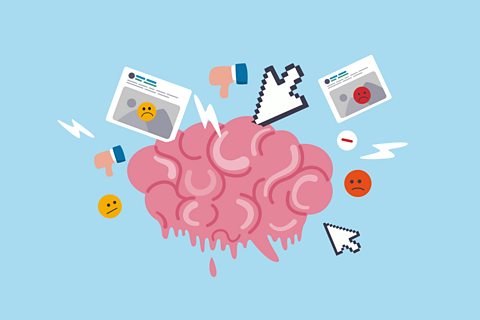
When people say things like boys need to be ‘strong’ and ‘tough’, and girls need to be ‘gentle’ and ‘kind’, these are very 'black and white' views which aren't realistic or true. In reality, to be a decent human being, you can have all of these traits! And if we feel like we have to live up to these restrictive beliefs and expectations, this can be unhealthy and might cause some boys and men to believe that they can't express their feelings and emotions freely.
And if energy and emotions become 'pent-up' and not expressed, this can make us feel anxious and be damaging to us and the people around us. People might decide to carry out harmful behaviours which aren't good for them, like bad habits and even choose to do things they shouldn't.
How does toxic masculinity develop?
Exaggerated masculinity and unbalanced views about boys and men needing to be “tough” or 'in control', have been around for a long time.
But in today's society and with social media, these toxic ideas and harmful beliefs can be accessed and amplified very quickly, leading to people being exposed to dangerous and extreme views about masculinity. You might hear influencers say things like, 'men are better than women' or 'men rule and women don't count'. These kind of statements and claims are not just untrue, it’s a kind of thinking called misogyny, which means a disrespect, dislike or hatred of women.
Finding our way in the world is complicated and difficult enough and sometimes, because of these online templates or posts of what people believe being a male is, this can be confusing and attract and influence some people into believing what they see or read. But these can be untrustworthy and are unhealthy views to have.
How can we avoid it?
It’s important to question what you see online. Do your research and fact-check where information comes from to make sure you're not being influenced by harmful views or passing on incorrect information.
And remember it’s OK to be unsure or to ask questions, especially when things online might make you feel confused, pressured or even angry. That’s all part of learning who you are.
Reputable places like BBC Bitesize or trusted academic resources can help you sort fact from opinion. And remember it's important to talk to someone, like a trusted adult, if something doesn’t feel right.
Toxic masculinity examples
There are lots of harmful stereotypes about what it means to be a man. Some signs of toxic behaviour or thinking can include:
- Putting women down or dismissing women's opinions, thoughts and feelings.
- Showing no emotion.
- Men insulting other men. For example, calling them 'weak' or 'not manly' for being kind and emotionally aware, which are actually really important masculine traits.
Healthy masculinity
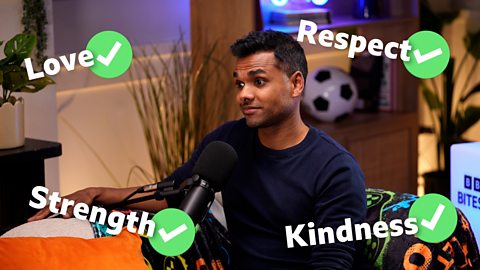
So what are healthy masculine traits?
These can be a variety of things and can look like the following:
- Being yourself
- Being honest about how you feel
- Having an awareness of your own or other people's emotions
- Showing love and respect
- Having strength
- Being confident
- Being kind and caring
- Showing intelligence
- Being supporting and encouraging
Being a boy or a man doesn't mean you need to be defined by or have all of these traits. You should also never feel like you have to follow a set of rules or viewpoints that can hurt you or other people.
How can we tackle toxic masculinity pressure?
When you hear exaggerated or harmful ideas and views, if you feel safe to do so, you could challenge them.
But you don’t have to do this right there and then in the moment, especially if it feels unsafe or that things can escalate. For example, if calling out the harmful thoughts or beliefs could lead to an argument or make things worse, don't do it. Instead, talk to someone you trust like a teacher, parent, or carer who can help you work out what to do going forward and in your own time.
If you’re struggling with toxic masculinity and would like extra support and advice for any of the issues raised in this vodcast, search for BBC Bitesize Action Line for Young People where you’ll find contacts for organisations who can help you.
Watch more Series 2 World of Wellbeing
World of Wellbeing: How to cope with change
Wellbeing and education influencer Kit Brown and Dr T find out how to overcome unexpected changes in life.
World of Wellbeing: How to find yourself
Wellbeing and education influencer Kit Brown and Dr T find out why your brain is wired to want to belong and how to figure out your values, what's important to you and find your people.
What is body image and how does it affect mental health?
Wellbeing and education influencer Kit Brown and Dr T discuss body image, social media and the pressure teenagers feel to look a certain way.

If you need support
You should always tell someone about the things you’re worried about. You can tell a friend, parent, guardian, teacher, or another trusted adult. If you're struggling with your mental health, going to your GP can be a good place to start to find help. Your GP can let you know what support is available to you, suggest different types of treatment and offer regular check-ups to see how you’re doing.
If you’re in need of in-the-moment support you can contact Childline, where you can speak to a counsellor. Their lines are open 24 hours a day, 7 days a week.
There are more links to helpful organisations on the BBC Bitesize Action Line page for young people.
Catch Up on Series 1 of World of Wellbeing
What is friendship? video
Ami Charlize and Radio 1’s Dr Radha talk friendship fall-outs and growing apart.
How to stop worrying? video
Ami Charlize and Radio 1’s Dr Radha chat through what you can do if you're feeling worried or anxious.
How much sleep do you need? video
Ami Charlize and Radio 1’s Dr Radha give some guidance on how exercise and being active can help boost your mood.