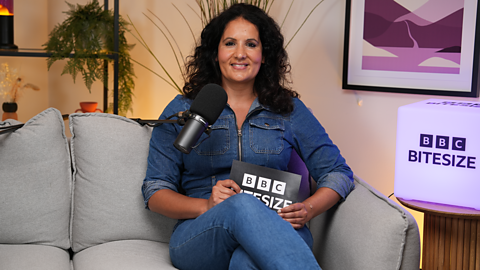
In this episode of World of Wellbeing, Ami and Radio 1’s Dr Radha talk friendships, fall-outs and feeling left out. Radha shares her thoughts on toxic friendships and the red flags to look out for when a friendship turns sour.
Ami: And I was unfortunately that person that kind of got left out of the group and you know, you feel really excluded.
Hey guys.
I'm Ami Charlize.
Dr Radha: And I'm Dr Radha.
Ami: Welcome to World of Wellbeing from BBC Bitesize, where we talk about how to look after yourself and your mind. So today, what are we chatting about?
Dr Radha: So today we're talking about a very important subject Ami, which is all about friendship fallouts.
So we all know, don’t we, when our friendships are going really well, it’s great, but when we have a fallout, things aren't so great. So I want to ask you, have you ever fallen out with a friend?
Ami: I think definitely, yeah. I've had fallouts growing up and even now I still have them sometimes. But I think for me, one that really, really sticks out was the time when I was in a friendship group of three in primary school and I was unfortunately that person that kind of got left out of the group and you know, you feel really excluded, but I learnt to kind of just drift away and make new friends. And I think that was really important for me.
Dr Radha: Yeah, it can be really hard, can’t it, like in a group when there's lots of different dynamics.
Ami: Definitely.
Dr Radha: So science actually tells us that friendships are really important. We don't really think about the science behind friendships when we meet all our friends,
Ami: No.
Dr Radha: Understandably, but science tells us that actually they're really good for our mental health and our emotional wellbeing. But also when life gets tough and things get really tricky for us, it's our friendships basically, our relationships, which keep us resilient, keeps us kind of going, keeps us kind of almost surviving through those difficult times, so they are really important to nurture. But as we know, like fallouts happen. So Ami, like from your point of view, why do you think we have friendship fallouts sometimes?
Ami: Do you know what, I think people just grow apart and the friend that you begin with doesn't always necessarily be the friend that you end with. And I feel like for me, there's definitely been friends where they just change. And I think it's really helpful to try and work out is this just like a normal day-to-day tough moment with this friend that we can get over, or is this something a bit bigger and something I need to kind of step back and think about?
Ami: Toxic friendships is definitely something we all struggle with.
Dr Radha: Yeah, definitely.
Ami: Yeah. So what would you say are like red flags to look out for in a friendship?
Dr Radha: Well, beware if anyone says ‘brutally honest,’ ‘I'm going to be brutally honest with you here,’because actually they then may go and say really hurtful things. Other times people might belittle you, make you feel kind of less than, sometimes people try and change who you are, but also just making you feel worse about yourself, I think. You know, whenever we go andmeet up with a friend, we know afterwards, do we feel better from that interaction, or do we feel worse?
I think yeah, if you're not enjoying being with a friend, that's like the first kind of, ‘hang on a sec, why not?’ Because when you're with your friends, it's supposed to you know, like comfort you, make you forget about things.
Ami: And if you spot these signs, do you personally think that the friendship should be over?
Dr Radhda: So I think there are two things. So I think if it’s kind of like a day-to-day disagreement, someone’s having a bad day, you can talk it out, you can say sorry, you can kind of, you know, chat through things. But if it has got signs of toxicity where you know you're feeling worse when you actually meet them, then yeah, I think it's time to sort of step back and have some time away from them and see how you feel. If you feel a lot better, then you're probably right and it's probably time just to let that go and just step away from it.
Ami: Definitely.
Dr Radha: I think that's really important for people to know that a friendship can just kind of close the page, and it doesn't have to be a massive, massive blow up in your face kind of argument.
Ami: We've talked about toxic friendships, but what about healthy ones?
Dr Radha: So Ami, what's important for you in a healthy friendship?
Ami: I think friends that are going to bring you up, not bring you down. You know, you want friends that are going to uplift you and make you feel like the smallest achievements are the biggest achievements, even if it's like, you know, you've had a really, really bad week at school, but you got yourself in, they should be acknowledging that and being like, ‘well done for actually going in today, it's really good.’And also I want to be able to do that for them too.
Dr Radha: I love that, yeah. Trust, and I think like you said, like kindness, all those things are about kindness, aren't they? Those practical things, supporting someone, making someone feel proud of themselves, like championing them. They're all really important. So I guess there's no right or wrong to friendships, like we're all different, we all need different things. So it's really important to work out what you need. And I guess kind of knowing that will also help you then work out maybe why you've fallen out with a friend as well.
Ami: I think we all definitely want to be like a better friend to our own friends, so what would you recommend is like a good way to be a good friend if you might be going through a fallout or just you know, want to improve in friendships?
Dr Radha: So one of the easiest things to do when we've had a fallout is just to think about things from our perspective. So get out a journal or maybe say it out loud and just write down how do you feel?
What was the situation?What actually happened?
And then, this is the hardest bit, but it's really helpful, is to try and step out of that and think, ‘okay, this is how I felt about it, but what might my friends have felt in that moment?
What was going on for them?What was going on in their life?’
And potentially, ‘what are the reasons why they actually behaved as they did?’
Ami: So trying to see it from both perspectives is really helpful.
Dr Radha: And then a third angle is kind of stepping out of that and seeing the bigger picture. And again, if you've got someone who is neutral who you can trust, maybe chatting to them about what happened, getting their perspective and trying to kind of see it from all angles, because in that way then, we kind of can have a bit of empathy, we can have a bit of understanding, and we're more likely then to be able to go to that person and say, ‘this is my bit I take responsibility for.’ Hopefully they'll do the same.
Ami: Yeah.
Dr Radha: And then actually you can get over that fallout.
Ami: And if I'm honest like when you are in an argument, you think you're right all the time.
Dr Radha: Yeah.
Ami: I'm so bad for it that I actually I'm genuinely the one who’s always in the right.
Dr Radha: Me too.
Ami: So I think it's definitely important that if you are like me, kind of stepping back and thinking,‘alright, but how does that look from them and their perspective?’ is definitely important.
Dr Radha: Yeah.
And again, you know, if you haven't had fallout, then actually it's really helpful to right now think about maybe someone in your friendship group whoyou might just send a message to and text, and just ask them how they are,because sometimes we don't always know what's happening for people.
Ami: I want to do that right now.
Dr Radha: Yeah.
Ami: Let’s do it now. I’m going to do it. I’m going to text one of my friends. And if you're listening or watching, you should definitely do the same.
Dr Radha: Yeah.
Ami: Who should I text?
Dr Radha: I love that.
Ami: Okay, I’ll text one of my friends. Are you okay?
Dr Radha: And it might be someone again who seems like they're doing okay, but we just have no clue, do we, about what's going on in people's lives.
Dr Radha: Well, I’ve just sent it to her anyway.
I love that.
Ami: So we’ll know how she's feeling.
Dr Radha: I definitely think that's really important.
Ami: Thanks so much for being with us.
Head to Bitesize Study Support to watch more episodes or search World of Wellbeing on BBC Sounds to listen now.
Bye!
Dr Radha: If you’re feeling worried or unhappy about someone’s behaviour or a friendship, it’s really important to talk to someone you trust, that might your parent, a teacher, your guardian or another friend.
And remember, you can always contact Childline for free confidential advice.
Friendship fall-outs
Do you know that sinking feeling when you've fallen out with one of your friends? It can feel all-consuming and be hard to know what to do or where to turn. We’ve all been there! It can be really hard on a one-to-one basis, but also if you’re in a friendship group with lots of dynamics going on all at once.
Our friends and the relationships in our lives are one of the main things that keep us well and happy. When life gets really tough, it’s our friendships and relationships that keep us bouncing back and keep us going.
However, it’s important to recognise that it’s only the meaningful and healthy relationships and friendships that do this, not the friendships that are ‘toxic’ or unhealthy or damaging for us. Unhealthy relationships can actually impact our mental health, our mood, our self-esteem and our confidence.
One of the most helpful things we can learn is how to distinguish the healthy relationships from the unhealthy ones.
What are the signs of an unhealthy friendship?
There are lots of signs or ‘red flags.’ Watch out, for example, for someone using phrases like, ‘I’m going to be brutally honest with you…’. This often means they’re about to say something hurtful. Other signs can be when someone belittles you, making you feel ‘less than’, or if they try to change who you are, or make you feel worse about yourself than you did before. Sometimes you might feel drained after you have met up with them or like you haven’t really enjoyed hanging out.
How do you know when a friendship should be over?
We’re all going to have arguments and fall out with friends now and again – we’re human and that’s just life. If you have a fall-out and are able to chat it through and talk to each other in a neutral, non-judgemental way, and find some solution or way forward, and apologise to each other, that’s great. It actually means sometimes we learn more about ourselves and the other person, and we can actually get closer to someone else through finding solutions to arguments or conflict.
However, if there are any of those red flags, or they are not interested in finding a solution, or talk to you in a blaming way where they expect you only to say sorry or take responsibility, then it may be time to step back and let the friendship go, for your own mental and emotional health.
How to spot a healthy relationship
There are lots of elements that make up a healthy relationship including trust, openness and being able to be yourself and open up without worry. Friends who celebrate your wins and lift you up, and who are there for you if things are tough or challenging and in the bad times. Kindness is a big one too – if a friendship is based on kindness, then it is unlikely to go wrong.
How to get over a friendship fall-out
When we argue with someone, it is easy for us to think about things purely from our perspective only. A useful way of changing this is to step into someone else’s shoes and journal what happened and how you feel and to try and write down how they might feel and what might be going on for them and why they may have behaved in that way or said what they said. Asking someone who is not involved can help too as they can give you a different perspective.
It’s great to meet up or communicate with them and tell them how much you care for them, what you take responsibility for and how you would like to move things forward. Hopefully they will do the same! Communication with our friends is the way we sort things out and it can be helpful to reach out and start that chat sooner rather than later.
If you are struggling with friendship fall-outs, then talk to someone you trust. That might be a parent, a teacher, or a carer, or even another friend.
More World of Wellbeing
World of Wellbeing: Advice on self-esteem, self care, friendships, confidence, worrying and more
Ami Charlize and Dr Radha chat about issues like anxiety, friendships and self-care in this World of Wellbeing vodcast series

Self care ideas from Dr Radha. video
Ami Charlize and Radio 1’s Dr Radha chat about the benefits of practising self care.

How to stop worrying? video
Ami Charlize and Radio 1’s Dr Radha chat through what you can do if you're feeling worried or anxious.
World of Wellbeing on BBC Sounds
The World of Wellbeing Podcast. audio
Listen to The World of Wellbeing Podcast on BBC Sounds.

If you need support
You should always tell someone about the things you’re worried about. You can tell a friend, parent, guardian, teacher or another trusted adult. If you're struggling with your mental health, going to your GP can be a good place to start to find help. Your GP can let you know what support is available to you, suggest different types of treatment and offer regular check-ups to see how you’re doing.
If you’re in need of in-the-moment support you can contact Childline, where you can speak to a counsellor. Their lines are open 24 hours a day, 7 days a week.
There are more links to helpful organisations on BBC Action Line.
