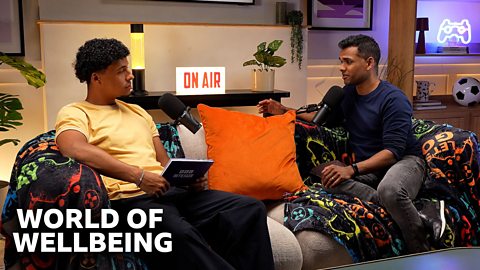
World of Wellbeing is the vodcast series that's all about how to look after you and your mind.
In this episode wellbeing and education influencer Kit Brown and clinical psychiatrist Dr T identify when stress can be good and bad for you. They look at the early signs of stress you should look out for and they reflect on some recent stressful moments in their own lives.
Kit Brown:
When I'm stressed, I can feel it within myself.
You know I'm on a short fuse, I shut down and I don't really like to talk to people.
Are these common things to experience?
Dr T:
Mate, I'm right there with you.
Kit Brown:
Hi guys, I'm education and wellbeing TikToker, Kit Brown.
Dr T:
And I'm Dr T, psychiatrist for under 18s.
Kit Brown:
Welcome to World of Wellbeing from BBC Bitesize, where we talk about how to look after you and your mind.
So Dr T, what's on your mind today?
Dr T:
Do you know what? I'm thinking about stress.
I know it's a stressful thing to think about.
I'm wondering, have you ever run into stress that has started to affect your wellbeing?
Kit Brown:
Absolutely.
I think recently I had to organise a school play for our year four cohort and being the head of year, I can tell you that is the most stressed I've ever been.
It was magical.
It was wonderful.
But oh my goodness, was it stressful.
I had to organise 90 children, make sure costumes were ordered, make sure all of the children knew the lyrics to the songs.
It was a really stressful time and actually I felt like it affected my own wellbeing.
Dr T:
Wow Kit, that does sound full on.
And you know what? Stress can have its positives.
It's a little bit like pressing the accelerator pedal system in our body, where our heart beats faster, we breathe more quickly, we're able to perform, and this can be good for exams or doing a class talk.
We can be on our A-game.
Kit Brown:
So is stress a good or a bad thing?
Dr T:
That’s a good question because it actually depends.
You see, we need a little bit of stress, a little bit of what we call necessity to actually perform and do stuff.
But if you have stress running at too high a level for too long, that's going to burn you out.
So what sort of things make you stressed, Kit?
Kit Brown:
So there are small things that make me stressed.
I think you know, in my everyday teaching life, like marking, workload, maybe it's falling out with friends over things as well, but I've also gone through some big things that have caused a lot more stress as well.
You know, I think back to last year, I had a really big injury.
I tore my hamstring at football which put me out for months, you know, I couldn't play.
You know, I wasn't at training socialising with the boys as well.
So that left me feeling really stressed, really isolated as well.
Dr T:
Events like that can leave us with big feelings to have to process.
And actually if we let the stress build up, then it can start to fatigue certain areas of our brain.
So it's harder to think and it can even drop our mood.
So it's really important to be able to notice the signs of stress early so that you can start to process them.
Kit Brown:
So when I'm stressed, I can feel it within myself, you know I'm on a short fuse,
I shut down and I don't really like to talk to people.
Are these common things to experience?
Dr T:
Yeah, mate, I'm right there with you.
Do you know what?
When I get stressed, I start eating junk food.
I'm just being honest with you because this is the place to do it.
Other signs of being stressed include emotional changes, so you can be quiet.
You can be sad, withdrawn.
You can be angry, shouty, snappy, you know, get really irritable.
But there can be physical signs as well.
So there can be changes in your appetite, changes in your sleep routine, and even just the physical sensation of, “Ooh, I've got butterflies in my tummy. I've got sweaty palms.”
And so these are all signs of experiencing stress in some way.
Kit Brown:
And they’re definitely signs that I've experienced myself, but my question is, how do we combat that stress?
Dr T:
So there are two gears for coping with stress.
Gear number one is self-regulation.
That's coping on your own.
Getting away from the noise.
Maybe having your own time, your alone time, journalling, listening to a podcast.
But gear number two is co-regulation and that is that, “I'm going to deal better with my stress if I'm with other people having a chat, having some fun, socialising or playing sport.” and it's important to be able to identify in the moment, “What is the gear that I need right now?”
What do you do when you're stressed, Kit?
Kit Brown:
One thing that I like to do is journalling.
You know, I think sometimes I'm not always in the right frame of mind to talk to people, but actually putting pen to paper and being able to get all of those thoughts out onto paper is a great way to release those emotions and it's worked brilliantly for me.
Journalling is great because when you put pen on paper, you're processing your thoughts, you’re identifying some of the feelings you have and that calms your brain down.
Dr T:
What about co-regulation?
Do you ever go into that gear?
Kit Brown:
So I'll either have a chat with a friend or go and play football.
I like to put that stress to the side for a moment and just get outside, have some fun.
Dr T:
Yeah, getting active can be a good stress buster.
When you’re getting your heart rate up and you're sweating, you're also releasing endorphins.
That's going to help take the stress down.
So it's a really good strategy.
So ultimately there are things that you can do on your own.
There are things that you can do with others to combat stress and it's all about trying to be aware of ‘what do I need right now?’
Kit Brown:
So is there anything you can do to get ahead of stress?
Dr T:
Yeah, sure.
We've talked about activity, but you know, sleep is a number one.
And if you're going through a stressful time, sleep is a must.
On top of that, hydrating well.
Looking after your nutrition, eating well, all of this is going to help.
Kit Brown:
Love that.
Do you know what?
I'm going to set myself a reminder to go to bed early tonight.
Get a really good night's sleep.
Dr T:
That's a good idea.
Kit Brown:
So what is something that we can do in the moment when we're stressed to try and calm down?
Dr T:
When your mind's in a spin, you need to hit the brake pedal system of your body.
A great way to do that is with a breathing technique.
It's the double inhale, exhale.
Let's do it together.
So we're going to breathe in through our nose.
And then we're going to do a top up breath.
And exhale.
And inhale.
Top up.
And exhale.
How do you feel?
Kit Brown:
Zen.
Very good.
It's been a pleasure. Thanks, Dr T.
And thanks to all of you for sticking with us on this episode today.
To listen to more episodes of the World of Wellbeing podcast, head to BBC Sounds.
Don't forget to subscribe and share them with your friends. Or search BBC Bitesize Study Support to watch them on our website.
Bye!
Dr T:
Bye!
If you're struggling to cope with stress, talk to a trusted adult like your parent, teacher or guardian.
It can really make a difference.
And if you'd like extra support and advice for any of the issues raised in this vodcast, search for BBC Bitesize Action Line for young people, where you'll find contacts for organisations who can really help you.
Speaking as part of Series 2 of the World of Wellbeing vodcast, Dr T and Kit Brown look at some of the signs of stress and discuss what you can do to help reduce it.
What is stress?
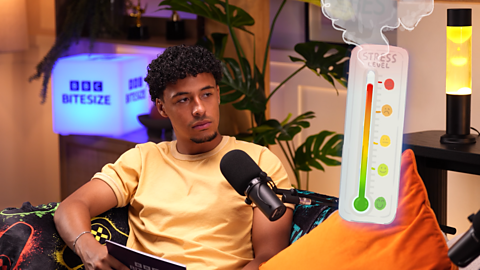
Stress is often a reaction to mental or emotional pressure and most people will feel stressed at some point in their lives. When you feel worried, anxious or excited your body releases stress hormones like cortisol or adrenaline.
Whether you are nearing an exam, approaching results day, or starting at a new school, there are some moments where the feelings of stress can hit hard. But if you find that stress is affecting your mental health you should try and get some support from your family, a teacher, or your GP.
According to the NHS, stress can cause many symptoms, which may affect how you feel physically or mentally. These can include things like headaches, stomach problems, difficulty concentrating and forgetfulness. You may also see changes in your behaviour such as avoiding people and places, or being irritable and snapping at others.
Dr T advises that there can also be changes in your appetite, in your sleep routine, or a physical sensation like 'butterflies' in your stomach.
How to manage stress
According to Dr T, there are two ways, or 'gears' you can use to cope with stress.
Gear one is for Dr T is self-regulation, which is coping on your own by getting away from the stressful situation. You can take some alone time to do something like listen to a podcast or do some journaling. You could use journaling as a technique to reduce stress – when you put pen on paper, you're processing your thoughts, you’re identifying some of the feelings you have and that can help calm your brain down.
Gear two is co-regulation, which means having a chat about your worries with friends or family, or doing something fun like socialising or playing sport. Getting active can be a good stress buster, when you’re getting your heart rate up and you're sweating, you're also releasing endorphins. Put that stress to the side for a moment and just get outside, have some fun.
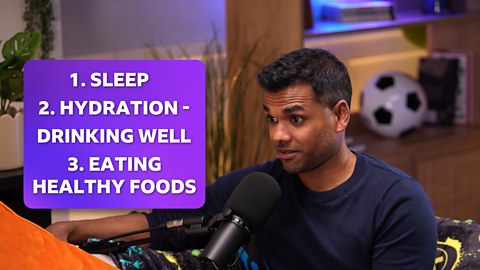
Some other things that can help reduce stress include getting a good night's sleep, staying hydrated, and looking after your nutrition. However, if you need an instant stress reliever, then try Dr T's double inhale, exhale breathing technique:
- Take a big breath in through your nose.
- Give yourself a quick top-up breath through your nose.
- Then a long exhale through your mouth.
Give it a try the next time you feel stressed and see how it makes you feel.
Is stress a good thing or a bad thing?
Whether stress is a good thing or a bad thing all depends! We need a little bit of stress to actually perform and do stuff in our lives. But if you have stress running at too high a level for too long, that's going to burn you out. Kit Brown told us that little things can stress him out, "in my everyday teaching life, (things like) marking, workload, maybe it's falling out with friends over things as well." Dr T advises that it's really important to be able to notice the signs of stress early so that you can start to process them.
If feelings of stress are getting too much for you, head to our support section below to find out where you can get more help and advice.
Watch more Series 2 World of Wellbeing
World of Wellbeing: What is wellbeing and how to tell if yours is good or bad?
Wellbeing and education influencer Kit Brown asks Dr T what is wellbeing? They reflect on their own wellbeing struggles and learn practical tools to improve their wellbeing.
World of Wellbeing: What is toxic masculinity?
Wellbeing and education influencer Kit Brown and Dr T break down what toxic masculinity means, how it manifests and discuss toxic vs healthy masculinity.

If you need support
You should always tell someone about the things you’re worried about. You can tell a friend, parent, guardian, teacher, or another trusted adult. If you're struggling with your mental health, going to your GP can be a good place to start to find help. Your GP can let you know what support is available to you, suggest different types of treatment and offer regular check-ups to see how you’re doing.
If you’re in need of in-the-moment support you can contact Childline, where you can speak to a counsellor. Their lines are open 24 hours a day, 7 days a week.
There are more links to helpful organisations on the BBC Bitesize Action Line page for young people.
Catch Up on Series 1 of World of Wellbeing
What is friendship? video
Ami Charlize and Radio 1’s Dr Radha talk friendship fall-outs and growing apart.
How to be more confident
Ami Charlize and Radio 1’s Dr Radha talk affirmations, body confidence and bullying.

How to stop worrying? video
Ami Charlize and Radio 1’s Dr Radha chat through what you can do if you're feeling worried or anxious.