Will wildfires and extreme heat in Europe continue?

- Published
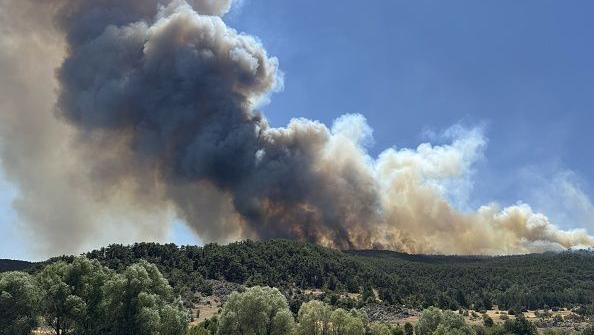
Parts of southern Europe have been in the grip of extreme heat with wildfires threatening tourist locations.
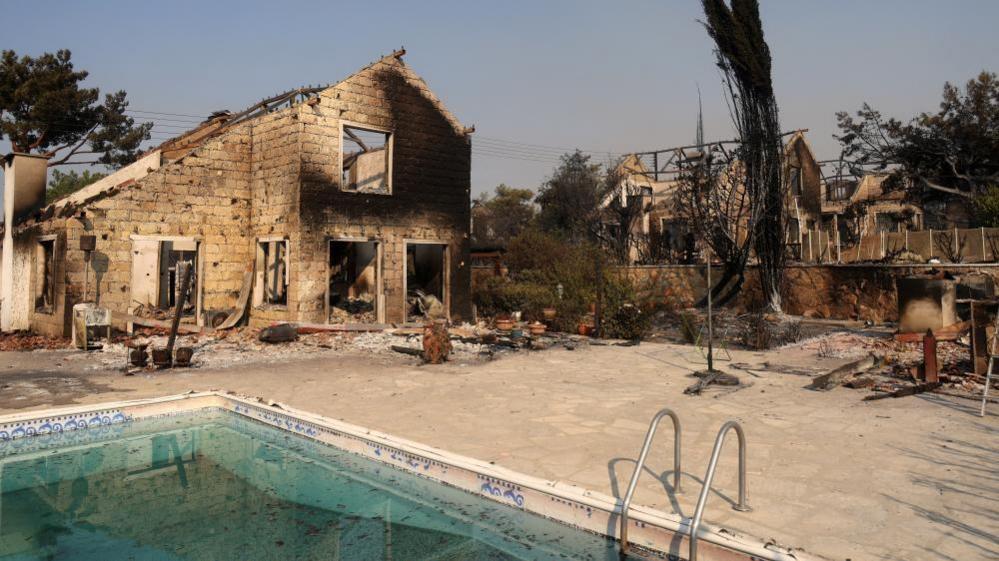
Two people were killed by fires in Cyprus and authorities closed the Acropolis in Athens due to health impacts of temperatures above 40C.
It was even hotter in Turkey on Friday with the country seeing the highest temperature ever recorded, exceeding 50C for the first time.
Most schools in the United Kingdom have now broken up for the summer holidays with thousands of sunseekers heading to Mediterranean tourist destinations over the coming weeks.
The most extreme heat is forecast to ease gradually with temperatures returning close to, if not below average for many locations.

The popular tourist destination of the Acropolis in Greece closed its gates as temperatures soared to 44C
On Saturday, meteorologists in Turkey confirmed Friday's temperature of 50.5C in the south-eastern city of Silopi, surpassing the previous heat record of 49.5C.
In the last week temperatures have been as high as 44C in Athens, Greece and in Lefka, Cyprus but widely across south-east Europe temperatures have been 5-10C above average.
Even the Balkans - normally less hot - have seen temperatures up to 40C where the average for the end of July is 31C with firefighters in North Macedonia, Albania and Croatia also battling wildfires.

Thousands of British holidaymakers will be heading to the Mediterranean for their summer holidays
Holiday destinations
Many UK holidaymakers head to southern Europe looking for some guaranteed hot and sunny weather.
Yet over the last few years the summer holidays have been heavily impacted by heatwaves in southern Europe along with extreme heat and wildfires near tourist destinations.
Whilst there may be a swimming pool or sea to cool down in, when does it become too hot to be enjoyable?
According to research as part of a BBC InDepth article on the threat of extreme heat on tourism, this is a question many more of us are starting to think about with climate change.
This latest heatwave and spate of wildfires may be worrying news for those of you heading to southern Europe in the coming days and weeks over the summer.
However, over the next week at least, the weather does look like it will cool down, or become less hot.
In Athens and Kos, temperatures of more than 40C at the weekend will come down to the mid thirties this week.
And in Cyprus, many locations will be closer to the seasonal average of 31-35C.
If it is southern Germany, Italy or the Balkans such as Croatia, Bosnia & Herzegovina you might be heading to, then temperatures in the high thirties will actually come down to the low twenties, a good 5-10C below average.
How the threat of extreme heat is starting to change our holiday plans
- Published18 June 2025

The Copernicus Emergency Management Service shows the wildfire risk remains high to extreme across southern parts of Europe over the coming days
Wildfire risks remain high
Despite some cooler weather on the way for parts of southern Europe, the wildfire risk will remain 'high to extreme' according to the Copernicus European Forest Fire Information System.
However, there is better news for some of the Balkans where wildfires have been raging over the last week.
With some thunderstorms and much needed rain in the forecast, the risk of further wildfires in North Macedonia, for example, should ease.
Somewhat surprisingly, northern Europe has also been experiencing high temperatures with a record-breaking heatwave in Finland.
On Sunday, for the 17th consecutive day, a temperature of 30C was measured somewhere in Finland - the first time since records began in 1961.
- Published24 July 2025
- Published23 July 2025