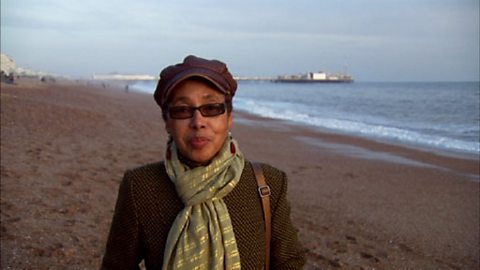
MIMI KHALVATI - Ghazal
If I am the grass and you the breeze, blow through me.
If I am the rose and you the bird, then woo me.
If you are the rhyme and I the refrain, don’t hang
on my lips, come and I’ll come too when you cue me.
If yours is the iron fist in the velvet glove
when the arrow flies, the heart is pierced, tattoo me.
If mine is the venomous tongue, the serpent’s tail,
charmer, use your charm, weave a spell and subdue me.
If I am the laurel leaf in your crown, you are
the arms around my bark, arms that never knew me.
Oh would that I were bark! So old and still in leaf.
And you, dropping in my shade, dew to bedew me!
What shape should I take to marry your own, have you
– hawk to my shadow, moth to my flame – pursue me?
If I rise in the east as you die in the west,
die for my sake, my love, every night renew me.
If, when it ends, we are just good friends, be my Friend,
muse, lover and guide, Shamsuddin to my Rumi.
Be heaven and earth to me and I’ll be twice the me
I am, if only half the world you are to me.
Mimi Khalvati reads the poem 'Ghazal' to the backdrop of a rural park.
It is a contemporary piece focusing on relationships.
This is from the series: Poets in Person
Teacher Notes
Students are asked to explore the poem as ancient poetic form or modern love song.
In groups, can they perform the poem (or sections of it) in two contrasting ways?
One performance is very traditional eg in the style of a story retold from a holy book.
The other presents the song in a very modern way eg an R 'n' B style pop ballad sung on the radio.
Students can edit the poem in any way they choose. What is Khalvati suggesting about the ancient or traditional, and the modern?
Curriculum Notes
This clip will be relevant for teaching English Literature at KS3 and KS4/GCSE in England and Northern Ireland. Also English language at KS3 and English Literature at GCSE in Wales.
This topic appears in OCR, Edexcel, AQA, WJEC in England and Wales and CCEA GCSE in Northern Ireland.
More from the series: Poets in Person
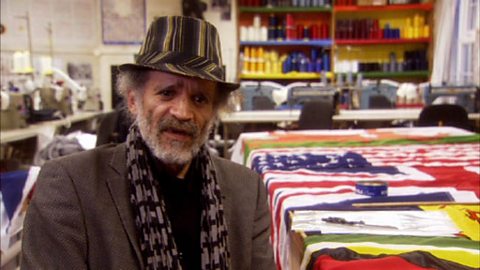
English Literature KS3 / GCSE: 'Flag' by John Agard (analysis) video
John Agard discusses his poem 'Flag', the symbolism of flags and poetry writing.
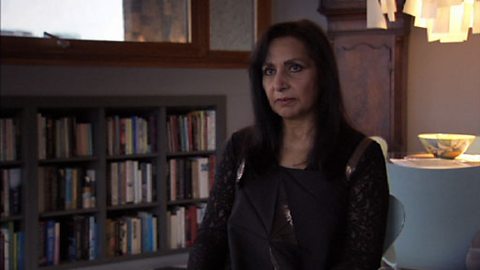
English Literature KS3 / GCSE: 'The Right Word' by Imtiaz Dharker (analysis) video
Imtiaz Dharker reads and explores the background to her poem, 'The Right Word'.
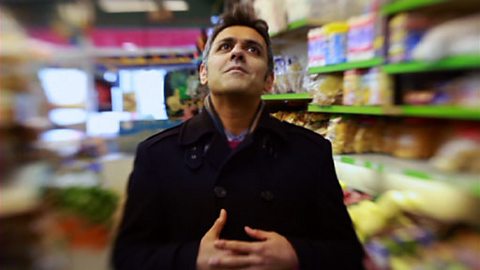
English Literature KS3 / GCSE: 'Singh Song' by Daljit Nagra (analysis) video
Daljit Nagra explores and performs his poem 'Singh Song'.
English Literature KS3 / GCSE: 'The Right Word' by Imtiaz Dharker (poem only) video
A performance of the poem 'The Right Word' by the poet, Imtiaz Dharker.
English Literature KS3 / GCSE: 'Flag' by John Agard (poem only) video
A performance of the poem 'Flag' by the poet, John Agard.
English Literature KS3 / GCSE: 'Singh Song' by Daljit Nagra (poem only) video
Daljit Nagra performs his poem 'Singh Song'.
English Literature KS3 / GCSE: 'Praise Song for My Mother' by Grace Nichols (analysis) video
Grace Nichols reads and explores the writing of her poem, 'Praise Song For My Mother'.
English Literature KS3 / GCSE: 'Ghazal' by Mimi Khalvati (analysis) video
Mimi Khalvati reads and explores the writing of her poem 'Ghazal'.
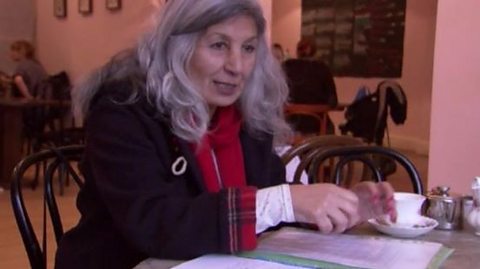
English Literature KS3 / GCSE: 'Checking Out Me History' by John Agard (analysis) video
Poet John Agard describes the process of writing his poem 'Checking Out Me History'.
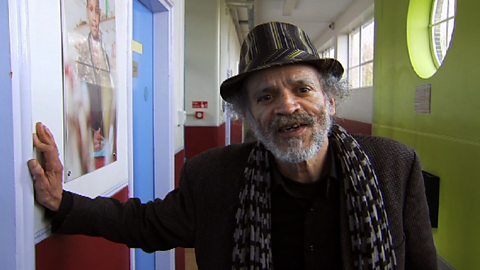
English Literature KS3 / GCSE: 'Checking Out Me History' by John Agard (poem only) video
John Agard performs his poem 'Checking Out Me History'.
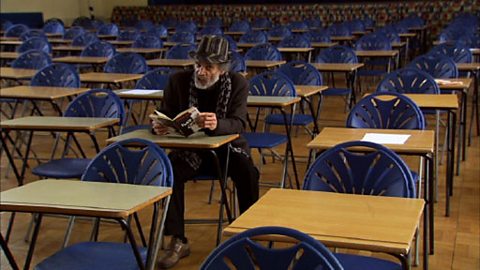
English Literature KS3 / GCSE: 'Praise Song for My Mother' by Grace Nichols (poem only) video
Grace Nichols performs her poem 'Praise Song for My Mother'.