JOHN AGARD:
Dem tell me
dem tell me
wha dem want to tell me
bandage up me eye with me own history
blind me to me own identity
dem tell me bout 1066 and all dat
dem tell me bout Dick Whittington and he cat
but Toussaint L'Ouverture
no dem never tell me bout dat
Toussaint a slave with vision lick back Napoleon
battalion and first black republic born
Toussaint de thorn to de French Toussaint
de beacon of de Haitian Revolution
dem tell me bout de man who discover de balloon
and de cow who jump over de moon
dem tell me de dish ran away with de spoon
but dem never tell me bout Nanny de Maroon
Nanny see-far woman of mountain dream
fire-woman struggle hopeful stream to freedom river
dem tell me bout Lord Nelson and Waterloo
but dem never tell me bout Shaka de great Zulu
dem tell me bout Columbus and 1492
but what happen to de Caribs and de Arawaks too
dem tell me bout Florence Nightingale and she lamp
and how Robin Hood used to camp
dem tell me bout ole King Cole was a merry ole soul
but dem never tell me bout Mary Seacole
from Jamaica she travel far to the Crimean War
she volunteer to go even when de British said no
she brave the Russian snow a healing star among the wounded
a yellow sunrise to the dying
dem tell me
dem tell me
wha dem want to tell me
but now I checking out me own history
I carving out me identity.
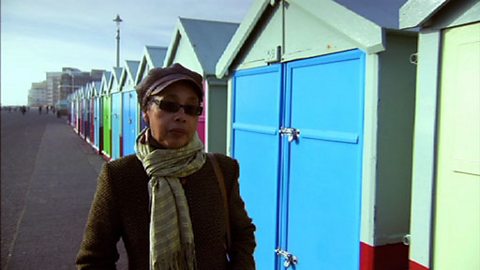
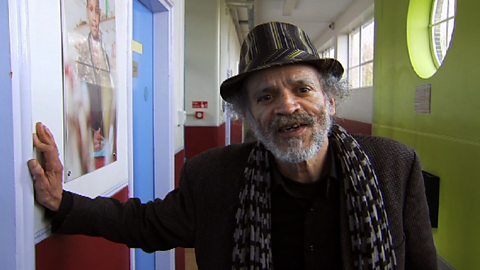
A performance of the poem, 'Checking Out Me History' by the poet John Agard, in a secondary school setting.
This is from the BBC series, Poets in Person.
Teacher Notes
This short film can be used to explore Agard's powerful use of rhyming couplets.
Students could identify as many rhyming couplets as possible (for example, Waterloo and Zulu).
What can students conclude about the clever use of contrasts in these images?
How is Agard expressing his identity and redressing the balance? How does Agard use this structure?
Curriculum Notes
This short film will be relevant for teaching English literature at KS3 and KS4/GCSE in England and Northern Ireland. Also English language at KS3 and English literature at GCSE in Wales
This topic appears in OCR, Edexcel, AQA, WJEC in England and Wales and CCEA GCSE in Northern Ireland.
More from the series: Poets in Person
English Literature KS3 / GCSE: 'Checking Out Me History' by John Agard (analysis) video
Poet John Agard describes the process of writing his poem 'Checking Out Me History'.
English Literature KS3 / GCSE: 'Singh Song' by Daljit Nagra (analysis) video
Daljit Nagra explores and performs his poem 'Singh Song'.
English Literature KS3 / GCSE: 'Singh Song' by Daljit Nagra (poem only) video
Daljit Nagra performs his poem 'Singh Song'.
English Literature KS3 / GCSE: 'Ghazal' by Mimi Khalvati (analysis) video
Mimi Khalvati reads and explores the writing of her poem 'Ghazal'.
English Literature KS3 / GCSE: 'Ghazal' by Mimi Khalvati (poem only) video
A reading of 'Ghazal' by the author, Mimi Khalvati.
English Literature KS3 / GCSE: 'The Right Word' by Imtiaz Dharker (poem only) video
A performance of the poem 'The Right Word' by the poet, Imtiaz Dharker.
English Literature KS3 / GCSE: 'The Right Word' by Imtiaz Dharker (analysis) video
Imtiaz Dharker reads and explores the background to her poem, 'The Right Word'.
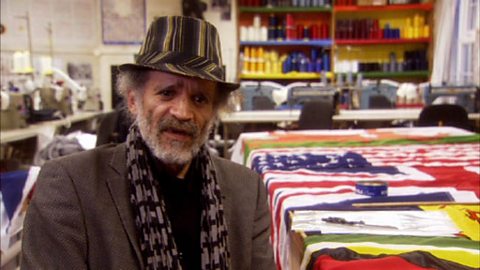
English Literature KS3 / GCSE: 'Flag' by John Agard (poem only) video
A performance of the poem 'Flag' by the poet, John Agard.
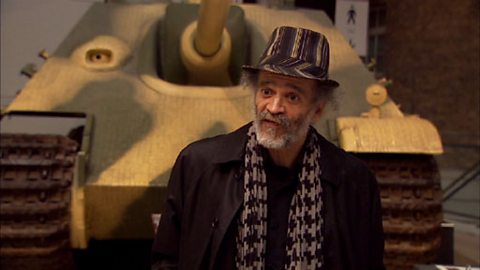
English Literature KS3 / GCSE: 'Flag' by John Agard (analysis) video
John Agard discusses his poem 'Flag', the symbolism of flags and poetry writing.
English Literature KS3 / GCSE: 'Praise Song for My Mother' by Grace Nichols (poem only) video
Grace Nichols performs her poem 'Praise Song for My Mother'.
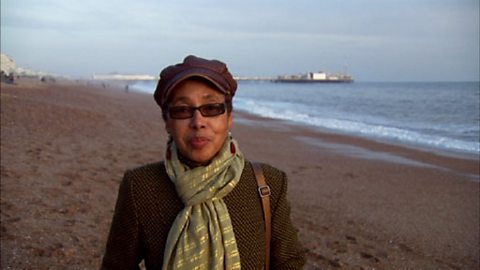
English Literature KS3 / GCSE: 'Praise Song for My Mother' by Grace Nichols (analysis) video
Grace Nichols reads and explores the writing of her poem, 'Praise Song For My Mother'.