The first line in our history book, I seem to remember, was, "West Indian history begins in 1492 with the arrival of Columbus." It's that very Eurocentric view. Nothing exists until the European has entered the arena. The retelling of history depends a lot on who is telling the story.
Dem tell me Dem tell me What dem want to tell me Bandage up me eye with me own history Blind me to me own identity Dem tell me bout 1066 and all dat Dem tell me bout Dick Whittington and he cat But Toussaint L'Ouverture No, dem never tell me bout dat.
I would like to think that the poem has a celebratory side. It's celebrating characters such as Toussaint L'Ouverture, Mary Seacole, the Amerindian past, but in a poem you're not writing a history book. You're not writing a piece of journalism, so no matter how well-intentioned you might be, or how crucial the facts might be, that wouldn't make a poem. So it came out in that way, like a counterpoint of two voices. So one voice is the nursery rhymes counterpointed by a celebration of historical characters.
Dem tell me bout de man who discover de balloon and de cow jump over de moon. Dem tell me de dish ran away with de spoon but dem never tell me bout Nanny de maroon. When I think of Nanny, I'm thinking that you're casting a spell. So I think from those words you get the feeling, "How can I deliver this?" This is a woman who used the traditions of her African ancestry so that becomes a kind of a spell against an oppressive regime at the time.
Nanny see-far woman of mountain dream fire-woman struggle hopeful stream to freedom river.
You can write a poem in Creole, but it might be a very reactionary poem. It might be very sexist. So it doesn't mean that writing a poem in Creole automatically means you're right on. But you're using all of your registers of speech, your linguistic heritage, and it gives a pride simultaneously in language, but also in history.
Dem tell me bout Lord Nelson and Waterloo but dem never tell me bout Shaka the great Zulu Dem tell me bout Columbus and 1492 but what happen to de Caribs and de Arawaks too…
Let's say I'm playing with words, the way you might play with musical notes. So a text becomes like a musical score. And sometimes the voice of delivery doesn't show itself until after the poem is written.
Dem tell me bout Florence Nightingale and she lamp and how Robin Hood used to camp Dem tell me bout ole King Cole was a merry ole soul but dem never tell me bout Mary Seacole.
The poet, hopefully, keeps us in touch with the vulnerable core of language that makes you what you are. It keeps you in touch with the heartfelt and vulnerable, fragile, complex, contradictory nature of the human beast.
Dem tell me Dem tell me wha dem want to tell me But now I checking out me own history I carving out me identity.
Poet John Agard describes the process of writing his poem 'Checking Out Me History'.
He explores where the ideas behind the poem came from.
His commentary is illustrated with school scenes and his own performance of extracts from the poem.
This is from the BBC series, Poets in Person.
Teacher Notes
You could ask your students to consider how Agard 'carves out his identity'.
Which poetic techniques does he use? Ask your students to illustrate as many different techniques as possible, on a large sheet of plain paper, using quotes to support each technique identified.
Students could be given a list of poetry techniques used by Agard to stimulate their analysis (for example, rhyme, repetition, metaphor, Creole, lyricism).
Which technique do students consider to be most effective in conveying Agard's messages?
Curriculum Notes
This short film will be relevant for teaching English literature at KS3 and KS4/GCSE in England and Northern Ireland. Also English language at KS3 and English literature at GCSE in Wales
This topic appears in OCR, Edexcel, AQA, WJEC in England and Wales and CCEA GCSE in Northern Ireland.
More from the series: Poets in Person
English Literature KS3 / GCSE: 'Checking Out Me History' by John Agard (poem only) video
John Agard performs his poem 'Checking Out Me History'.
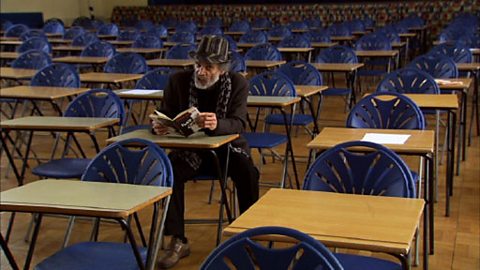
English Literature KS3 / GCSE: 'Flag' by John Agard (analysis) video
John Agard discusses his poem 'Flag', the symbolism of flags and poetry writing.
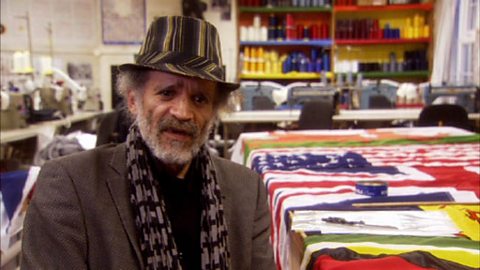
English Literature KS3 / GCSE: 'Flag' by John Agard (poem only) video
A performance of the poem 'Flag' by the poet, John Agard.
English Literature KS3 / GCSE: 'Ghazal' by Mimi Khalvati (analysis) video
Mimi Khalvati reads and explores the writing of her poem 'Ghazal'.
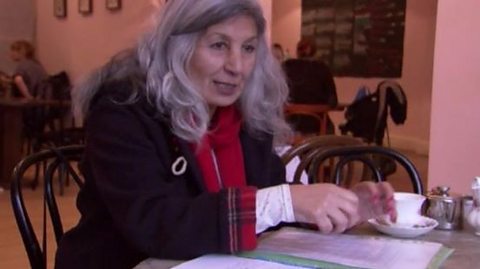
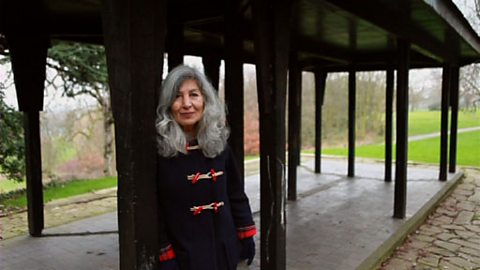
English Literature KS3 / GCSE: 'Ghazal' by Mimi Khalvati (poem only) video
A reading of 'Ghazal' by the author, Mimi Khalvati.
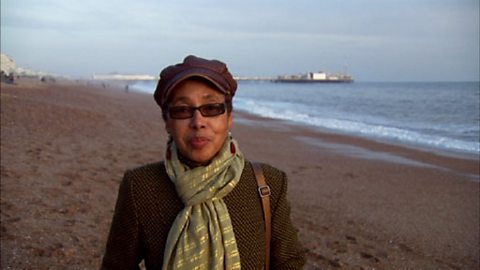
English Literature KS3 / GCSE: 'Praise Song for My Mother' by Grace Nichols (poem only) video
Grace Nichols performs her poem 'Praise Song for My Mother'.
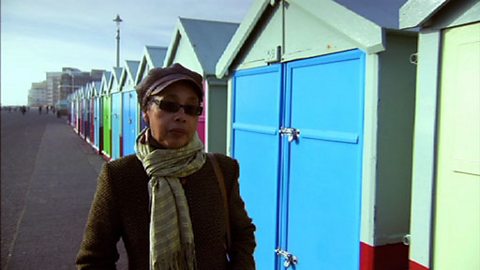
English Literature KS3 / GCSE: 'Praise Song for My Mother' by Grace Nichols (analysis) video
Grace Nichols reads and explores the writing of her poem, 'Praise Song For My Mother'.
English Literature KS3 / GCSE: 'Singh Song' by Daljit Nagra (analysis) video
Daljit Nagra explores and performs his poem 'Singh Song'.
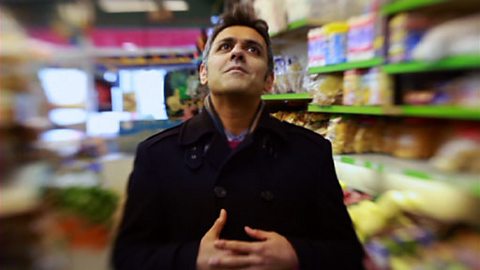
English Literature KS3 / GCSE: 'Singh Song' by Daljit Nagra (poem only) video
Daljit Nagra performs his poem 'Singh Song'.
English Literature KS3 / GCSE: 'The Right Word' by Imtiaz Dharker (analysis) video
Imtiaz Dharker reads and explores the background to her poem, 'The Right Word'.
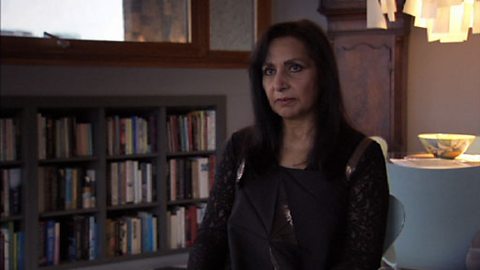
English Literature KS3 / GCSE: 'The Right Word' by Imtiaz Dharker (poem only) video
A performance of the poem 'The Right Word' by the poet, Imtiaz Dharker.