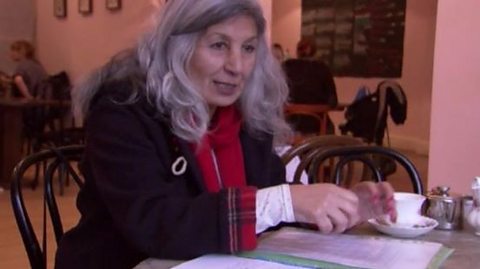
I grew up in a small country village along the Atlantic coast in Guyana. To me it still remains a very magical place in my consciousness and I think, in a way, my creativity is linked somehow to where I grew up, that small country village of my childhood.
You were water to me, deep and bold and fathoming. You were moon's eye to me, pull and grained and mantling…
I wrote it some time after my mum had died. I was just reflecting on her one day and what she meant to me because I loved her very much. I wanted to capture, you know, something about her qualities.
You were sunrise to me, rise and warm and streaming…
This was the only photograph I have of my mother and father. It's at my elder sister's wedding. My mum is at the very back here. I come from a big family. There were seven of us. She had seven children, six girls and one brother. We all are extremely close as a family, doing things together.
Because my mother had so many of us, we were allowed a lot of freedom. We were allowed to go fishing and we'd be off on our own for ages. And she told us stories at night and fairy tales. I'm sure that, you know, is very much part of my consciousness.
My mum was really a lovely person. She was very kind of… very warm and open. Our house was always full of people visiting. She loved cooking. That's why some of the images in the poem related to cooking. I've also spoken of the flame tree. It's a beautiful tree, lining the avenues of Guyana, and it has red flowers. It's very beautiful to look at.
You were the fish's red gill to me, the flame tree's spread to me, the crab's leg, the fried plantain smell, replenishing, replenishing. Go to your wide futures, you said.
In my late teens I wanted to become a novelist, but after coming to England, I don't know if it was the emotional separation, being away from your culture and all that you know, to England, which is so different, maybe that separation drove me more into poetry.
The Creole language that we use, the everyday language of the people, which has been influenced by Africa, and all the other races in the Caribbean have influenced the Creole way of speaking. And then we have so-called standard English, which isn't standard really because English is a complex and beautiful language. So having both to draw on is very exciting for me as a poet.
You trust in your instincts all the way through the poems. It's like a little adventure for you because you don't quite know where it will take you, how it will turn out or end up. You look back at some of the poems you have written and see them as your children, in a way. They form their own lives and futures and, whatever happens, you just let them go and let people interpret them. After a time, you know, you can't hold on to them. They're meant to be shared.
Grace Nichols talks about her poem, 'Praise Song for my Mother'.
Following brief visual images of Guyana, she explores how the poem reflects her family life, cultural background and approach to writing poetry. Nichols reads extracts from the poem to the accompaniment of ambient guitar music and wave sounds.
This is from the BBC series, Poets in Person.
Teacher Notes
This short film could be used to explore the metaphors of motherhood employed in the poem.
In pairs students could choose one metaphor from the poem and write it in the middle of a plain piece of paper.
Give your students ten minutes to analyse and explore the metaphor in note form, in as much detail as possible; listing as many different interpretations of the words and image as they can.
This is an exercise called 'saying a lot, about a little'.
Curriculum Notes
This short film will be relevant for teaching English literature at KS3 and KS4/GCSE in England and Northern Ireland. Also English language at KS3 and English literature at GCSE in Wales.
This topic appears in OCR, Edexcel, AQA, WJEC in England and Wales and CCEA GCSE in Northern Ireland.
More from the series: Poets in Person
English Literature KS3 / GCSE: 'Singh Song' by Daljit Nagra (analysis) video
Daljit Nagra explores and performs his poem 'Singh Song'.
English Literature KS3 / GCSE: 'The Right Word' by Imtiaz Dharker (analysis) video
Imtiaz Dharker reads and explores the background to her poem, 'The Right Word'.
English Literature KS3 / GCSE: 'Flag' by John Agard (poem only) video
A performance of the poem 'Flag' by the poet, John Agard.
English Literature KS3 / GCSE: 'The Right Word' by Imtiaz Dharker (poem only) video
A performance of the poem 'The Right Word' by the poet, Imtiaz Dharker.
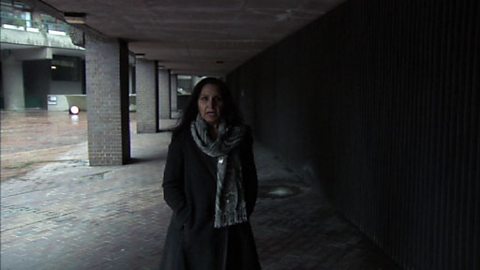
English Literature KS3 / GCSE: 'Singh Song' by Daljit Nagra (poem only) video
Daljit Nagra performs his poem 'Singh Song'.
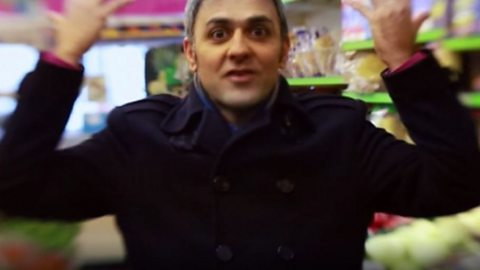
English Literature KS3 / GCSE: 'Ghazal' by Mimi Khalvati (poem only) video
A reading of 'Ghazal' by the author, Mimi Khalvati.
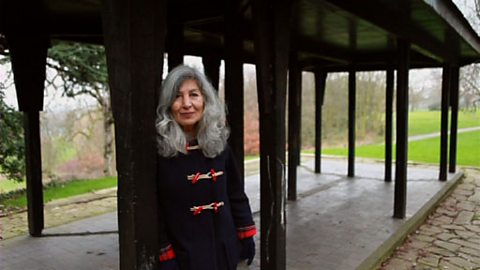
English Literature KS3 / GCSE: 'Flag' by John Agard (analysis) video
John Agard discusses his poem 'Flag', the symbolism of flags and poetry writing.
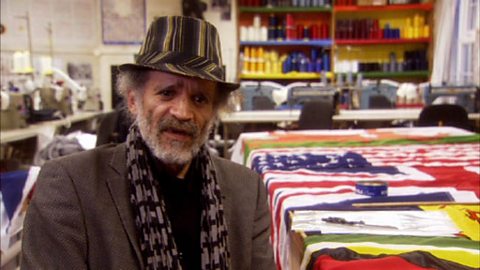
English Literature KS3 / GCSE: 'Praise Song for My Mother' by Grace Nichols (poem only) video
Grace Nichols performs her poem 'Praise Song for My Mother'.
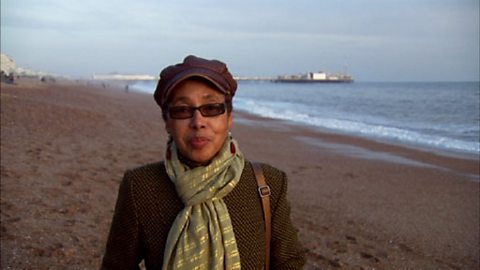
English Literature KS3 / GCSE: 'Checking Out Me History' by John Agard (poem only) video
John Agard performs his poem 'Checking Out Me History'.
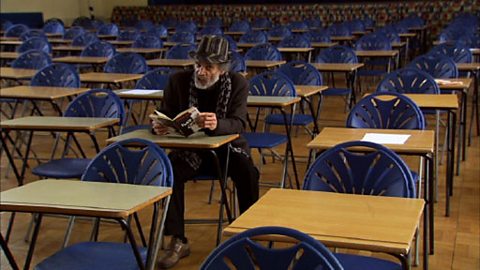
English Literature KS3 / GCSE: 'Checking Out Me History' by John Agard (analysis) video
Poet John Agard describes the process of writing his poem 'Checking Out Me History'.
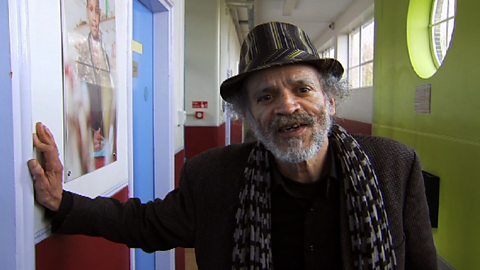
English Literature KS3 / GCSE: 'Ghazal' by Mimi Khalvati (analysis) video
Mimi Khalvati reads and explores the writing of her poem 'Ghazal'.