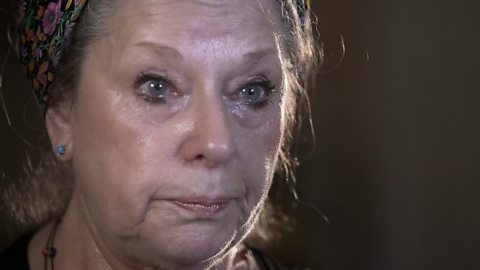
Trude Silman:
Well the Nazi occupation as such is difficult to define, because the Nazis only managed to enter Czechoslovakia two weeks before I left. Although from ‘33 onwards, we were aware of it as a family, but as a small child, I wasn’t. I think the biggest impact on me is the fact that I’ve learned to stand on my own two feet and fight my own battles.
I have not reached what I had set out to do, but looking backwards now, it doesn’t really make any odds. I’ve been basically lucky. I had a decent husband, and I’ve got a family. Although, there’s nobody here. And what can you expect. I consider, although many human beings like to think they’re superior to animals. We are only an animal. We are basically robots. We can’t control anything. We’ve just got to cope with what we’ve got.
What’s happiness, can you define it? I’ve not been, I haven’t been happy in one sense. I’ve had moments when I have enjoyed life. If you’re on your own you don’t want to sit in your own four walls. What do you do? Nobody wants you. So you do voluntary work. And I’m a thorn in the side of most folks when I do voluntary work. Because I speak up for the people who have problems.
I’m sure it has quite a lot to do with my history. Because I’ve no graves to go to, where are my parents, one God knows where, one in the ashes up in Auschwitz. Therefore I also don’t have a religious belief. I mean one of the things which often comes into my mind. You know if we have a terrible accident everybody prays for these people. How many millions and millions and millions of prayers have been said since religion and superstition came in? And we’re no better.
I think people are not aware of other people’s experiences and how it can be hurtful and how it can be good. The other story which I could tell you is, the kindness of strangers. The number of people who have helped me til I was able to stand on my own feet. Is amazing.
Video summary
Trude Silman, a Holocaust survivor who escaped to the UK, reflects on the impact of her experiences and how they have shaped her subsequent beliefs.
Trude talks about happiness and the kindness of strangers.
72 years later, she continues to build on evidence relating to her parents’ death: her father ended up in Auschwitz, and her mother (more than likely) at the concentration camp of Sered.
This short film contain scenes which viewers may find upsetting – teacher review is recommended prior to watching with your pupils.
Teacher Notes
Discuss with your class how events in history (such as the Holocaust) have shaped the way we live today. What influence have they had on society, communities and relationships?
How has our understanding of history changed?
This topic appears in history at KS3 and KS4 / GCSE in AQA, OCR A, OCR B, EDEXCEL, EDUQAS and WJEC GCSE in England and Wales, and CCEA GCSE in Northern Ireland.
It is also on the curriculum for 2nd, 3rd and 4th Level, National 4 and 5, and Higher in Scotland.
Trude’s Story - Escaping from Nazi occupied Czechoslovakia. video
In this animation, Trude Silman describes her experience as a young Jewish girl living in Nazi occupied Czechoslovakia, and escaping to Britain in 1939.

Arek’s Story - Survival in Auschwitz-Birkena. video
Arek Hersh recounts his experience as a prisoner, at the age of only 14, in the notorious death camp at Auschwitz-Birkenau.
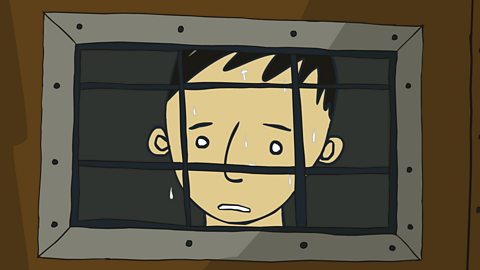
Interview with Holocaust survivor Arek Hersh. video
Arek Hersh, an 85-year-old concentration camp survivor expresses his anger for what the Nazis did to him. He talks about why it’s important for him to tell his story to others.
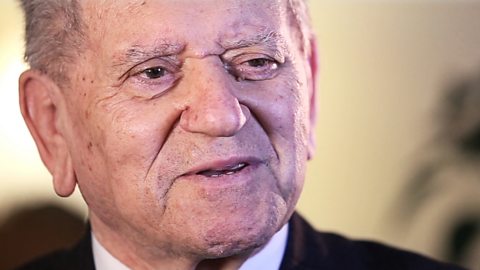
Heinz’s Story - Kristallnacht and escape to Britain. video
Holocaust survivor Heinz Skyte on life in Nazi Germany and his escape to Leeds in the UK.
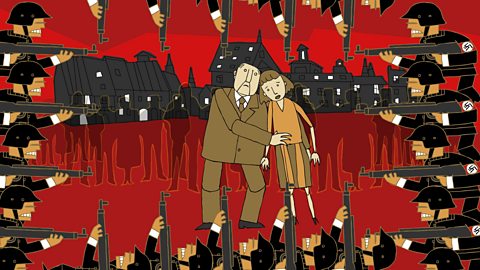
Interview with Holocaust survivor Heinz Skyte. video
Heinz, a Holocaust survivor, reflects on his childhood experiences in Nazi Germany.
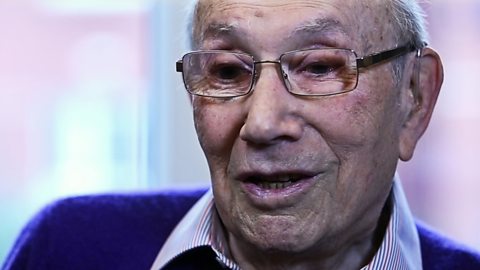
Martin's Story - Interrupted childhood experiences of a young Holocaust survivor. video
Martin Kapel, a survivor of the Nazi Polenaktion ("Poland Action") in October 1938, relates his childhood that included expulsion, escape and bombing.
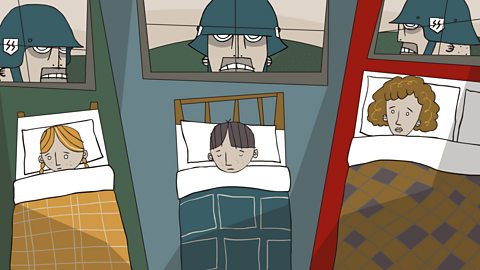
Interview with Holocaust survivor Martin Kapel. video
Martin Kapel came to the UK via the Kindertransport, following the Nazi Poland Action in October 1938. He reflects on the importance of studying history in order to learn from the past.
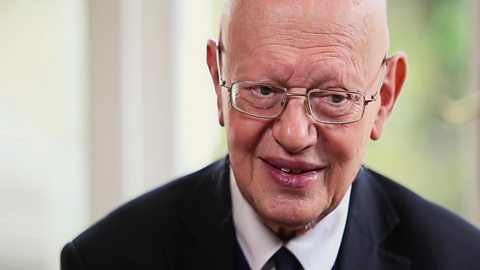
Ruth's Story - Escaping the Nazis as war began. video
Jewish girl Ruth Rogoff escaped from Germany and arrived in Britain on 3 September 1939. She relates her childhood experiences and talks of her mother’s remarkable courage.
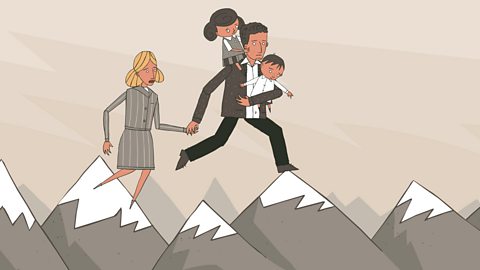
Interview with Holocaust survivor Ruth Rogoff. video
Ruth Rogoff discusses her memories of the Holocaust and details the horrors of watching footage from concentration camp Bergen-Belsen at her local cinema.
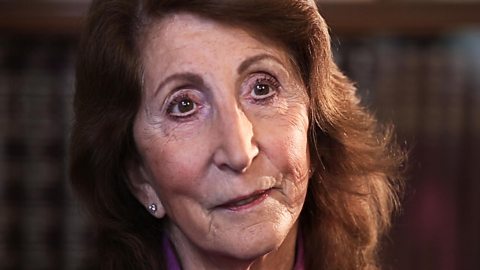
Suzanne’s Story - Hiding from the Nazis in occupied France. video
Suzanne Ripton’s story of living in hiding, as a Jewish child in Nazi-occupied France.
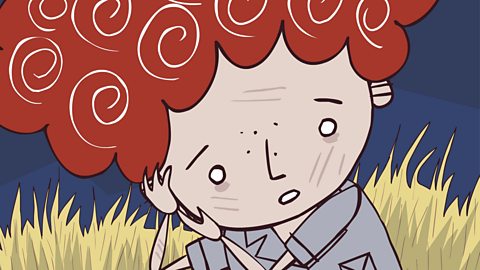
Interview with Holocaust survivor Suzanne Ripton. video
Suzanne Ripton, a Holocaust survivor who now lives in the UK, discusses the traumatic after effects of her experiences, her hatred of the Nazis and why we should remember the Holocaust.