Martin Kapel:
In 1938 when I was 8 years old, there occurred what has become known as the Polenaktion.
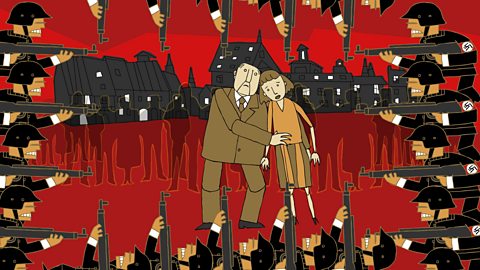
Early in the morning, we were all sleeping in our beds.The Nazis entered our flat.We were going to be taken away.We were put onboard a train.
We came to realise that we were all polish Jews.
We were luckier than some, we had been taken as an entire family.
Some of the people had been separated, they didn’t know whether they were ever going to see one another ever again.
To make matters worse, there were people of all ages. Babies, there were very old people,
people who were ill, some had been taken out of hospital beds.
Travelled for the rest of the day and after it got dark.
The train stopped and we were told to get off.
Outside the station, there were two rows of SS men.
We were marched off. And the rumour went round that we were being taken to some remote place where we would all be shot.
I did see people collapse through exhaustion, and I was left in no doubt about the brutality of these SS men.
We marched for some hours. And then we were stopped at a railway line, and we were told that the SS men were not coming any further.
It seems likely that this was in fact, the Polish frontier.The SS Men wouldn’t want to cross that at this particular stage,that could provoke an international incident.
We were told that we would have to go on marching between the rails,because on either side there were ditches, and anybody who fell risked injury not only from the fall, but also being trampled.
Eventually soldiers and police came and took us prisoner.
What the Poles were trying to do, was to force us back into Germany. The German authorities were ready for that and attempts to send us back failed.
We managed to get to Krakow, where we had some relations, and we arrived on their doorstep.
Roundabout the time that we went to Poland, Britain allowed children to be brought over, in what came to be known as the Kindertransport.
I was very lucky to be one of the few to be rescued from Poland.
I would have died with all the rest of my family if I hadn’t been.
I went to foster parents in Coventry.
In the autumn of 1940, the so-called Blitz began.
Coventry was one of the most severely bombed cities.
We had 17 raids when a few bombs were dropped on the city.
And then one night, we had a very big raid.
Now Home Office advice was that if you hadn’t got an air-raid shelter, the safest part of the house was under the stairs.
Under our stairs we had a small pantry. So we all crowded into that, foster parents, my sister and I and the dog.
He was very vicious, he bit quite a few people. We tried to keep our distance, but whenever a bomb came very near, the dog growled and we were really afraid, all of us.We heard a very loud hissing sound and it was obvious the bomb was coming near.
It landed just a few doors down.The next morning when we emerged, the house had lost its doors and its windows and part of the roof.
It’s amazing that there were many small air-raids, and generally speaking, people took them in their stride.
But during these big air-raids, I certainly felt very much afraid, and I don’t think very many people if they are truthful could say otherwise.
Video summary
Martin Kapel, a survivor of the Nazi Polenaktion ("Poland Action") in October 1938, relates his childhood that included expulsion, escape and bombing.
17,000 Jews were forcefully escorted from the German Reich on the 27th, 28th and 29th October 1938 to the Polish border by brutal SS guards and dogs. As yet, Germany and Hitler were not willing to invade a sovereign state, but arriving in Poland Martin and the other Jews were met with equal dislike.
The Polish Parliament passed a law on the 31st March 1938 that provided for the possibility of withdrawing to all ex-citizens of Poland their citizenship if they lived abroad for five years, as they were said to have lost their connection to the Polish nation.
This affected approximately 30,000 Polish Jews in the German Reich and an additional 20,000 Polish Jews in Austria. Initially, the Polish police and army tried to return the Jews to Germany, but the Germans refused.
Finding his way to family in Krakow, Martin was lucky to find himself on a Kindertransport to Great Britain where he was 'rescued' from the abyss of the Holocaust which would engulf the rest of his family.
Whilst living with a foster family in Coventry, Martin also experienced the Blitz of Autumn 1940 and the frightening near-misses that hit his and other homes nearby. He remarks that whilst the 'Blitz-Spirit' maintained a positive frame of mind for most, the reality of the Blitz was very frightening.
PLEASE NOTE: This short film contains disturbing scenes. Teacher review is recommended prior to use in class.
Teacher Notes
Students could investigate the Nazi Polenaktion and the law the Polish Parliament passed in March 1938 withdrawing all ex-citizens of Poland their citizenship if they had lived abroad for five years.
How do your students think the 17,000 Jews would have felt being rejected by both Germany and their homeland Poland?
Students could also use this short film to understand the Blitz and how air raids affected families in Britain. Through a variety of sources they could look how families sheltered and how they maintained a positive morale.
Students could look specifically at the children who were fostered by British families like Martin and his sister. Not only were they adapting to a new country, not knowing what was happening to their families left behind, but their own lives were at risk.
This topic appears in history at KS3 and KS4 / GCSE in AQA, OCR A, OCR B, EDEXCEL, EDUQAS and WJEC GCSE in England and Wales, and CCEA GCSE in Northern Ireland.
It is also on the curriculum for 2nd, 3rd and 4th Level, National 4 and 5, and Higher in Scotland. It also appears in PSHE and PDE at KS3 and KS4.
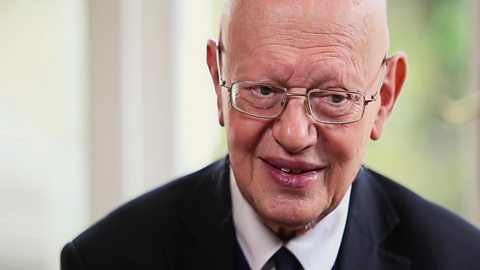
Interview with Holocaust survivor Martin Kapel. video
Martin Kapel came to the UK via the Kindertransport, following the Nazi Poland Action in October 1938. He reflects on the importance of studying history in order to learn from the past.
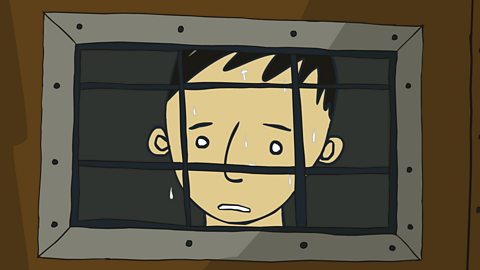
Arek’s Story - Survival in Auschwitz-Birkena. video
Arek Hersh recounts his experience as a prisoner, at the age of only 14, in the notorious death camp at Auschwitz-Birkenau.
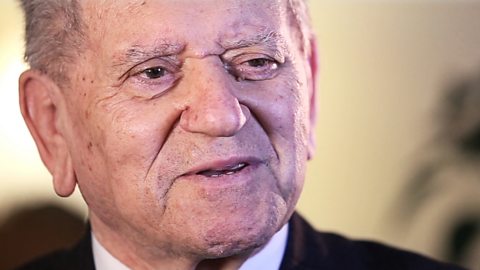
Interview with Holocaust survivor Arek Hersh. video
Arek Hersh, an 85-year-old concentration camp survivor expresses his anger for what the Nazis did to him. He talks about why it’s important for him to tell his story to others.
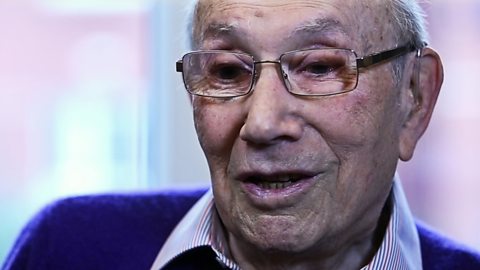
Heinz’s Story - Kristallnacht and escape to Britain. video
Holocaust survivor Heinz Skyte on life in Nazi Germany and his escape to Leeds in the UK.
Interview with Holocaust survivor Heinz Skyte. video
Heinz, a Holocaust survivor, reflects on his childhood experiences in Nazi Germany.
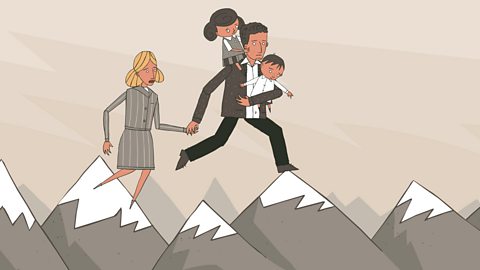
Ruth's Story - Escaping the Nazis as war began. video
Jewish girl Ruth Rogoff escaped from Germany and arrived in Britain on 3 September 1939. She relates her childhood experiences and talks of her mother’s remarkable courage.
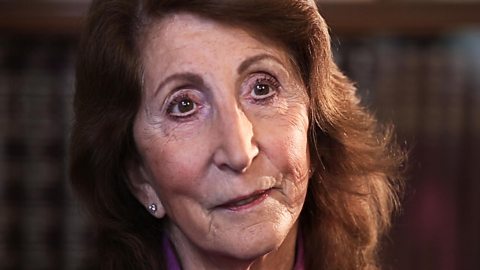
Interview with Holocaust survivor Ruth Rogoff. video
Ruth Rogoff discusses her memories of the Holocaust and details the horrors of watching footage from concentration camp Bergen-Belsen at her local cinema.
Trude’s Story - Escaping from Nazi occupied Czechoslovakia. video
In this animation, Trude Silman describes her experience as a young Jewish girl living in Nazi occupied Czechoslovakia, and escaping to Britain in 1939.

Interview with Holocaust survivor Trude Silman. video
Trude Silman, a Holocaust survivor who escaped to the UK, reflects on the impact of her experiences and how it has shaped her subsequent beliefs.
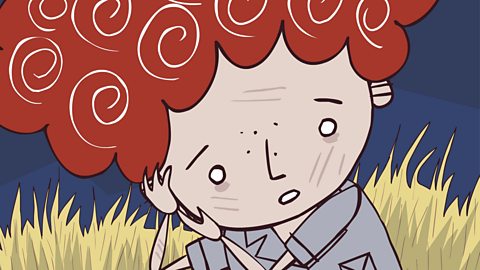
Suzanne’s Story - Hiding from the Nazis in occupied France. video
Suzanne Ripton’s story of living in hiding, as a Jewish child in Nazi-occupied France.
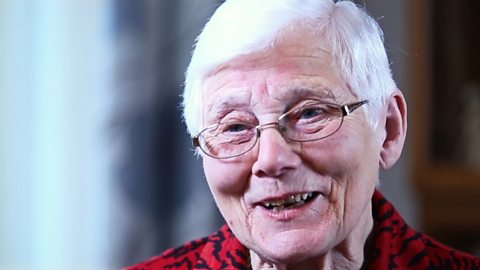
Interview with Holocaust survivor Suzanne Ripton. video
Suzanne Ripton, a Holocaust survivor who now lives in the UK, discusses the traumatic after effects of her experiences, her hatred of the Nazis and why we should remember the Holocaust.