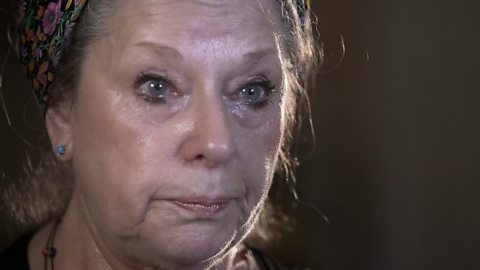
Trude Silman:
I’m back in my school days about 1938,
I have a wonderful photograph, a class photograph of all of us here.
It’s something which is a great pleasure to look at, but also extremely sad. Because unfortunately, the Germans killed many, many children. One and a half million innocent children were killed during the Holocaust.
Why should innocent people, just because they were Jewish, be killed for no reason at all?
And I look at these faces, I don’t know who survived and who didn’t. I only know that I survived.
We had this radio in our dining room, and Father was oftenbut when he had the news on, you could hear this shouting,and that of course was the typical Hitler speechmaking.
Everybody was aware of this knock at the door and it always came during the night,when they came to take away people, either to take them to prison or to beat them up or whatever, and that fear was there all the time I was at home.
You feel insecure, you don’t feel at ease. You can’t relax and you know that something is wrong.
Germans didn’t come into Czechoslovakia until the 15th March 1939.
And I realised that my parents were wanting to get the children away to safety.
And my turn came, I left home on the 28th March 1939.
The only thing I really remember is getting into a taxi.
I remember my mother and my father and my brother standing near me.
But I cannot remember saying goodbye to them, I can’t rememberwhether I hugged them, kissed them, whether Icried. I have absolutely no recollection whatsoever.
We were travelling by train, through to London.But I end up in Wallsend on Tyne, where a very kind family had offered to give me a home.
I start getting homesick and I start feeling very very poorly.
Because a) I was missing my parents
b) I didn’t speak one word of English.
The food was totally different. I’d never eaten toast, porridge, kippers, marmalade, all these normal English things .
And I just basically cried for as long as I stayed with them.
From the age of 9, in those four years, in those war years, I lived with so many different people.
I mean, I would think I must have been at least through 15 – 20 different places.
I never saw my parents after the 28th March 1939.
Father, he was transported on the 19th of April 1942, and he was already dead by the 8th of May.My Mother, is a different story altogether. The last proper evidence I have that she was alive, was when she was transported to a small concentration transportation camp near Bratislava called Siered.
And I’ve been working for years and years to try and trace her. AndI am almost at the end of the trail. I received some evidencefrom a testimony given by somebody in 1962,who could have been on the same transport that my mother was taken on and on a Death Marchon which she would have been shot and killed.
'The impact on me is something which has never left me. Every single day I rue the destruction of my family. To me, family is the most important building brick for human beings and that's why I find it so hard today.
Video summary
Trude Silman describes her experience as a young Jewish girl living in Nazi occupied Czechoslovakia, and escaping to Britain in 1939.
When her home town of Bratislava was invaded by the Nazis, Trude describes the changing atmosphere in the town and the impact it had on her life, family and community.
News of the invasion came through the radio immediately, and her parents decided that she should be sent to England. Trude’s transition to life in Britain was uncomfortable, especially due to her grasp and knowledge of the English language, which made her feel just as isolated as she was back in Bratislava.
72 years later, she continues to build on evidence relating to her parents’ death: her father ended up in Auschwitz, and her mother (more than likely) at the concentration camp of Sered.
PLEASE NOTE: This short film contains disturbing scenes. Teacher review is recommended prior to use in class.
Teacher Notes
Discuss with your class the experience of Trude in her home town and when she came to England. How do pupils think the children felt?
What items would they have bought over with them? How were the children selected?
This could then be extended to discuss and research the organisations that are designed to help children today.
What happens to unaccompanied children that come to Britain today?
This topic appears in history at KS3 and KS4 / GCSE in AQA, OCR A, OCR B, EDEXCEL, EDUQAS and WJEC GCSE in England and Wales,and CCEA GCSE in Northern Ireland.
It is also on the curriculum for 2nd, 3rd and 4th Level, National 4 and 5, and Higher in Scotland.
Interview with Holocaust survivor Trude Silman. video
Trude Silman, a Holocaust survivor who escaped to the UK, reflects on the impact of her experiences and how it has shaped her subsequent beliefs.
Arek’s Story - Survival in Auschwitz-Birkena. video
Arek Hersh recounts his experience as a prisoner, at the age of only 14, in the notorious death camp at Auschwitz-Birkenau.
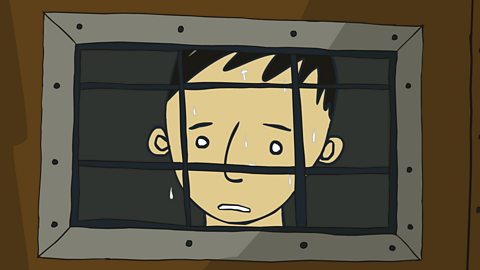
Interview with Holocaust survivor Arek Hersh. video
Arek Hersh, an 85-year-old concentration camp survivor expresses his anger for what the Nazis did to him. He talks about why it’s important for him to tell his story to others.
Heinz’s Story - Kristallnacht and escape to Britain. video
Holocaust survivor Heinz Skyte on life in Nazi Germany and his escape to Leeds in the UK.
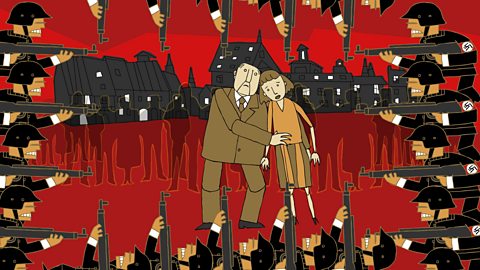
Interview with Holocaust survivor Heinz Skyte. video
Heinz, a Holocaust survivor, reflects on his childhood experiences in Nazi Germany.
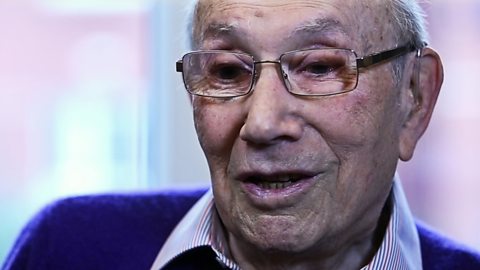
Martin's Story - Interrupted childhood experiences of a young Holocaust survivor. video
Martin Kapel, a survivor of the Nazi Polenaktion ("Poland Action") in October 1938, relates his childhood that included expulsion, escape and bombing.
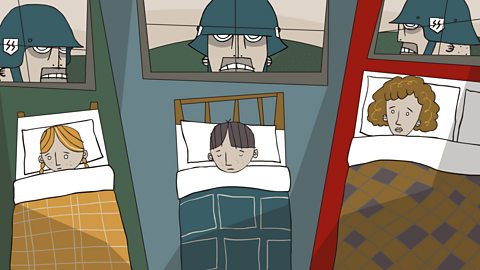
Interview with Holocaust survivor Martin Kapel. video
Martin Kapel came to the UK via the Kindertransport, following the Nazi Poland Action in October 1938. He reflects on the importance of studying history in order to learn from the past.
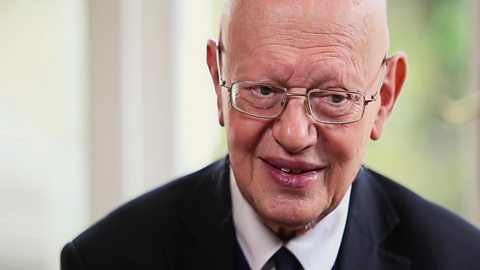
Ruth's Story - Escaping the Nazis as war began. video
Jewish girl Ruth Rogoff escaped from Germany and arrived in Britain on 3 September 1939. She relates her childhood experiences and talks of her mother’s remarkable courage.
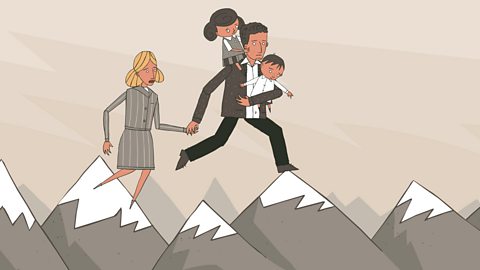
Interview with Holocaust survivor Ruth Rogoff. video
Ruth Rogoff discusses her memories of the Holocaust and details the horrors of watching footage from concentration camp Bergen-Belsen at her local cinema.
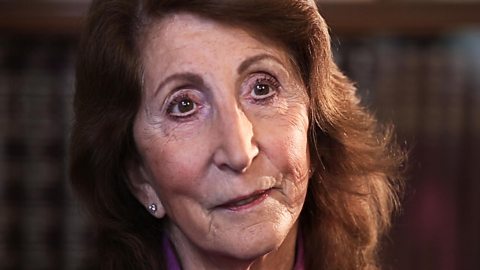
Suzanne’s Story - Hiding from the Nazis in occupied France. video
Suzanne Ripton’s story of living in hiding, as a Jewish child in Nazi-occupied France.
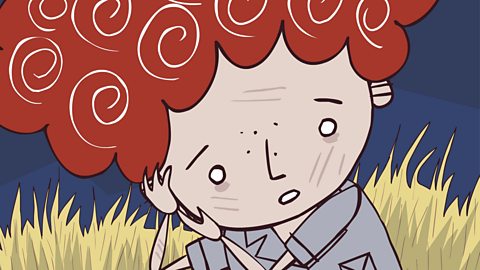
Interview with Holocaust survivor Suzanne Ripton. video
Suzanne Ripton, a Holocaust survivor who now lives in the UK, discusses the traumatic after effects of her experiences, her hatred of the Nazis and why we should remember the Holocaust.