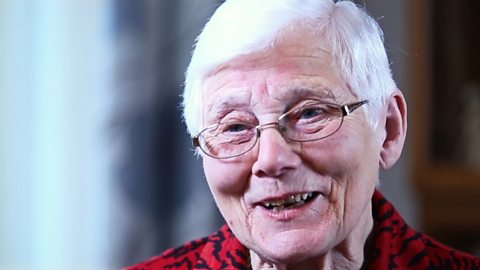
Suzanne Ripton:
Ooh, my Paris was gorgeous. I lived in the Twentieth Arrondissement.
I loved Paris, being a little girl there was fun. We used to walk along the Seine and over the bridges.My Mum used to buy me lovely ice cream (smacks lips)
And she used to put me on a carousel ride.
And the marionettes in the park! There was music always playing. And it was a lovely life. It was a cultured life.
I remember going to a pre-school. I loved going there. But I didn’t go there for very long.
Slowly, slowly, my Life changed.
The first thing we couldn’t do, we couldn’t go out.
You started to hear noises that you hadn’t heard before. It was really scary sometimes.
As I understand it now, we were occupied. And all the shouting and the carrying on you could hear outside was soldiers.
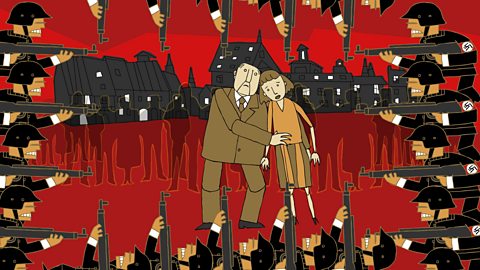
The day it happened it was August and it was hot. And I was with my Father at the window. And suddenly he said “They’re here.”
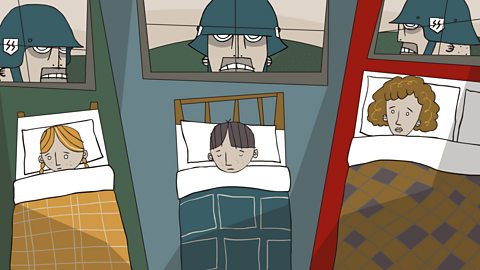
And we went into the bedroom and my Mum pushed me under the bed.
You could hear all these boots on the stairs
And they banged on the …. bang, bang, bang, bang, bang …
And we didn’t answer the door. We stayed in the bedroom
And then they took an axe and they came in, told us “Raus! Out!”
And they told my parents “Pack a bag!”
During all the commotion, Madame Collomb came in, she was our next door neighbour.And she said “What’s my child doing in this apartment?” She took my hand, took me away.
Had they realised what she was doing, we’d have all been shot on the spot. And she got away with it.
She took me to her apartment and put me underneath her dining table, with a big chenille tablecloth over it.
Made me a little bed, and I lived there for two or three weeks. And it was dark, and it was solitary and it was lonely and I had nightmares there.
I never saw my parents again after that. And I was a lost, totally lost child.
After that Madame Collomb took me out at night. And furtively we had to go to catch a train.
The first hiding place she took me to was Mondoublau which is South-West of Paris.
I couldn’t go to school, I couldn’t go out on the street, because there were German Soldiers everywhere.
They hid me in sort of a strange outhouse. Stayed there two years in hiding.
I was taken to the Auvergne, to a farm in the middle of nowhere.
There was no light, no water. You have to be self-sufficient. You grow up overnight.
I slept occasionally inside the house, but then other times went and slept with the goat
because she’d had some kids. They were warm and they were friendly and snuffle against your cheek.
During the day I had to go out and work like a man. It’s hard, in the winter when it’s frozen.
My hands were blue and they were cracked and bleeding and sore and my feet were in the same condition, because I didn’t have shoes.
I used to sit down and cry sometimes. But it didn’t do any good so I stopped that. Nobody heard.Nobody ever said “Ooh I’ll explain what happened to you” “I will explain what War means.”
“I will explain what happened to your parents, that you are never going to see them again.”
“I will explain that you are never going back to your house in Paris, forget it, it’s gone.”
The War finished in 45, and I was still in the Auvergne for two years.
We didn’t know, we hadn’t been told.I didn’t know the war was over, because we didn’t have newspapers, we didn’t have a radio, we didn’t have electricity.Nobody knew.
Video summary
Suzanne Ripton’s story of living in hiding, as a Jewish child in Nazi-occupied France.
Suzanne recounts the terrifying experience of Nazi occupation of Paris in 1940, her sudden separation from her parents, and what life was like for a Jewish child living in hiding during the Second World War.
When Jewish people were being rounded-up in Paris during the occupation, Suzanne describes how her parents’ door was smashed with an axe, and how their brave neighbour - Madam Colombe, raced in claiming Suzanne to be her daughter, which more than likely saved her life.
For the next few years Suzanne was passed from hiding place to hiding place where she was forced to work hard on a farm, live with goats and become self-sufficient to survive.
She did not know of the war’s end in 1945 and was still in ‘hiding’ in 1947. Years later, Suzanne found out that both of her parents were killed at Auschwitz.
PLEASE NOTE: This short film contains disturbing scenes. Teacher review is recommended prior to use in class.
Teacher Notes
Discuss with your class how people risked and braved punishment to help Jewish children and families during the Holocaust.
Pupils could look further into “Hidden Children” during WWII and tie in with one of the most famous examples – Anne Frank.
This short film could also make for good ground to debate moral decision-making – were people right to risk their own and victims’ lives?
This topic appears in history at KS3 and KS4 / GCSE in AQA, OCR A, OCR B, EDEXCEL, EDUQAS and WJEC GCSE in England and Wales and CCEA GCSE in Northern Ireland.
It is also on the curriculum for 2nd, 3rd and 4th Level, National 4 and 5, and Higher in Scotland. It also appears in modern studies / PSHE / PDE at KS3 and KS4.
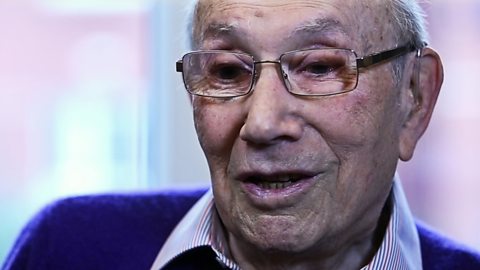
Interview with Holocaust survivor Suzanne Ripton. video
Suzanne Ripton, a Holocaust survivor who now lives in the UK, discusses the traumatic after effects of her experiences, her hatred of the Nazis and why we should remember the Holocaust.
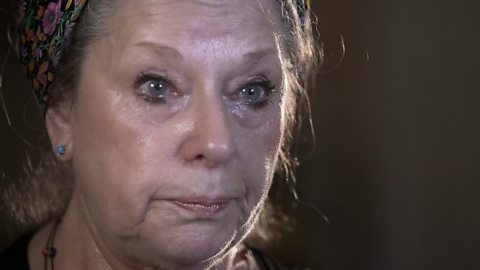
Arek’s Story - Survival in Auschwitz-Birkena. video
Arek Hersh recounts his experience as a prisoner, at the age of only 14, in the notorious death camp at Auschwitz-Birkenau.
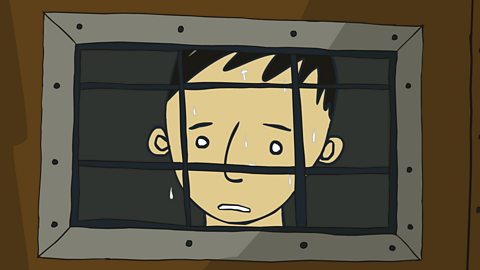
Interview with Holocaust survivor Arek Hersh. video
Arek Hersh, an 85-year-old concentration camp survivor expresses his anger for what the Nazis did to him. He talks about why it’s important for him to tell his story to others.
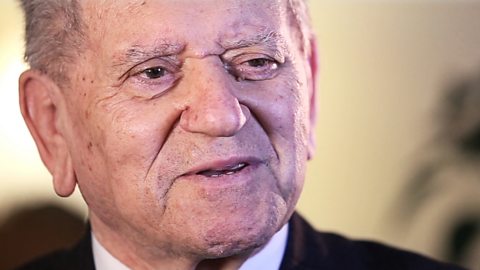
Heinz’s Story - Kristallnacht and escape to Britain. video
Holocaust survivor Heinz Skyte on life in Nazi Germany and his escape to Leeds in the UK.
Interview with Holocaust survivor Heinz Skyte. video
Heinz, a Holocaust survivor, reflects on his childhood experiences in Nazi Germany.
Martin's Story - Interrupted childhood experiences of a young Holocaust survivor. video
Martin Kapel, a survivor of the Nazi Polenaktion ("Poland Action") in October 1938, relates his childhood that included expulsion, escape and bombing.
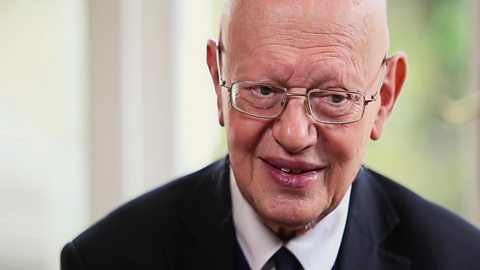
Interview with Holocaust survivor Martin Kapel. video
Martin Kapel came to the UK via the Kindertransport, following the Nazi Poland Action in October 1938. He reflects on the importance of studying history in order to learn from the past.
Ruth's Story - Escaping the Nazis as war began. video
Jewish girl Ruth Rogoff escaped from Germany and arrived in Britain on 3 September 1939. She relates her childhood experiences and talks of her mother’s remarkable courage.
Interview with Holocaust survivor Ruth Rogoff. video
Ruth Rogoff discusses her memories of the Holocaust and details the horrors of watching footage from concentration camp Bergen-Belsen at her local cinema.
Trude’s Story - Escaping from Nazi occupied Czechoslovakia. video
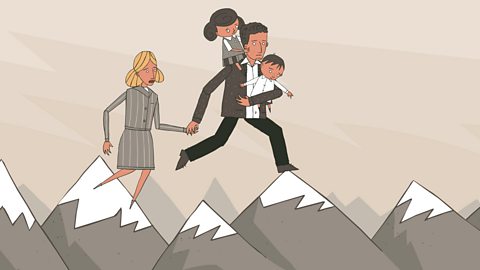
In this animation, Trude Silman describes her experience as a young Jewish girl living in Nazi occupied Czechoslovakia, and escaping to Britain in 1939.

Interview with Holocaust survivor Trude Silman. video
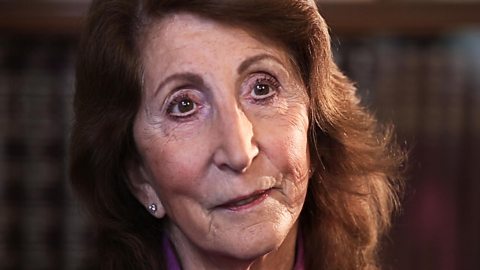
Trude Silman, a Holocaust survivor who escaped to the UK, reflects on the impact of her experiences and how it has shaped her subsequent beliefs.