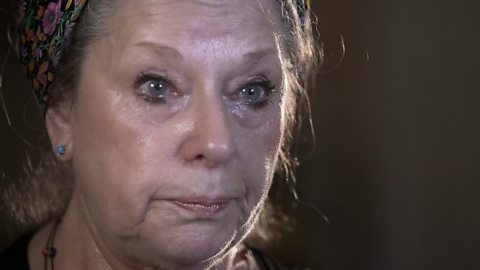
Heinz Skyte:
I do remember the day the Nazis came to power.
I was almost 13. I remember looking down from our window.
Nazis always celebrated their successes by torchlight processions. And the Nazis marched past and sang songs, bloodthirsty songs.
The Nuremberg Laws which came in, in the autumn of 35, legalised the anti-Jewish measures.
We were no longer allowed to go to cinemas and theatres and be members of clubs.
As a child, of any age, to be excluded from your peers is a blow.
You feel inferior. And you question your existence.
There were 3 Jewish boys including me, left in the class.
The main Hitler Youth leader came and said “It’s time you left the school, we don’t want you here”
I left school at 16.
If it hadn’t been for the Nazis I probably would have gone to University, but we could no longer do that, because Universities were no longer accepting Jews.
At the age of 18 I went to Hamburg, to college to learn English. In the evenings, we got together, and we heard the news, and we knew something was going to happen.
In Nuremberg, my parents were arrested, rounded up, kept standing in the square in the centre of the town for about 2 hours. Were abused, spat upon.
The Synagogue was set on fire. The women, the older people and the children were sent home.
When my mother got home, about 4 o’clock in the morning, she rang where I was staying.
She said “Father’s gone away.” (Which was code for he’s been arrested. ) “ Get dressed. Go for a walk. Now.”
So that’s what I did. I sat on park benches. Then I went round the department stores. I tried to make myself small, not to stand out
I could see the smoke from the burning synagogues everywhere.
I could also see groups of Jewish people, being frogmarched through the streets after they’d been arrested.
Windows were smashed.
The Germans invented the term Kristallnacht, because of all the broken glass.Eventually I went home. The Landlady said “The Gestapo has been for you.”
There's a good job that I did leave the digs, otherwise I would have been sent to a concentration camp
Father was arrested and then sent to Dachau Concentration Camp near Munich. He was there for 5 or 6 weeks.
Most of the people were released just before Christmas ’38.And he came home and he was a completely changed man.
It was then, quite obvious that there was no future for us in Germany.
There was nowhere to go. No country wanted us
Frank, my brother was in Leeds. He tried to very hard to get me a trainee post and finally succeeded. And I came to Leeds.
We managed to get visas for our parents eventually and they came. Thank God, because 4 days later, war broke out.
Well, the day war broke out. A policeman came asking us to come down and report to police headquarters.
We were registered as enemy aliens. Cameras and binoculars were impounded, which were considered spying equipment.
Churchill was by then, just become Prime Minister.
And his civil servants famously asked him “What shall we do with these enemy aliens?” and Churchill’s words were “Collar the Lot”So we were interned, father, brother and me.
Well all of us felt a bit sore, because we were more opposed to the Nazis than the British natives were.We were kicked out there because we were Jewish.
And we were interned here because we were GermanWe wanted to fight the Nazis and instead we were kept behind barbed wire.
Video summary
Holocaust survivor Heinz Skyte talks about living in Fuerth near Nuremberg as a young boy before the Second World War and witnessing the changes during the Nazi takeover of his home city.
Whilst Heinz was at college in Hamburg, his parents were arrested during Kristallnacht, in November 1938 when a Pogrom (co-ordinated riot) against Jews and their property occurred across Germany.
He witnessed the Jewish community buildings being set on fire around him and was ordered by his parents not to return home that day. The experience lead Heinz to join his brother in Leeds.
He discusses the irony of being an 'enemy alien' in Britain, finding himself more motivated to fight the Nazis than the British and yet unable to do so.
PLEASE NOTE: This short film contains disturbing scenes. Teacher review is recommended prior to use in class.
Teacher Notes
Using a variety of sources, students could produce a 60 second news announcement of the Kindertransport, answering the question: Why did the British government allow Jewish children from Germany to come to Britain?
This resource is ideal for preparing students for Holocaust Memorial Day.
This topic appears in history at KS3 and KS4 / GCSE in AQA, OCR A, OCR B, EDEXCEL, EDUQAS and WJEC GCSE in England and Wales,and CCEA GCSE in Northern Ireland.
It is also on the curriculum for 2nd, 3rd and 4th Level, National 4 and 5, and Higher in Scotland. It also appears in PSHE and PDE at KS3 and KS4.
Interview with Holocaust survivor Heinz Skyte. video
Heinz, a Holocaust survivor, reflects on his childhood experiences in Nazi Germany.
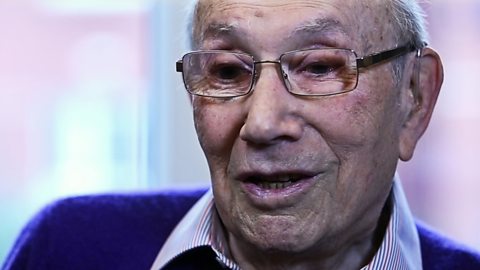
Arek’s Story - Survival in Auschwitz-Birkena. video
Arek Hersh recounts his experience as a prisoner, at the age of only 14, in the notorious death camp at Auschwitz-Birkenau.
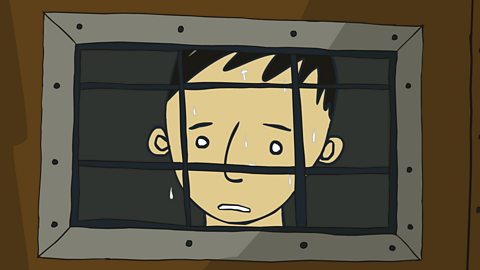
Interview with Holocaust survivor Arek Hersh. video
Arek Hersh, an 85-year-old concentration camp survivor expresses his anger for what the Nazis did to him. He talks about why it’s important for him to tell his story to others.
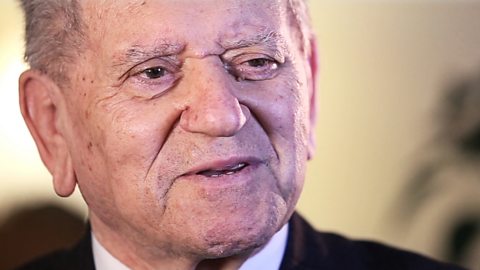
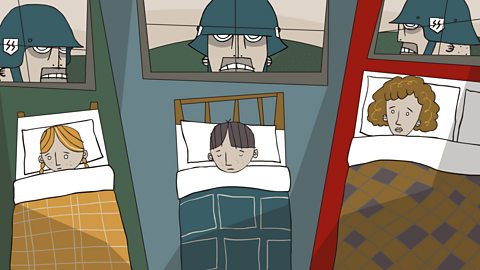
Martin's Story - Interrupted childhood experiences of a young Holocaust survivor. video
Martin Kapel, a survivor of the Nazi Polenaktion ("Poland Action") in October 1938, relates his childhood that included expulsion, escape and bombing.
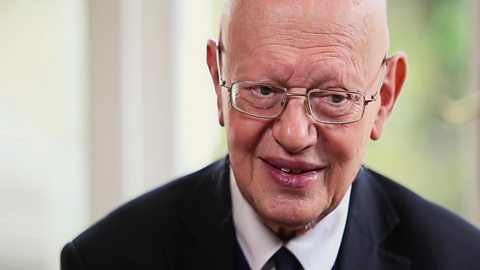
Interview with Holocaust survivor Martin Kapel. video
Martin Kapel came to the UK via the Kindertransport, following the Nazi Poland Action in October 1938. He reflects on the importance of studying history in order to learn from the past.
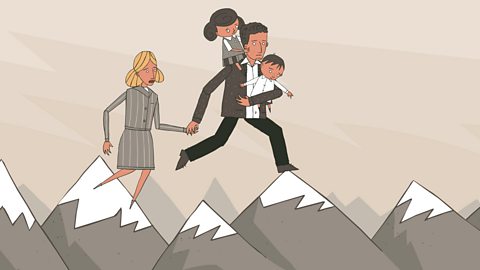
Ruth's Story - Escaping the Nazis as war began. video
Jewish girl Ruth Rogoff escaped from Germany and arrived in Britain on 3 September 1939. She relates her childhood experiences and talks of her mother’s remarkable courage.
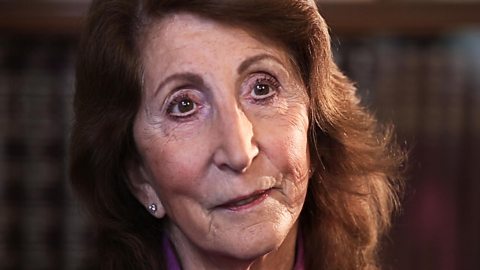
Interview with Holocaust survivor Ruth Rogoff. video
Ruth Rogoff discusses her memories of the Holocaust and details the horrors of watching footage from concentration camp Bergen-Belsen at her local cinema.
Trude’s Story - Escaping from Nazi occupied Czechoslovakia. video
In this animation, Trude Silman describes her experience as a young Jewish girl living in Nazi occupied Czechoslovakia, and escaping to Britain in 1939.

Interview with Holocaust survivor Trude Silman. video
Trude Silman, a Holocaust survivor who escaped to the UK, reflects on the impact of her experiences and how it has shaped her subsequent beliefs.
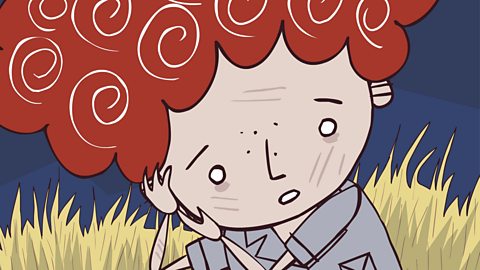
Suzanne’s Story - Hiding from the Nazis in occupied France. video
Suzanne Ripton’s story of living in hiding, as a Jewish child in Nazi-occupied France.
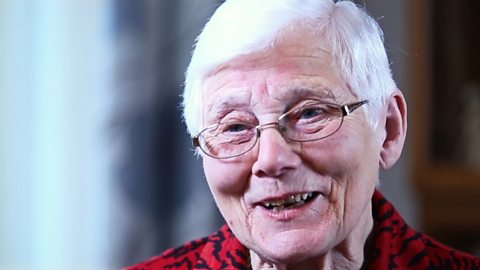
Interview with Holocaust survivor Suzanne Ripton. video
Suzanne Ripton, a Holocaust survivor who now lives in the UK, discusses the traumatic after effects of her experiences, her hatred of the Nazis and why we should remember the Holocaust.