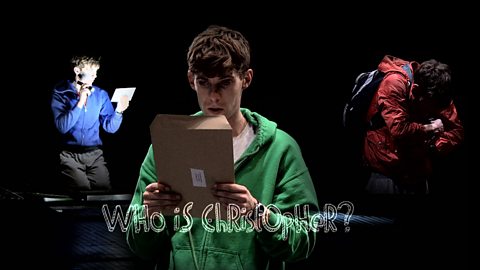
Simon:
There’s a huge amount of characters in the play. I think probably there’s something like 30 different characters, many of whom say one thing.
Christopher:
59, 61…
Policeman:
Ohhh!
Simon:
There’s a pragmatic question about how do you cast that? You could get 30 different actors. But I became quite excited by the notion of creating an ensemble of different characters, of creating the possibility of the audience seeing actors take on and take off different hats and take on and off different characters.
Football Fan A:
He could be our elf mascot…
Football Fan B:
Come on! Shift it!
Simon:
When you’ve got the same actor who plays the Reverend Peters…
Reverend Peters:
Well, it isn’t actually in our universe.
Simon:
… playing a policeman…
Policeman:
Don’t even… look it stops at…
Simon:
… that's quite playful, it’s quite silly its quite fun.
Policeman:
Park yourself.
Simon:
I think what you really need is a bit of playfulness. And it’s something we brought to the theatricality by creating the ensemble.
Policeman:
Christopher!
Nicola:
Because you’re part of the ensemble, there was never a moment when you felt you weren’t involved in the piece.
Nick:
You’re on stage pretty much the whole time and you have a challenge which is flipping very quickly from one person to the next, to make a very quick impression with each of the characters, err, some of them only appear for a matter of moments.
Man:
Through the underpass and up the stairs. You’ll see the signs!
Nicola:
It always felt slightly strange to be looking at Christopher on the train for me I found it quite hard thinking what am I now, I’m not his mother now I’m just a person on a train.
Christopher:
Most other people are lazy. They never look at everything. They do what is called glancing.
Nick:
What we’re creating are scenes that are recognisable by a group of actors all working together to create a moment if we all just marched along in the same way it would not be as effective, so you make choices… on the train I decided that my character would listen to headphones, so I’m listening to music on the train, when I’m in the street, erm, I’m perhaps slightly aggressive because I’m late. So you have to make choices to make those ensemble characters live and be as real as you can even though you’re really a part of what could be a crowd, and that’s how you make it effective.
Marianne:
They have to click in and click out of scenes so you can see them sitting on the side as an ensemble member just focusing the previous scene and then stand up and they’re in the middle of a very, very emotional scene as their character. That’s hard to do.
Roger:
Judy.
Look I’m sorry. Ok?
Judy:
Perhaps you should of thought about that before you made me look like a complete idiot.
Scott:
I think the stylised ensemble nature of this production is important because it’s all about Christopher's take on the world nothing really exists unless Christopher wants it to. So the company will be chaos they will be flitting around until Christopher focuses and then they will snap into position.
Christopher:
Right… Is this London?
Scott:
They represent his thoughts and they can be chaotic and they can be absolutely pure and linear and precise whatever state of mind he is in.
Video summary
This short film is to support teaching around GCSE English Literature or Drama.
Through interviews with the cast and creative team of the National Theatre’s production of 'The Curious Incident of the Dog in the Night-Time', we gain an insight into the use of ensemble acting, where a small group of actors play a large number of different parts.
We observe rehearsals and performance, and the playwright, Simon Stephens discusses the challenges and results of casting a play with many characters.
Actors performing multiple parts gives the production a sense of playfulness and theatricality.
A cast member explains the challenges of being part of an ensemble including making an impact with a character quickly, and being on stage all the time.
Through rehearsal footage, we see how a group of actors all working together can create an instantly recognisable scenario.
Ensemble actors have to make quick choices in their characterisation, snap in and out of characters, and make each one distinctive.
Scott Graham, the choreographer, explains how the stylised ensemble in the production represented the nature of Christopher’s mind, which can be chaotic, until he focuses in on something.
This short film is from the BBC series, The Curious Incident of the Dog in the Night-Time: From Page to Stage, made in collaboration with the National Theatre.
It explores how Mark Haddon’s much-loved novel became a multi-award-winning theatre production.
Interviews with the playwright, director and cast and footage from both rehearsal and performance reveal the process of bringing the story alive on stage.
Teacher Notes
Students could be encouraged to explore how the scenes were created in performance, and discuss ideas on how they can work together as an ensemble effectively.
This short film could be used to help students understand what physical theatre is and how it can be used in performance.
If analysing the play as a piece of live theatre, students could be reminded of how particular scenes were created and asked to analyse the use of movement and physical theatre in the performance, as well as how the actors worked as an ensemble.
Students could also be encouraged to explore multi-role playing in theatre and how to create clear characters.
This short film is suitable for teaching GCSE English literature and drama in England, Wales and Northern Ireland and National 5 in Scotland.
Creating Atmosphere. video
Through interviews with the director and designers, we learn how projection, lighting and sound come together to create atmosphere in the production.
Creating Comedy and Tension. video
The cast and creative team explore how they created moments of comedy and tension in the play.
Design Elements. video
A look at how the highly stylised set of the play was designed, featuring interviews with the director and designers.
Adapting a Novel for Theatre. video
Playwright Simon Stephens explains the strategies he used in adapting the story of Mark Haddon’s novel into a script for his production at the National Theatre.
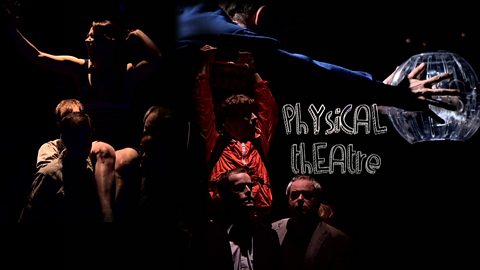
What is Physical Theatre? video
Scott Graham from theatre company, Frantic Assembly, explains what physical theatre is, and how it was used to create the original National Theatre production.
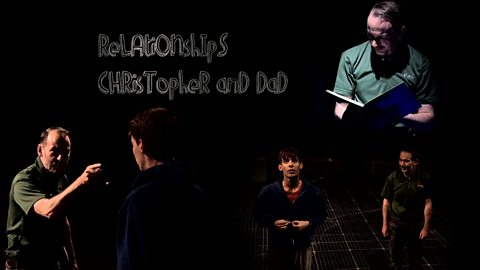
Christopher and his Dad. video
An exploration of the relationship between Christopher Boone and his Dad, Ed Boone, using footage from the original National Theatre production of 'The Curious Incident of the Dog in the Night-Time'.
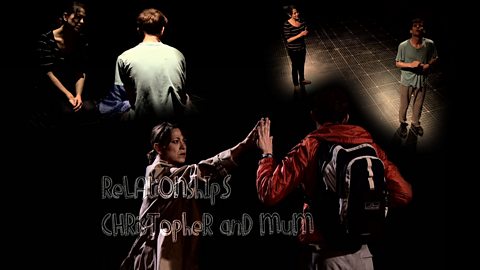
Christopher and his Mum. video
A look at the relationship between Christopher Boone and his Mum, Judy, through interviews with the actors and footage from the National Theatre production.
Christopher and Siobhan. video
A look at the relationship between the characters of Christopher Boone and his teacher, Siobhan, played by Niamh Cusack in the National Theatre production.
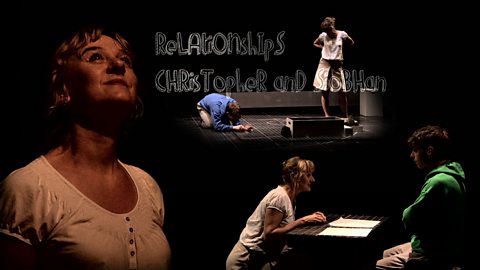
Themes. video
Playwright Simon Stephens explains the themes of the novel and play; family, love, honesty and truthfulness.
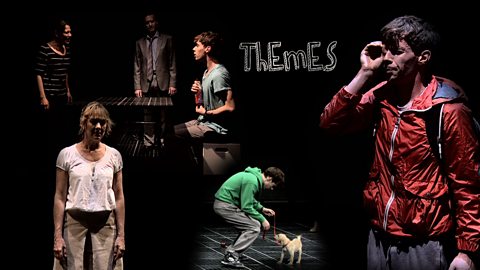
Who is Christopher Boone? video
An exploration of the character Christopher Boone, from the actor and director who originated the role in the National Theatre production of 'The Curious Incident of the Dog in the Night-Time'.