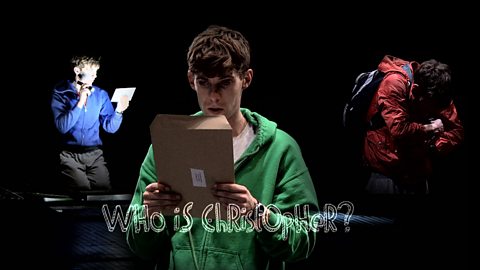
Christopher:
Right, left, right, left, right…
Paule:
It’s interesting how quite often with this show, the way you make the show and the tools you use are reflected in the sort of show it is. So with Christopher who we sort of said that the theatre was like the inside of his head.
Siobhan:
And I put my hands on the side of my face so I can’t see…
Paule:
What we wanted to do was all the things that are available to us, the video projectors and the lights and things. We wanted to make alive in that space.
Judy:
It’s lovely!
Christopher:
And she jumped backwards and disappeared under the water and I thought!
Bunny:
The sound, the lights, the music. We all have to be almost orchestrating ourselves together so that everything we are doing is… we're all doing the same thing at the same moment.
I spent two, three weeks, on and off in rehearsals with Marianne and the company. I don’t get to do any lighting, but I can watch them and I can understand it and I can track the story that we need to keep alive for the audience.
Adrian:
In the rehearsal room you don’t have all the magic of the lighting and the projection. It’s just, it’s very raw you know and um as the composer, you have to imagine in your mind's ear and eye what that is going to translate into. The brilliant thing about rehearsals is that it’s all about trying.
Paule:
When I’m in rehearsal what I do is I work out where I want all the lighting cues to go so I’m not wasting time when I’m there looking for it.
Christopher:
Is this train going to London?
Paule:
I just go right this is what we’re doing, you know is Mrs Shears upstage, this moment is that.
Mrs Shears:
Christopher…
Paule:
In a way, Curious moves like the inside of Christopher’s head so it has to be lots of changes in the lighting all of the time because it’s as busy as he is.
Siobhan:
I could pretend that I am in space and all I could see would be stars.
Adrian:
With a show like this I think that there’s a real real danger that music could be used to sort of get too sentimental. It would be so easy just to say oh you know, we could do some bits of music that say, isn’t it how sad is it to be Christopher which would be the wrong thing to do, or we decided it was the wrong thing to do.
One of the things that came about was that Christopher, really likes maths…
Christopher:… Follows Pythagoras’s theory…
Adrian:
… and machines and things that he knows that he can control. And so of course, that’s great for somebody like me as the composer cause I can pick up on, ah right so he likes maths, he likes machines. How can we use those concepts… to build a score, to build a piece of music with.
Reverend Peters:
Open your paper Christopher, and you may begin.
Adrian:
And I thought right, I’m going to use very computery sounds and bleeps and that sort of stuff.
Christopher:
2, 3, 5, 7, 11…
Paule:
One of the things we’re constantly trying to look for with the play was a sense of Christopher controlling things until they got out of control.
Siobhan:
I can help you.
Christopher:
Will you help me with spelling and the grammar and the footnotes?
Paule:
You know lights moving very carefully and picking things out of darkness and then things kind of get too much for him and it becomes less safe and visually playing games with that.
Christopher:
Is this train going to Willesden Junction?
Paule:
I don’t necessarily make a shift to do with the emotional temperature its more to do with places where he feels safe and places where he doesn’t. I mean it’s interesting when he’s in his mother’s house we put him in a very tight box of light in a way the dark, you know monsters can come from there and Mr. Shears being outside and patrolling. It’s finding a way to make the situation make sense.
Bunny:
There are obvious really tense and crucial moments, when he’s found the letters… when he finds out that his dad killed Wellington.
Siobhan:
Father had murdered Wellington.
Christopher:
2768…
Siobhan:
Father could murder me.
Bunny:
Um. Those were really crucial moments and we really did want to make something happen.
Paule:
Lighting can be like painting it can achieve times of day, it can achieve emotional kind of heightened moments it can achieve all sorts of different things.
Siobhan:
I can make them let me take Toby! But if they didn’t let me I would still go because it would be a dream come true…
Paule:
I don’t think the audience will ever read that overtly… I just hope that they are aware there is a particular… there is a different atmosphere.
Christopher:
So the book is finished.
(Drops book)
Video summary
This short film is to support teaching around GCSE English Literature or Drama.
Through interviews with the director and designers, we learn how projection, lighting and sound come together to create atmosphere in the National Theatre production of 'The Curious Incident of the Dog in the Night-Time'.
Footage from the show is used to demonstrate how lighting creates different atmospheres, which the lighting designer explains change rapidly to reflect Christopher’s rapid thought processes.
The composer talks about using Christopher’s love of maths as a basis for creating an electronic-sounding score.
We see how lighting is used to reflect changes in Christopher’s mood, for example when he feels safe and when he doesn’t.
We see examples of when the technical elements came together to highlight the tense and crucial moments in the show.
This short film is from the BBC series, The Curious Incident of the Dog in the Night-Time: From Page to Stage, made in collaboration with the National Theatre.
It explores how Mark Haddon’s much-loved novel became a multi-award-winning theatre production.
Interviews with the playwright, director and cast and footage from both rehearsal and performance reveal the process of bringing the story alive on stage.
Teacher Notes
Students could consider the design decisions made, and transfer the thought process to their own drama work.
If analysing the play as a piece of live theatre, students could look at how design elements contributed to the mood of different scenes.
This short film is suitable for teaching GCSE English literature and drama in England, Wales and Northern Ireland and National 5 in Scotland.
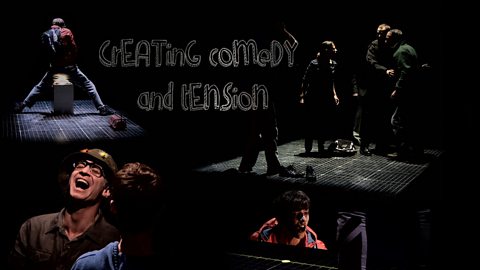
Creating Comedy and Tension. video
The cast and creative team explore how they created moments of comedy and tension in the play.
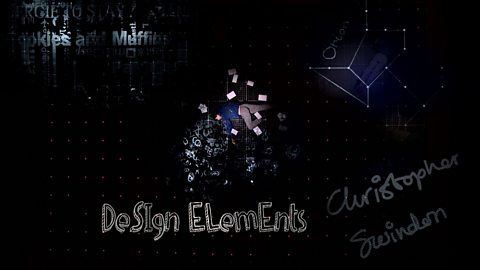
Design Elements. video
A look at how the highly stylised set of the play was designed, featuring interviews with the director and designers.
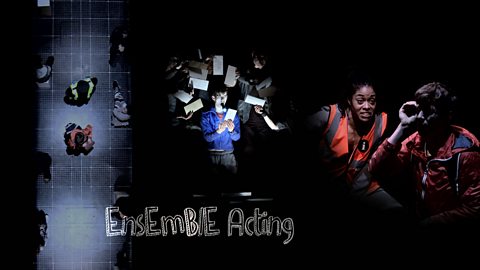
Ensemble Acting. video
The cast and creative team give us an insight into the use of ensemble acting, where a small group of actors play a large number of different parts.
Adapting a Novel for Theatre. video
Playwright Simon Stephens explains the strategies he used in adapting the story of Mark Haddon’s novel into a script for his production at the National Theatre.
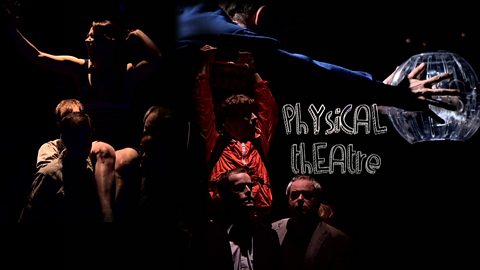
What is Physical Theatre? video
Scott Graham from theatre company, Frantic Assembly, explains what physical theatre is, and how it was used to create the original National Theatre production.
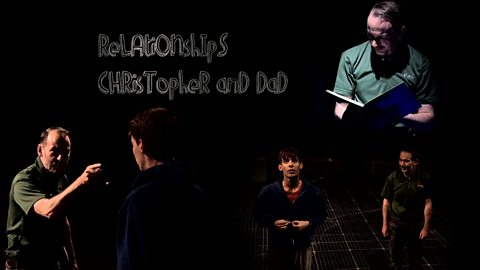
Christopher and his Dad. video
An exploration of the relationship between Christopher Boone and his Dad, Ed Boone, using footage from the original National Theatre production of 'The Curious Incident of the Dog in the Night-Time'.
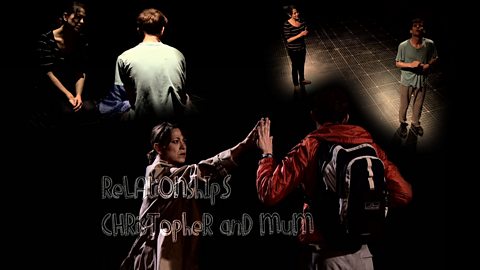
Christopher and his Mum. video
A look at the relationship between Christopher Boone and his Mum, Judy, through interviews with the actors and footage from the National Theatre production.
Christopher and Siobhan. video
A look at the relationship between the characters of Christopher Boone and his teacher, Siobhan, played by Niamh Cusack in the National Theatre production.
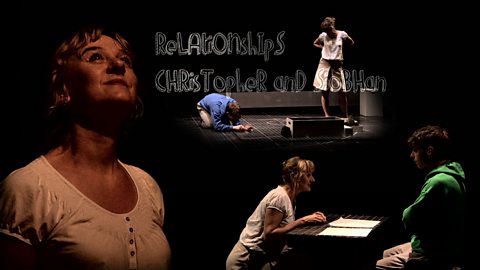
Themes. video
Playwright Simon Stephens explains the themes of the novel and play; family, love, honesty and truthfulness.
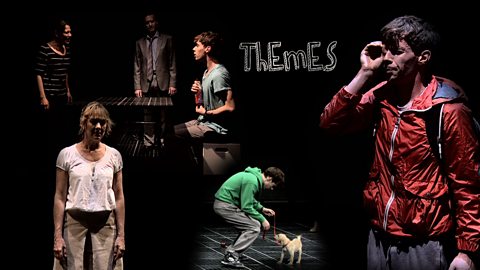
Who is Christopher Boone? video
An exploration of the character Christopher Boone, from the actor and director who originated the role in the National Theatre production of 'The Curious Incident of the Dog in the Night-Time'.