Scott:
I think physical theatre is a very dynamic way of exploring a subtext in any kind of context. If you think of everyday life people just sitting opposite each other talking, there are the words but there's also the body language… And that’s just at a naturalistic level. It actually embraces a whole range of dynamic choreography it can explode into dance… It just shows often what is existing underneath… the aches, the desires, the needs that aren't expressed verbally.
Marianne:
I asked Scott and Steve to get involved because I knew it would be very physical and because we wanted to make it emotional and poetic and interesting without it being, umm realistic so that means you show things in a way that is physical rather than somebody actually walks through the door, puts the key in the door and opens it and puts the key on the side. You actually do something which is much more gestural.
Siobhan:
I let myself into the house and wiped my feet on the mat. I put my keys in the bowl on the table and I took my coat off and hung it on the side of the fridge so it would be ready for school the next day.
Scott:
It’s always helpful when a writer is prepared to be very ambitious. Simon really wanted that immediacy and economy that physicality could provide and he didn’t want to go into a whole world of exposition.
Christopher:
I waited for nine more minutes but no one else came pass. And the train was really quiet and I did not move again so I knew that the train had stopped.
Scott:
Because we’re dealing with a very particular mind. What Mark Haddon does brilliantly is take his reader into that mind.
Luke/Christopher:
There is a village in a distance which has 31 visible houses.
Scott:
And so this production had to bring its audience into the mind of Christopher Boone. So we had to see the world from his point of view.
Niamh:
Finding that physical language which is slightly topsy turvy is a wonderful sort of… way of transmitting the kind of mind that Christopher has which is brilliant and a very imaginative mind.
Siobhan:
And one of them, was mother.
Nick:
You’ve got to be really bold and quite brave because when someone’s saying to you be a chair or a light you do feel to begin with that you’re looking slightly foolish but because everybody was doing the language… it works. What happens with that is that you then are seeing the world hopefully through Christopher’s eyes.
Siobhan:
I went up to my bedroom and switched on my light and played 6 games of Tetris and got to level 38 which is my fourth best ever score.
Marianne:
I knew that the boy playing Christopher would need to be very physical actor and be able to express things physically in a way, again, he possibly can’t articulate, verbally.
Scott:
As an actor he has to be in control of every moment of his physicality on stage and Luke embraced that.
Marianne:
It is a surprisingly difficult thing to achieve quite… simple movements because they have to be very exact, has to be properly thought out, has to be on exactly the right beat.
Simon:
One of the brilliant things about having Frantic on board was that they were able to bring some very pragmatic solutions to quite particular problems – getting Swindon to Paddington train station.
Scott:
Urgh. It was awful to read on the page. It’s just a list of words and advertising slogans and what’s overheard here and there.
My instinct initially was, it’s not going to work. We had to resist getting lost in the randomness of the words.
Nick:
When we first started learning some of the physical sequences, it was surprising how hard it was – it was a lot of practice …There just the sequence where was walk around Swindon and Christopher is feeling out of his depth because everyone else seems to be in step – just those simple moves – everything is on a beat of five and constantly turning. It looks easy, it was horrendously difficult to do to actually get in our bodies so that you can do it without looking like you’re counting or worried about crashing into somebody behind you.
Scott:
That scene could have been a disaster – we had to really focus on him and just appreciate what it must be like how terrifying to have that sensory overload and what you have at the end of it – it’s like an odyssey and he’s completely exhausted.
Train Man:
Hey ya, you look, Ah!
Scott:
And it seems absolutely right because this was never a journey for someone like us, this was a journey for a boy who’s never left Swindon who sees the world in a very very different way.
Christopher:
(EXHAUSTED)
right, left, right, left, right, left…
Video summary
This short film is to support teaching around GCSE English Literature or Drama.
An insight into this theatrical form and an explanation of how it was used in 'The Curious Incident of the Dog in the Night-Time'.
Scott Graham from theatre company Frantic Assembly explains physical theatre as a dynamic way of exploring the subtext of a story, including a range of body language, choreography and dance.
Footage from the National Theatre’s production of 'The Curious Incident of the Dog in the Night-Time' in performance and rehearsal along with interviews with the cast and creative team explore how physical theatre can be used to tell a story.
This short film is from the BBC series, The Curious Incident of the Dog in the Night-Time: From Page to Stage, made in collaboration with the National Theatre.
It explores how Mark Haddon’s much-loved novel became a multi-award-winning theatre production.
Interviews with the playwright, director and cast and footage from both rehearsal and performance reveal the process of bringing the story alive on stage.
Teacher Notes
This short film provides a useful introduction to physical theatre and how it can be used in performance.
If studying the play as a set text, students could be encouraged to explore how the scenes were created in performance.
This short film could be used to prompt ideas on how the scene of Christopher travelling can be performed.
If analysing the play as a piece of live theatre, students could be tasked with analysing the use of movement and physical theatre in the performance.
This short film is suitable for teaching GCSE English literature and drama in England, Wales and Northern Ireland and National 5 in Scotland.
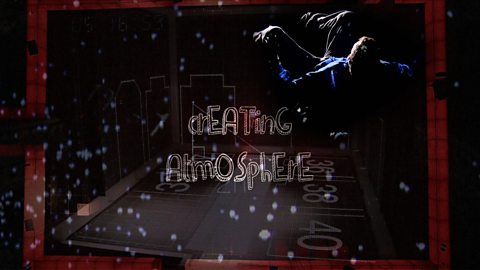
Creating Atmosphere. video
Through interviews with the director and designers, we learn how projection, lighting and sound come together to create atmosphere in the production.
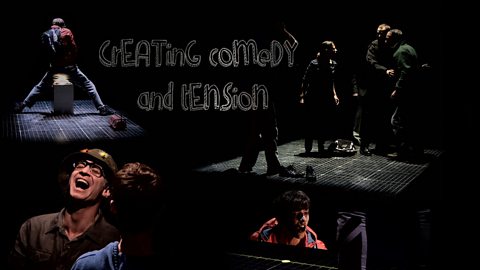
Creating Comedy and Tension. video
The cast and creative team explore how they created moments of comedy and tension in the play.
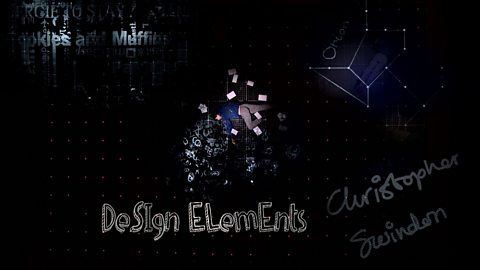
Design Elements. video
A look at how the highly stylised set of the play was designed, featuring interviews with the director and designers.
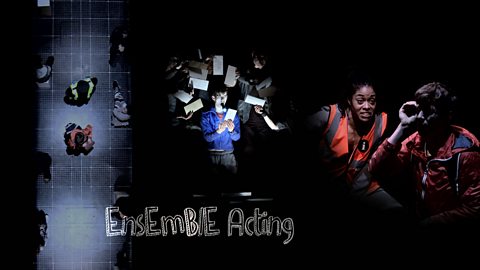
Ensemble Acting. video
The cast and creative team give us an insight into the use of ensemble acting, where a small group of actors play a large number of different parts.
Adapting a Novel for Theatre. video
Playwright Simon Stephens explains the strategies he used in adapting the story of Mark Haddon’s novel into a script for his production at the National Theatre.
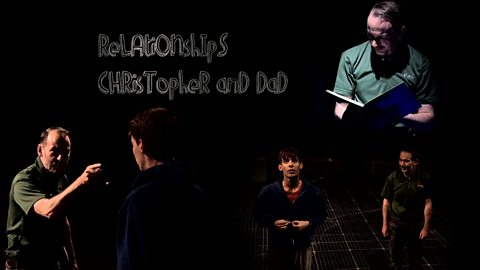
Christopher and his Dad. video
An exploration of the relationship between Christopher Boone and his Dad, Ed Boone, using footage from the original National Theatre production of 'The Curious Incident of the Dog in the Night-Time'.
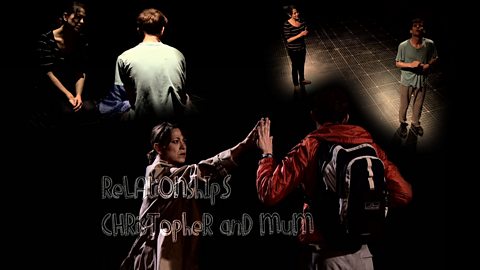
Christopher and his Mum. video
A look at the relationship between Christopher Boone and his Mum, Judy, through interviews with the actors and footage from the National Theatre production.
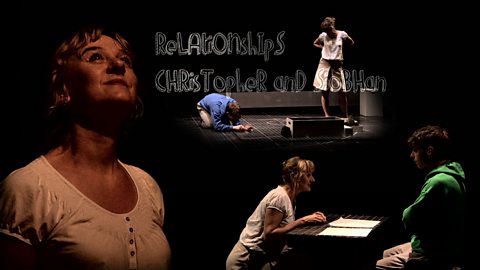
Christopher and Siobhan. video
A look at the relationship between the characters of Christopher Boone and his teacher, Siobhan, played by Niamh Cusack in the National Theatre production.
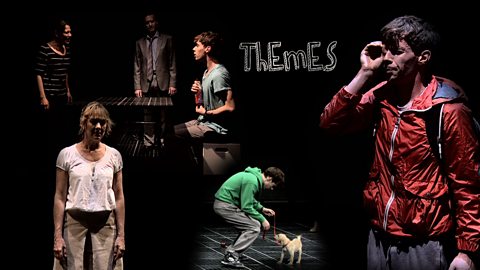
Themes. video
Playwright Simon Stephens explains the themes of the novel and play; family, love, honesty and truthfulness.
Who is Christopher Boone? video
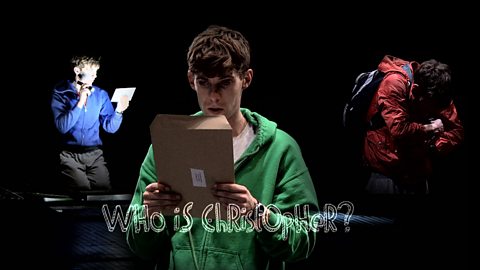
An exploration of the character Christopher Boone, from the actor and director who originated the role in the National Theatre production of 'The Curious Incident of the Dog in the Night-Time'.