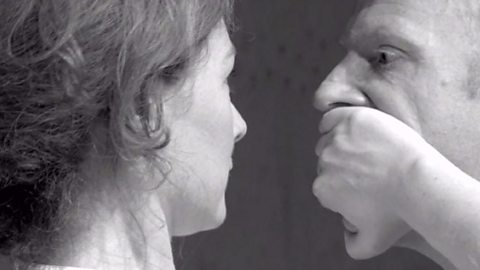
CHRISTOPHER WRIGHT:How came she by that light?
MADELINE APPIAH:Why, it stood by her. She has light by her continually. 'Tis her command.
MICHAEL BOYD:I'd like to try the scene in the dark. The night is scary from childhood onwards and all the rest of it, and this does take place at night. Let's disappear down to a very narrow patch of light and just see what that gives us.
MADELINE APPIAH:We just had a pool of light and we could all sort of go in the light or out of the light but always, someone had to be in the middle.
AISLIN MCGUCKIN:We slightly cheated in that we had one spot coming down, but the concept was that her world was as… extensive as the light the candle would give out.
CHRISTOPHER WRIGHT:I have two nights watched with you, but can perceive no truth in your report.
MADELINE APPIAH:'And you could just see Chris' face coming in to the light 'and then coming out and it was all very-- felt slightly horror.'
CHRISTOPHER WRIGHT:How came she by that light?
MADELINE APPIAH:Why, it stood by her. She has light by her continually. 'Tis her command.
MICHAEL BOYD:Okay, sorry… The dark version made the actors come really close to each other. Creating a strange intimacy between two people who could see her but she couldn't see them.
CHRISTOPHER WRIGHT:You see her eyes are open.
MADELINE APPIAH:Ay, but their sense is shut.
MICHAEL BOYD:'And if she did see them suddenly 'for a moment, she was seeing them as something else.'
CHRISTOPHER WRIGHT:Look, how she rubs her hands.
AISLIN MCGUCKIN:Yet here's a spot.
CHRISTOPHER WRIGHT:Hark! She speaks.
MADELINE APPIAH:You really felt that once you were in that light you were exposed. You really felt how small the space was.
CHRISTOPHER WRIGHT:I will set down what comes from her, to satisfy my remembrance the more strongly.
AISLIN MCGUCKIN:Out!
MADELINE APPIAH:I imagine the Macbeth castle was massive, but that kind of real intimacy and real, like, 'seriously, this is what's happened,' and not wanting to let anyone hear you and it felt scary.
AISLIN MCGUCKIN:Out! I say. One… Two… Why then, 'tis time to do it.
AISLIN MCGUCKIN:'It really gave me a sense of how small her world may be.' It was claustrophobic. The universe became this sphere of light. Which is why she has light by her. Because her world is murky, morally, and maybe she only wants to be out in the dark.
AISLIN MCGUCKIN:With this amount of light because look how much of the world I don't have to engage with.
AISLIN MCGUCKIN:Hell is murky. Hell is so close to me as well.
MICHAEL BOYD:Yeah, yeah.
AISLIN MCGUCKIN:And you can't escape from it. With light you can't escape dark. Here's the smell of the blood still. All the perfumes of Arabia will not sweeten this little hand.
MADELINE APPIAH:She looked me directly in the eye for so… I couldn't prepare for that.
MADELINE APPIAH:There was a bit when you were stood here and you were really so vulnerable I just wanted to embrace you and "Shh" you to sleep.
AISLIN MCGUCKIN:To bed. To bed. There's knocking at the gate.
Video summary
The director and actors experiment with the staging of the sleepwalking scene.
What happens to the relationships when the whole of the scene is played in a small circle of light?
This short film is from the BBC series, Shakespeare Unlocked.
Teacher Notes
This short film could be used to demonstrate different staging techniques and how this echoes light and dark imagery from the play.
In pairs, ask your students to discuss the following questions:
- What is the effect of playing the scene in a small pool of light?
- Would your students choose to play it this way?
- What would this practical performance choice tell us about Lady Macbeth and her journey?
- If they were directing would students choose for Lady Macbeth to know the doctor and gentlewoman are there or not? Why?
It has been suggested that most, if not all, of the scenes in Macbeth could take place in the dark.
In groups, ask students to look at some of the other scenes in the play, and consider how lighting them in a different way might affect the audience.
Ask students to try and find as many references to light and darkness in the play as they can.
How important a theme is the contrast between light and darkness, and how does it relate to the kind of choice that Macbeth was speaking about in his soliloquy, ‘If it were done’?
This short film is suitable for teaching GCSE English literature and drama in England, Wales and Northern Ireland and National 4/ 5 in Scotland.
Act 5, Scene 1 - Sleepwalking. video
The doctor and lady-in-waiting witness Lady Macbeth sleepwalking.
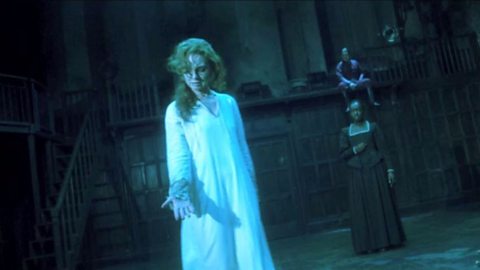
Act 5, Scene 1 - Sleepwalking Queen (workshop) video
The director investigates how knowledge of Lady Macbeth’s secret changes the lives of others.
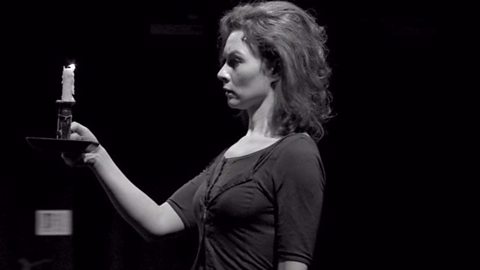
Act 5, Scene 1 - Unlocking the words (workshop) video
RSC Head of Voice, Lyn Darnley, helps Aislín McGuckin through a series of voice exercises.
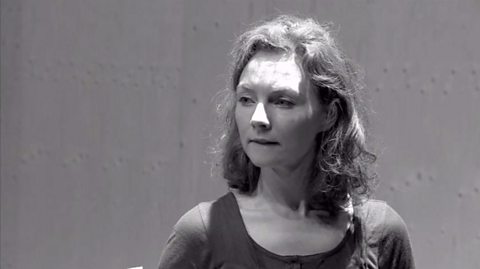
About the 2011 RSC production. video
A look at the production and how the design is informed by the period in which Macbeth was written.
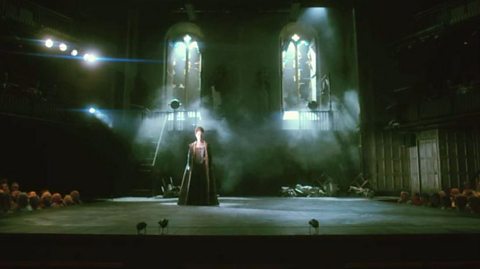
Act 1, Scene 7 - Persuading Macbeth (workshop) video
A look at the different ways of performing the scene when Lady Macbeth persuades her husband to kill the king.
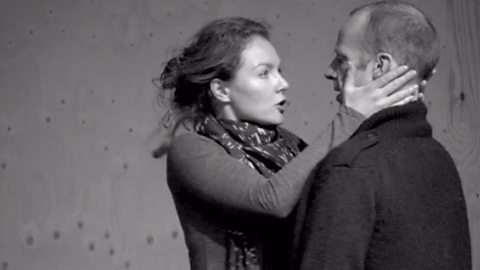
Act 1, Scene 7 - To Kill the King. video
Macbeth debates the murder of King Duncan and decides against it. Lady Macbeth uses a battery of strategies to change his mind.
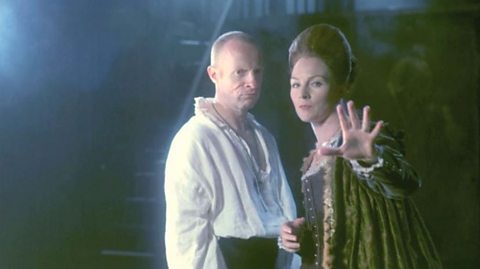
Act 1, Scene 7 - Whether to kill the king (workshop) video
Analysis of Macbeth’s soliloquy and key images in the speech.
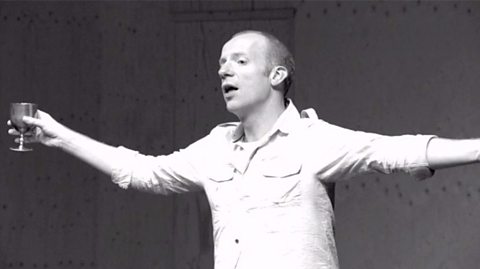
Act 2, Scene 2 - Bloody Daggers. video
Macbeth has committed the murder and is overcome with guilt and fear.
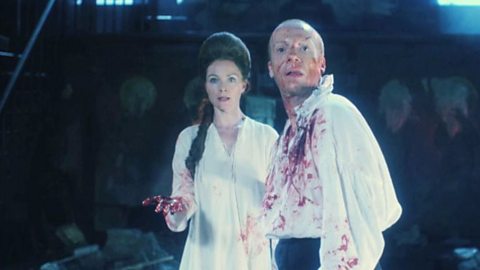
Act 2, Scene 2 - Hearing noises (workshop) video
The cast explore how Lady Macbeth takes control as Macbeth struggles with his guilty conscience.
Act 2, Scene 2 - Rhythm of the language (workshop) video
The cast discuss iambic pentameter and explore the rhythm of Shakespeare’s language.
Act 2, Scene 2 - The king is dead (workshop) video
The actors and director explore the Macbeths' very different responses to Duncan’s murder.