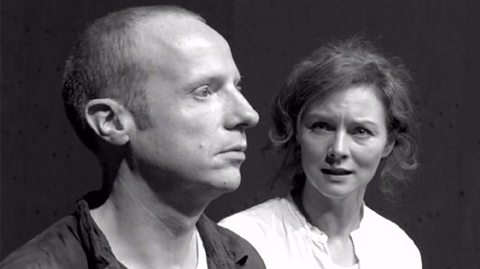
AISLIN MCGUCKIN:That which hath made them drunk hath made me bold.
JONATHAN SLINGER:The iambic pentameter. Di dum, di dum, di dum, di dum, di dum.
MICHAEL BOYD:Ti tum, ti tum, ti tum, ti tum, ti tum.
AISLIN MCGUCKIN:The heartbeat, the - di dum, di dum is how we speak in-- It's how we all-- It's how we communicate to each other now.
And the understood structure here is based on this ten beat line. Ten beats and five… five stresses… I don't know, "That which hath made them drunk hath made me bold." That's a very, very regular line.
AISLIN MCGUCKIN:That which hath made them drunk hath made me bold.
AISLIN MCGUCKIN:What hath quench'd them hath given me fire.
JONATHAN SLINGER:The truth is that we very often speak in iambic pentameter just naturally. I'd really like to have a cup of tea, right? Now… Nobody says, "I'd really like to have a cup of tea" do they?
MICHAEL BOYD:Listening their fear, I could not say 'Amen.'
JONATHAN SLINGER:Listening their fear, I could not say 'Amen.' Actors, students, you know, they go round doing this di dum, di dum… And it's very difficult, once you've got it so rigidly in your head to let go of it because the truth is, you have to let go of it.
JONATHAN SLINGER:How-- whatever-- Of whatever interest it is it is no longer interesting when you can still hear it when an actor's saying it. It just gets in the way and it stops people from understanding what you're saying.
JONATHAN SLINGER:Still it cried, "Sleep no more!" to all the house. Glamis hath murder'd sleep, and therefore Cawdor Shall sleep no more. MACBETH SHALL SLEEP NO MORE.
MICHAEL BOYD:'I have drugged their possets that death and nature do contend about them…' and then you've got the beginning of a short line '…whether they live or die.' And then there's another short line - from Macbeth, off, 'Who's there what ho?' So actually that does make up ten beats so it suggests it probably should 'Boom…' come in and flow like a line.
AISLIN MCGUCKIN:I have drugg'd their possets, that death and nature do contend about them, whether they live or die.
JONATHAN SLINGER:Who's there? What, ho! There are a lot of shared lines in this scene. I have done the deed. Didst thou not hear a noise?
AISLIN MCGUCKIN:I heard the owl scream and the crickets cry. Did not you speak?
JONATHAN SLINGER:When?
AISLIN MCGUCKIN:Now.
JONATHAN SLINGER:As I descended?
AISLIN MCGUCKIN:Ay.
AISLIN MCGUCKIN:The sharing of the lines in the 'Bloody Daggers' or post-murder scene I think allows us to hear how… urgent the need to communicate is between Macbeth and Lady Macbeth at that point. They don't have a great deal of time; it's almost as if time has escalated.
AISLIN MCGUCKIN:That they-- There isn't time for pause. They are coming in on each other's lines because of panic, rising panic.
JONATHAN SLINGER:As I descended?
AISLIN MCGUCKIN:Ay.
JONATHAN SLINGER:Hark!
JONATHAN SLINGER:Who lies i' the second chamber?
AISLIN MCGUCKIN:Donalbain.
JONATHAN SLINGER:This is a sorry sight.
JONATHAN SLINGER:In this scene… the heartbeat is, "De-de, de-de, de-de, de-de, de-de, de-de, de-de." And yet you're sharing those de-de. So you've got, "De-de, de-de, de-de, de-de, de-de, de-de, de-de."
AISLIN MCGUCKIN:I heard the owl scream and the crickets cry. Did not you speak?
JONATHAN SLINGER:When?
AISLIN MCGUCKIN:Now.
JONATHAN SLINGER:As I descended?
AISLIN MCGUCKIN:Ay.
JONATHAN SLINGER:Hark!
JONATHAN SLINGER:Who lies i' the second chamber?
AISLIN MCGUCKIN:Donalbain.
JONATHAN SLINGER:This is a sorry sight.
AISLIN MCGUCKIN:A foolish thought, to say a sorry sight.
JONATHAN SLINGER:'When anybody is in that kind of heightened state' people start to talk very, very quickly at each other, finish each other's sentences, come in-- It’s a very… heightened way of communicating and I think that's what Shakespeare's doing in this scene.
MICHAEL BOYD:It ends… with a complete line… from… "A foolish thought, to say a sorry sight." with a complete line from you. You're-- you're sharing lines…
AISLIN MCGUCKIN:Uh huh.
MICHAEL BOYD:…in that bom, bom, bom, bom, bom, bit and then you almost put a stop to it with, "Let's get back to proper lines."
AISLIN MCGUCKIN:OK.
MICHAEL BOYD:I mean obviously she's not thinking that but–
AISLIN MCGUCKIN:Yeah. Yeah.
MICHAEL BOYD:But it marks the moment when you're trying to bring it back to sanity, to reason.
MICHAEL BOYD:I could smell fear on them more clearly as their heart rate and their language accelerated.
AISLIN MCGUCKIN:My husband.
JONATHAN SLINGER:I have done the deed. Didst thou not hear a noise?
AISLIN MCGUCKIN:I heard the owl scream and the crickets cry. Did not you speak?
JONATHAN SLINGER:When?
AISLIN MCGUCKIN:Now.
JONATHAN SLINGER:As I descended?
AISLIN MCGUCKIN:Ay.
JONATHAN SLINGER:Hark!
JONATHAN SLINGER:Who lies i' the second chamber?
AISLIN MCGUCKIN:Donalbain.
JONATHAN SLINGER:This is a sorry sight.
AISLIN MCGUCKIN:A foolish thought, to say a sorry sight.
Video summary
The cast discuss iambic pentameter and explore the rhythm of Shakespeare’s language.
The cast discover that the rhythm of the lines creates an atmosphere of urgency and desperation.
This short film is from the BBC series, Shakespeare Unlocked.
Teacher Notes
This short film could be used to illustrate the dramatic difference that can be made by adjusting the rhythm or pace of line delivery.
To reinforce the points made here, your students could also be shown excerpts from calm, busy and tense scenes from films, television or filmed theatre, noting down how the rhythm and pace of the characters' language changes.
This short film is suitable for teaching GCSE English literature and drama in England, Wales and Northern Ireland and National 4/ 5 in Scotland.
Act 2, Scene 2 - The king is dead (workshop) video
The actors and director explore the Macbeths' very different responses to Duncan’s murder.
Act 5, Scene 1 - Candle in the dark (workshop) video
The director and actors experiment with the staging of the sleepwalking scene.
Act 5, Scene 1 - Sleepwalking. video
The doctor and lady-in-waiting witness Lady Macbeth sleepwalking.
Act 5, Scene 1 - Sleepwalking Queen (workshop) video
The director investigates how knowledge of Lady Macbeth’s secret changes the lives of others.
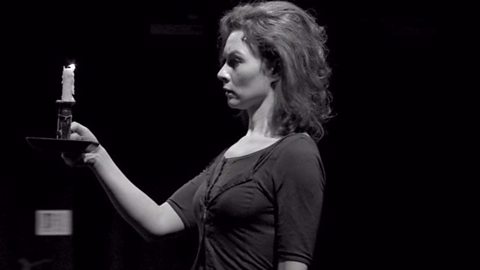
Act 5, Scene 1 - Unlocking the words (workshop) video
RSC Head of Voice, Lyn Darnley, helps Aislín McGuckin through a series of voice exercises.
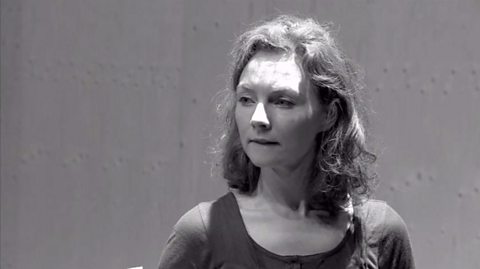
About the 2011 RSC production. video
A look at the production and how the design is informed by the period in which Macbeth was written.
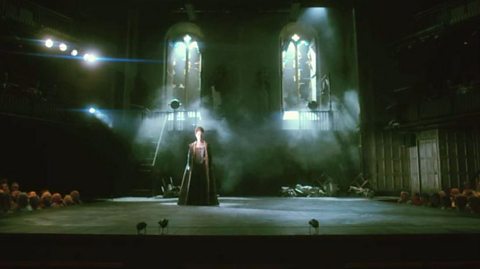
Act 1, Scene 7 - Persuading Macbeth (workshop) video
A look at the different ways of performing the scene when Lady Macbeth persuades her husband to kill the king.
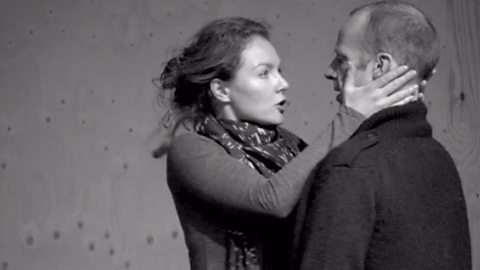
Act 1, Scene 7 - To Kill the King. video
Macbeth debates the murder of King Duncan and decides against it. Lady Macbeth uses a battery of strategies to change his mind.
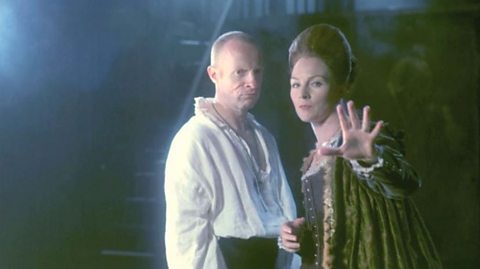
Act 1, Scene 7 - Whether to kill the king (workshop) video
Analysis of Macbeth’s soliloquy and key images in the speech.
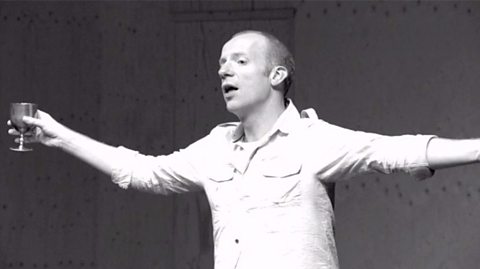
Act 2, Scene 2 - Bloody Daggers. video
Macbeth has committed the murder and is overcome with guilt and fear.
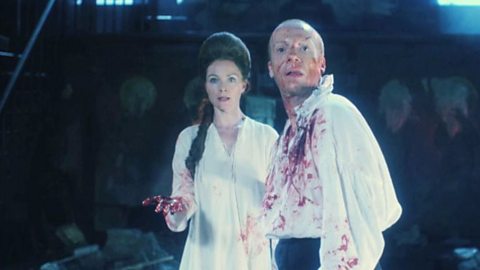
Act 2, Scene 2 - Hearing noises (workshop) video
The cast explore how Lady Macbeth takes control as Macbeth struggles with his guilty conscience.