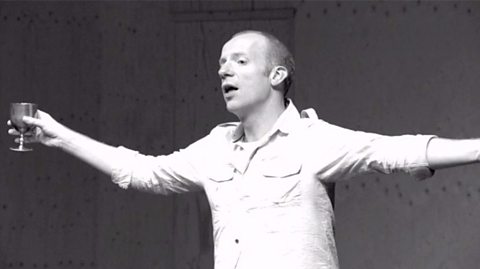
Lady Macbeth:Hark! It was the owl that shriek'd, the fatal bellman that gives the stern'st goodnight.
Lady Macbeth:He is about it. The doors are open and the surfeited grooms do mock their charge with snores.
Lady Macbeth:I have drugg'd their possets, that death and nature do contend about them whether they live or die.
Guard:'Who's there? What, ho!'
Lady Macbeth:Alack, I am afraid they have awaked and 'tis not done. The attempt and not the deed confounds us.
Lady Macbeth:Hark.
Lady Macbeth:I laid their daggers ready, he could not miss them. Had he not resembled my father as he slept, I had done it.
Lady Macbeth:My husband.
Macbeth:I have done the deed. Didst thou not hear a noise?
Lady Macbeth:I heard the owl scream and the crickets cry.
Lady Macbeth:Did not you speak?
Macbeth:When?
Lady Macbeth:Now.
Macbeth:As I descended? Hark.
Macbeth:Who lies in the second chamber?
Lady Macbeth:Donalbain.
Macbeth:This is a sorry sight.
Lady Macbeth:A foolish thought, to say a sorry sight.
Macbeth:There's one did laugh in's sleep, and one cried, "Murder!" that they did wake each other: I stood and heard them: but they did say their prayers and address'd them again to sleep.
Lady Macbeth:There are two lodged together.
Macbeth:One cried, "God bless us!" and, "Amen" the other; as they had seen me with these hangman's hands. Listening their fear, I could not say 'Amen' when they did say, "God bless us!"
Lady Macbeth:Consider it not so deeply.
Macbeth:But wherefore could I not pronounce 'Amen'?
Macbeth:I had most need of blessing, and 'Amen' stuck in my throat.
Lady Macbeth:These deeds must not be thought after these ways; so, it will make us mad.
Macbeth:Methought I heard a voice cry, "Sleep no more.
Macbeth:Macbeth does murder sleep."
Macbeth:The innocent sleep, sleep that knits up the ravell'd sleeve of care, the death of each day's life, sore labour's bath, balm of hurt minds, great nature's second course, chief nourisher in life's feast–
Lady Macbeth:What do you mean?
Macbeth:Still it cried, "Sleep no more!" to all the house. 'Glamis hath murder'd sleep, and therefore Cawdor shall sleep no more; Macbeth shall sleep no more.'
Lady Macbeth:Who was it that thus cried?
Lady Macbeth:Why, worthy thane, you do unbend your noble strength, to think so brainsickly of things.
Lady Macbeth:Go get some water and wash this filthy witness from your hands.
Lady Macbeth:Why did you bring these daggers from the place?
Lady Macbeth:They must lie there, go carry them and smear the sleepy grooms with blood.
Macbeth:I'll go no more: I am afraid to think on what I've done; look on't again I dare not.
Lady Macbeth:Infirm of purpose. Give me the daggers: the sleeping and the dead are but as pictures: 'tis the eye of childhood that fears a painted devil.
Lady Macbeth:If he do bleed, I'll guild the faces of the grooms withal; for it must seem their guilt.
Macbeth:Whence is that knocking?
Macbeth:How is't with me, when every noise appals me?
Macbeth:What hands are here? Ha.
Macbeth:They pluck out mine eyes.
Macbeth:Will all great Neptune's ocean wash this blood clean from my hand?
Macbeth:No, this my hand will rather the multitudinous seas incarnadine, making the green one red.
Lady Macbeth:My hands are of your colour; but I shame to wear a heart so white.
Lady Macbeth:I hear a knocking at the south entry.
Lady Macbeth:Retire we to our chamber; a little water clears us of this deed. How easy is it then?
Lady Macbeth:Your constancy hath left you unattended.
Lady Macbeth:Hark! More knocking. Get on your nightgown, lest occasion call us, and show us to be watchers.
Lady Macbeth:Be not lost so poorly in your thoughts.
Macbeth:To know my deed, 'twere best not know myself.
Macbeth:Wake Duncan with thy knocking!
Macbeth:I would thou couldst!
Video summary
Macbeth has committed the murder and is overcome with guilt and fear.
Lady Macbeth tries to reassure him and to oversee the unfinished business of murder.
Noises and a knocking at the door unsettle them both.
PLEASE NOTE: This scene contains sequences which some people may find upsetting. Teacher review is recommended prior to use in class.
This short film is from the BBC series, Shakespeare Unlocked.
Teacher Notes
This short film is essential viewing for students studying 'Macbeth', especially when considering the implications of this key scene.
Before watching the scene, ask your students to look out for personal moments of crisis for Macbeth and Lady Macbeth.
Ask them to also consider what the turning point of the scene is.
Ask them to share their observations after watching the scene. What do they feel the turning point is?
This short film is suitable for teaching GCSE English literature and drama in England, Wales and Northern Ireland and National 4/ 5 in Scotland.
Act 2, Scene 2 - Hearing noises (workshop) video
The cast explore how Lady Macbeth takes control as Macbeth struggles with his guilty conscience.
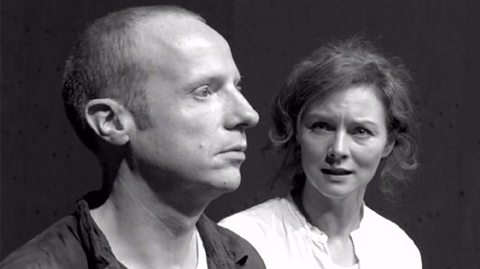
Act 2, Scene 2 - Rhythm of the language (workshop) video
The cast discuss iambic pentameter and explore the rhythm of Shakespeare’s language.
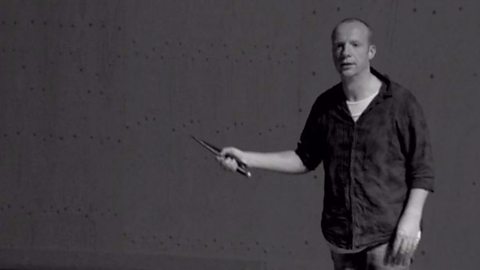
Act 2, Scene 2 - The king is dead (workshop) video
The actors and director explore the Macbeths' very different responses to Duncan’s murder.
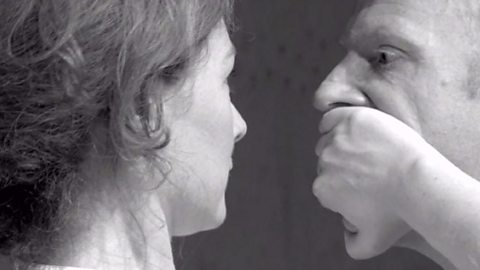
Act 5, Scene 1 - Candle in the dark (workshop) video
The director and actors experiment with the staging of the sleepwalking scene.
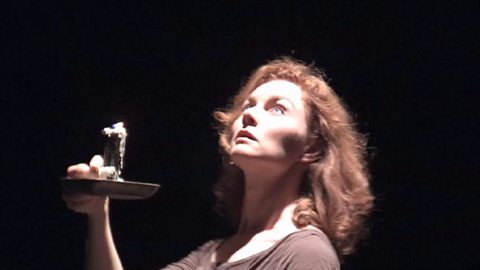
Act 5, Scene 1 - Sleepwalking. video
The doctor and lady-in-waiting witness Lady Macbeth sleepwalking.
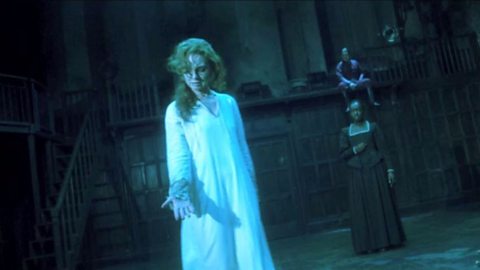
Act 5, Scene 1 - Sleepwalking Queen (workshop) video
The director investigates how knowledge of Lady Macbeth’s secret changes the lives of others.
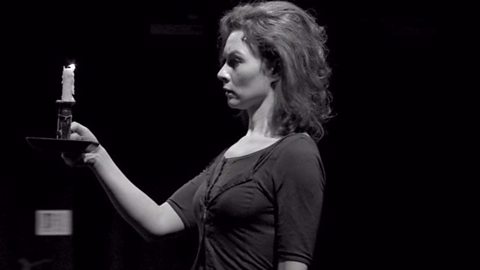
Act 5, Scene 1 - Unlocking the words (workshop) video
RSC Head of Voice, Lyn Darnley, helps Aislín McGuckin through a series of voice exercises.
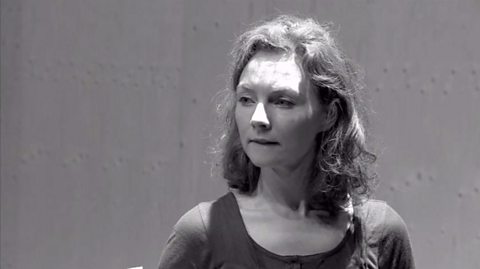
About the 2011 RSC production. video
A look at the production and how the design is informed by the period in which Macbeth was written.
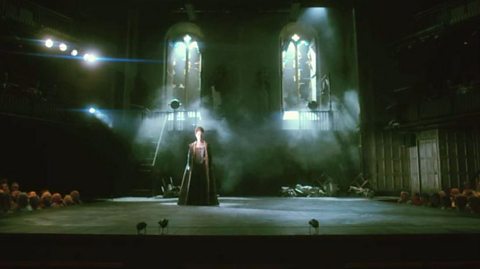
Act 1, Scene 7 - Persuading Macbeth (workshop) video
A look at the different ways of performing the scene when Lady Macbeth persuades her husband to kill the king.
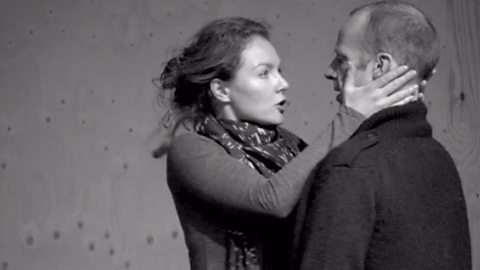
Act 1, Scene 7 - To Kill the King. video
Macbeth debates the murder of King Duncan and decides against it. Lady Macbeth uses a battery of strategies to change his mind.
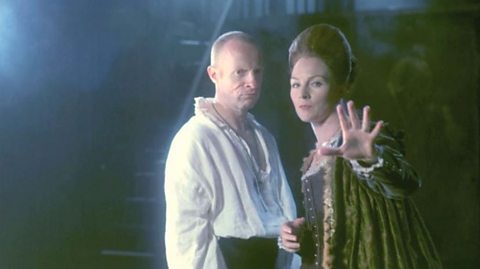
Act 1, Scene 7 - Whether to kill the king (workshop) video
Analysis of Macbeth’s soliloquy and key images in the speech.