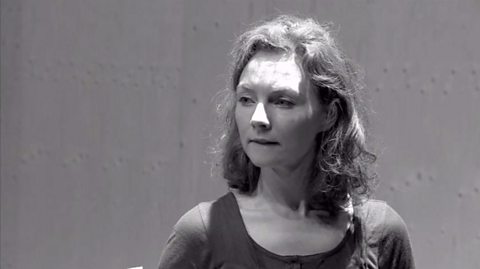
MICHAEL BOYD:Macbeth dramatizes the year after the gun powder plot
MICHAEL BOYD:when the Catholics tried to blow up Parliament. And failed. And there was a massive backlash, when the plot was discovered, against Catholics in England.
TOM PIPER:And out of that came an idea that perhaps there would be a church
TOM PIPER:or a kind of ruined environment.
AISLIN MCGUCKIN:The brain shall be a fume.
TOM PIPER:Church that had been once a Catholic place full of icons and images that was actually being desecrated in the way that under Henry the 8th that did happen and beautiful frescos were either white-washed over or their eyes were gouged out.
TOM PIPER:Theatre designer creates the world of the play. The world in which the story is being told. And in collaboration discussion with the director, the designer then goes away, gets lots of references, makes sketches and then works into models to create the world in which this story can take place.
ACTOR #1:Wake Duncan with thy knocking I would thou couldst.
TOM PIPER:The other theme that we wanted to look at very closely was the witches and the supernatural.
ACTOR #1:Did thou not hear a noise?
AISLIN MCGUCKIN:I heard the owl scream and the crickets cry, did not you speak?
ACTOR #1:When?
AISLIN MCGUCKIN:Now.
ACTOR #1:As I descended? Hark.
TOM PIPER:I think it's very difficult to not end up strange old hags with pointy hats.
[SCREAMS]
TOM PIPER:And in this production we went very much for the idea that the witches are Macduff's dead children.
TOM PIPER:So that meant that our witches were these three small children who we hung in the space on meat hooks to begin with.
MICHAEL BOYD:The children arrive first in the production as dead and then they burst into life in front of Macbeth and Banquo and start singing and start prophesising.
MICHAEL BOYD:And the porter's name is… S E Y T O N. Seyton, or is it Satan? And certainly in this production we're playing that quite strongly. And Jamie even comes and picks up the dead as they are slain and takes them through the door into Duncan's bedroom where the dreadful deed was done, which becomes the mouth of hell.
AISLIN MCGUCKIN:To bed.
AISLIN MCGUCKIN:To bed.
AISLIN MCGUCKIN:To bed.
AISLIN MCGUCKIN:I'm the only character who goes through the door
AISLIN MCGUCKIN:herself. She's not–
MICHAEL BOYD:Voluntarily.
AISLIN MCGUCKIN:Yeah. Which is suicide, I suppose in our world–
MICHAEL BOYD:Yes.
ACTOR #2:I'm just there watching, I don't even open the door for you, You open the door for yourself.
AISLIN MCGUCKIN:[SCREAMS]
MADELINE APPIAH:When we did the workshop, Michael whispered something to Jamie.
Madeline AppiahLADY-IN-WAITING
MADELINE APPIAH:Pray God it be, sir. And we get to the last part of the scene and I suddenly felt this presence behind me. I kind of did that thing, you know sometimes you feel there's something in the room and something's not quite right and it did feel like that because I could feel his presence.
MICHAEL BOYD:Okay, good. It's useful just to say, just try a draft like this. Now of course the scene won't entirely work just with that wash of colour on it, but then you'll do it with a different wash of colour on it.
MICHAEL BOYD:And then the next day you'll maybe do it with another one and gradually a picture will emerge, just like a painter painting over, painting over, new colour, layer on layer. Depth gradually being created. And not necessarily by conscious design.
AISLIN MCGUCKIN:Out. Out. Out. Damned spot. Out. I say.
TOM PIPER:When they actually perform the play, they've got all these different versions in their head that they can draw on. And obviously, you kind of move towards one interpretation but they're all kind of there and it keeps it very open and fluid.
AISLIN MCGUCKIN:All the perfumes of Arabia will not sweeten this little hand. [WAILS]
Video summary
Michael Boyd and Tom Piper talk about their production and how the set design is informed by the period in which Macbeth was written (the Protestant Reformation and the Gunpowder Plot).
They explore supernatural elements of the play, how the porter is portrayed as Satan and the witches as Macduff's dead children for example.
PLEASE NOTE: This short film contains scenes from Macbeth which some people may find upsetting. Teacher review is recommended prior to use in class.
This short film is from the BBC series, Shakespeare Unlocked.
Teacher Notes
This short film could be used to help students understand the choices that directors and actors make in putting on a play.
Choose a text the class have studied, and ask them to imagine they have to direct a stage production of it.
- What characters, ideas or aspects of the story interest them?
- In which historical period would they set their production?
- In our own time, or in another period?
- Where in the world would they choose to set it?
Ask them to explain the thinking behind their choices.
As part of an added value unit, students could direct their own version of a scene in the story, and include a written report on their choices and what they were trying to convey.
This short film is suitable for teaching GCSE English literature and drama in England, Wales and Northern Ireland and National 4/ 5 in Scotland.
Act 1, Scene 7 - Persuading Macbeth (workshop) video
A look at the different ways of performing the scene when Lady Macbeth persuades her husband to kill the king.
Act 1, Scene 7 - To Kill the King. video
Macbeth debates the murder of King Duncan and decides against it. Lady Macbeth uses a battery of strategies to change his mind.
Act 1, Scene 7 - Whether to kill the king (workshop) video
Analysis of Macbeth’s soliloquy and key images in the speech.
Act 2, Scene 2 - Bloody Daggers. video
Macbeth has committed the murder and is overcome with guilt and fear.
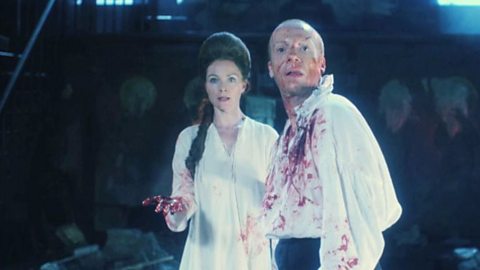
Act 2, Scene 2 - Hearing noises (workshop) video
The cast explore how Lady Macbeth takes control as Macbeth struggles with his guilty conscience.
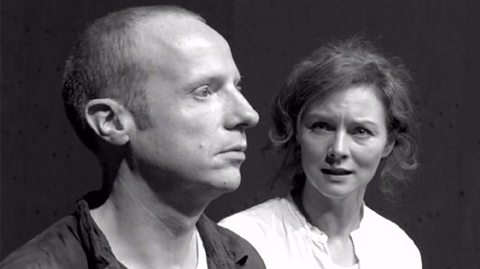
Act 2, Scene 2 - Rhythm of the language (workshop) video
The cast discuss iambic pentameter and explore the rhythm of Shakespeare’s language.
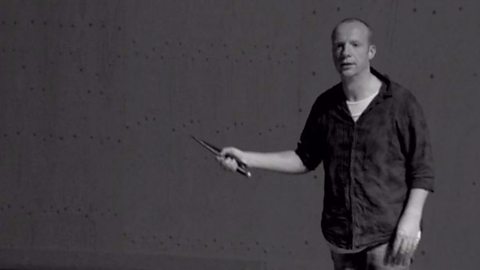
Act 2, Scene 2 - The king is dead (workshop) video
The actors and director explore the Macbeths' very different responses to Duncan’s murder.
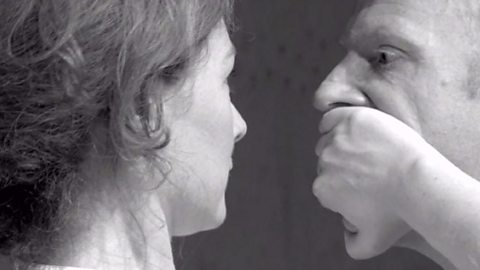
Act 5, Scene 1 - Candle in the dark (workshop) video
The director and actors experiment with the staging of the sleepwalking scene.
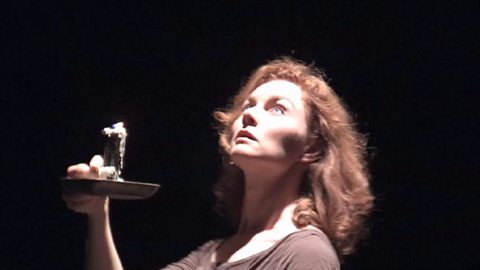
Act 5, Scene 1 - Sleepwalking. video
The doctor and lady-in-waiting witness Lady Macbeth sleepwalking.
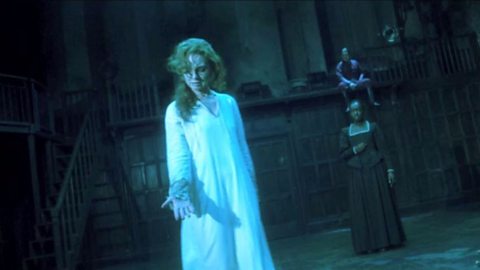
Act 5, Scene 1 - Sleepwalking Queen (workshop) video
The director investigates how knowledge of Lady Macbeth’s secret changes the lives of others.
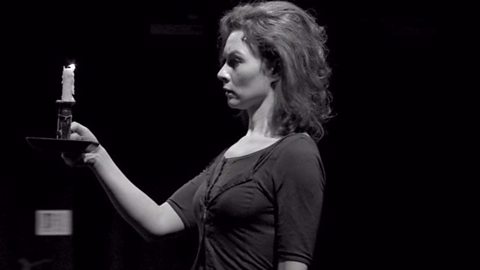
Act 5, Scene 1 - Unlocking the words (workshop) video
RSC Head of Voice, Lyn Darnley, helps Aislín McGuckin through a series of voice exercises.