AISLIN MCGUCKIN:Yet, here’s a spot. Out, damned spot. Out!
LYN DARNLEY:In this particular speech, although she's asleep, we hear what she is seeing, what she is hearing, what she is sensing. Let's just have a look at the number of times you actually use this image of blood. Now if you beat, the number of times you use the word or a word that is–
AISLIN MCGUCKIN:Relating to blood, yeah.
LYN DARNLEY:Related to it, yeah.
AISLIN MCGUCKIN:Here's the smell of the blood still. All the perfumes of Arabia will not sweeten this little hand.
AISLIN MCGUCKIN:'The stamping of the feet is about simplifying.' It made me realise how many references there were indeed to blood, if I had to stamp my foot with any reference to blood. You can sometimes be so busy working out the emotional state, that you don't see the obvious. Yet who would have thought the old man to have had so much blood in him.
LYN DARNLEY:'Shakespeare gives us these words, over and over again.' Blood isn't always referred to as blood.
AISLIN MCGUCKIN:Wash your hands, put on your nightgown, look not so pale, I tell you yet again…
LYN DARNLEY:'But blood runs throughout the passage.'
AISLIN MCGUCKIN:"Wash your hands, put on your nightgown", relates to it in a way that I didn't absolutely think of until then.
LYN DARNLEY:Okay great. Let's just try that now. Using the sense of impetus and change that's in the punctuation, in the full stops, the commas, anything at all.
LYN DARNLEY:So I'll beat whenever there is a punctuation.
Okay. Yet here's a spot. Out. Damned spot. Out! I say, one, two…
LYN DARNLEY:'What we're looking at is just how we use…' Written punctuation to actually signify a change in thought, or a development of an idea.
AISLIN MCGUCKIN:Fie! My lord, fie! A soldier and afeared? What need we fear who knows it, when none can call our power to account. Yet who would have though the old man to have had so much blood in him.
LYN DARNLEY:Try that again now. This time actually shifting.
AISLIN MCGUCKIN:Okay.
LYN DARNLEY:Moving. See if it makes a difference. So if we put these two chairs together. Just become very aware of when you are talking to yourself,and when you are talking to Macbeth.
AISLIN MCGUCKIN:She doesn't see the doctor. She doesn’t see… She sees Macbeth. In a ghost-like form.
AISLIN MCGUCKIN:Fie! My lord, fie! A soldier and afeared? What need we fear who knows it, when none can call our power to account. Yet who would have thought the old man to have had so much blood in him.
AISLIN MCGUCKIN:They're snippets of scenes that she has had with Macbeth, interjected with moments she's had on her own.
AISLIN MCGUCKIN:Yet who would have thought the old man to have had so much blood in him. The thane of Fife had a wife. Where is she now? No more of that my lord, no more of that. No more of that, my lord. No! No more of that, my lord. No more of that. You mar all with this starting.
AISLIN MCGUCKIN:There was a bit, where I was, it wasn't just a mistake it was a pull between which it was. And it’s hard to know if she is remembering herself in that scene. Do you know? Remembering how she was a woman who was empowered. Talking to Macbeth or if she is the broken woman remembering the strength in Macbeth.
LYN DARNLEY:Yes. It's interesting though, that she says some of the things slightly differently. So Shakespeare doesn't give you the exact word. Again, do you remember what you say in the previous scene, when here you say, "what's done cannot be undone".
AISLIN MCGUCKIN:What's done is done.
LYN DARNLEY:Yes.
AISLIN MCGUCKIN:What's done cannot be undone.
LYN DARNLEY:So we get the feeling that the blood on her hands…
AISLIN MCGUCKIN:Will not. Will not come off. Yeah.
LYN DARNLEY:Will not come off. No matter how much she rubs it.
LYN DARNLEY:What is done?
AISLIN MCGUCKIN:The deed.
LYN DARNLEY:The deed.
AISLIN MCGUCKIN:The deed is done.
AISLIN MCGUCKIN:Because Macbeth says that too, "I have done the deed". It suggests that it's final.
LYN DARNLEY:Yes.
AISLIN MCGUCKIN:It has its repercussions, and I think that's what she has hoped for. That once the deed is done,
LYN DARNLEY:That's it.
AISLIN MCGUCKIN:That can be the end.
LYN DARNLEY:They can move on.
LYN DARNLEY:They can do other things, yes.
AISLIN MCGUCKIN:But conscience has to play a part, and it undoes her.
AISLIN MCGUCKIN:What's done cannot be undone. To bed. To bed. To bed.
Video summary
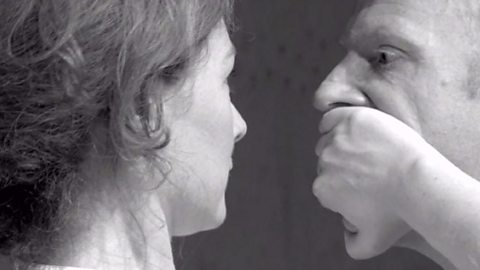
RSC Head of Voice and Text, Lyn Darnley, helps Aislín McGuckin through a series of voice exercises.
She highlights what Lady Macbeth is seeing, hearing and smelling to explain her seemingly disconnected words.
This short film is from the BBC series, Shakespeare Unlocked.
Teacher Notes
This short film could be used to illustrate the importance of understanding a character in depth through the words of the text.
Divide the class into groups, each of which works together on a particular monologue from a character they are familiar with.
Each group should use the words to find repetitions and changing thoughts and emotions.
They could use some of the exercises shown, such as clapping or stamping to indicate where a theme is referred to, or changing direction or position to show a shift in what the character is feeling.
This short film is suitable for teaching GCSE English literature and drama in England, Wales and Northern Ireland and National 4/ 5 in Scotland.
Act 5, Scene 1 - Candle in the dark (workshop) video
The director and actors experiment with the staging of the sleepwalking scene.
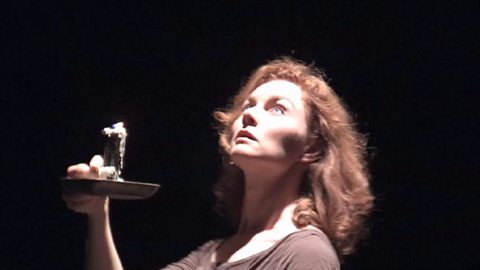
Act 5, Scene 1 - Sleepwalking. video
The doctor and lady-in-waiting witness Lady Macbeth sleepwalking.
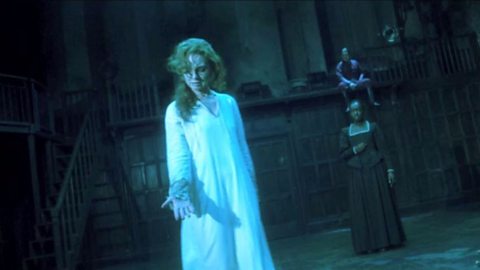
Act 5, Scene 1 - Sleepwalking Queen (workshop) video
The director investigates how knowledge of Lady Macbeth’s secret changes the lives of others.
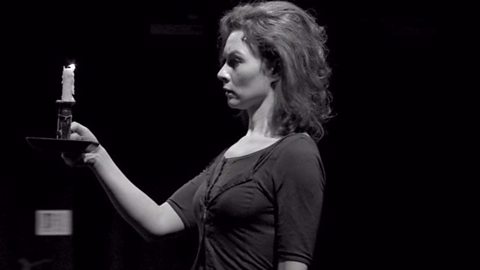
About the 2011 RSC production. video
A look at the production and how the design is informed by the period in which Macbeth was written.
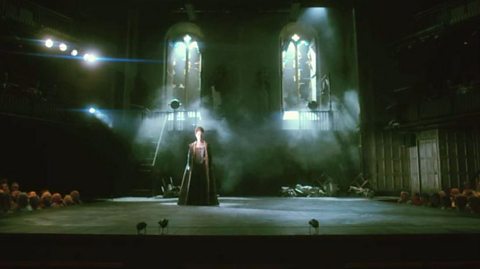
Act 1, Scene 7 - Persuading Macbeth (workshop) video
A look at the different ways of performing the scene when Lady Macbeth persuades her husband to kill the king.
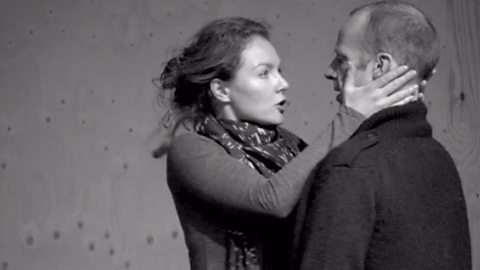
Act 1, Scene 7 - To Kill the King. video
Macbeth debates the murder of King Duncan and decides against it. Lady Macbeth uses a battery of strategies to change his mind.
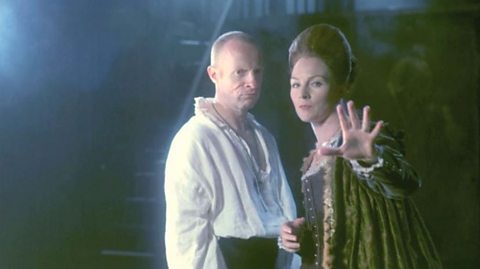
Act 1, Scene 7 - Whether to kill the king (workshop) video
Analysis of Macbeth’s soliloquy and key images in the speech.
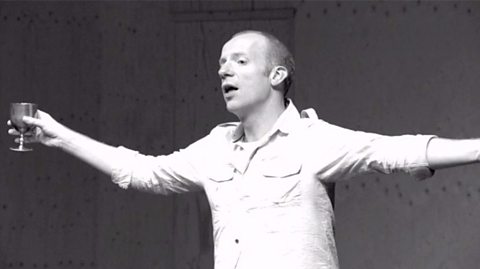
Act 2, Scene 2 - Bloody Daggers. video
Macbeth has committed the murder and is overcome with guilt and fear.
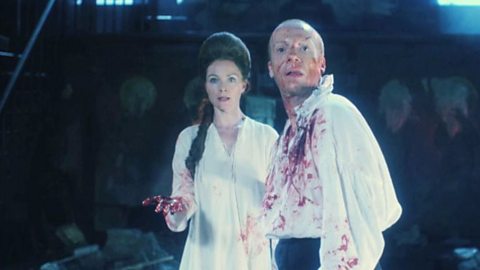
Act 2, Scene 2 - Hearing noises (workshop) video
The cast explore how Lady Macbeth takes control as Macbeth struggles with his guilty conscience.
Act 2, Scene 2 - Rhythm of the language (workshop) video
The cast discuss iambic pentameter and explore the rhythm of Shakespeare’s language.
Act 2, Scene 2 - The king is dead (workshop) video
The actors and director explore the Macbeths' very different responses to Duncan’s murder.