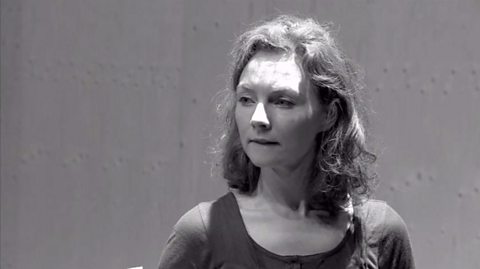
Jonathan Slinger:I dare do all that may become a man who dares do more is none.
Aislin McGuckin:What beast was't then that made you break this enterprise to me?
Jonathan Slinger:When she finds me and she's like, "What are you doing?" And Macbeth says, "We're not going to go through with this. I've decided we're not going to kill him."
Jonathan Slinger:And Lady Macbeth has these extraordinary, kind of mounts this extraordinary attack on him everything about him essentially, but mainly his manhood.
Aislin McGuckin:When you durst do it, then you were a man.
Michael Boyd:Then you were a man could be more aggressive then you could instinctively decide to make up
Aislin McGuckin:Uh huh.
Michael Boyd:Don't we do things, we say horrible things and actually bouncing straight off that we go into, "No, I didn't mean it."
Aislin McGuckin:Mm. Uh huh.
Michael Boyd:I didn't mean to hurt you.
Aislin McGuckin:Yeah.
Aislin McGuckin:When you durst do it, then you were a man. And to be more that what you were, you would be so much more the man.
Michael Boyd:One thing that I am definitely going to be looking for is the moment when Macbeth stops going, "I'm not going to do it. I'm not going to do it. I'm not going to do it." When is the moment of deciding again that he is going to do it?
Aislin McGuckin:Nor time nor place did then adhere, and yet you would make both they have made themselves and that their fitness now does unmake you.
Jonathan Slinger:For some reason, in the workshop, she got to me with her goading and I hit her. I didn't hit her like that.
Aislin McGuckin:They have made themselves and that their fitness now does unmake you. And I thought, "Well I wonder now does she-- Is she gonna u She will use this then." I have given suck, and know how tender 'tis to love the babe that milks me.
Jonathan Slinger:What the slap did, was took her to that place. Took her to the place where she could, realistically, very truthfully, very naturally go, "Sod you."
Aislin McGuckin:I would, while it was smiling in my face, have pluck'd my nipple from his boneless gums and dashed the brains out…
Jonathan Slinger:The turning point in the scene is when she brings up the baby. She pulls that up. And she knows it's a massive trump card.
Aislin McGuckin:Bringing the discussion of this child in is strong enough to stopMacbeth from leaving.
Michael Boyd:Yeah.
Jonathan Slinger:She tries everything else.
Aislin McGuckin:Everything else has failed.
Aislin McGuckin:I would, while it was smiling in my face have pluck'd my nipple from his boneless gums and dashed the brains out.
Jonathan Slinger:It's not just the horror of her bringing up our dead baby–
Michael Boyd:You're also inspired by it.
Jonathan Slinger:I'm also-- I'm inspired. I'm going, "Wow, you really are resolved."
Aislin McGuckin:When Duncan is asleep, whereto the rather shall his day's hard journey soundly invite him his two chamberlains will I with wine and wassail so convince that memory, the warder of the brain shall be a fume.
Michael Boyd:There's a moment when Duncan is asleep–
Aislin McGuckin:Yeah.
Michael Boyd:You've got him back–
Aislin McGuckin:It's the first time in a long time that we've absolutely been on the same page.
Jonathan Slinger:Yeah.
Michael Boyd:And this is now the actual plan.
Aislin McGuckin:Yeah.
Michael Boyd:We no longer have to persuade…
Aislin McGuckin:No.Michael Boyd:…it's kind of to do with the details.
Aislin McGuckin:When in swinish sleep their drenched natures lie as in a death, what cannot you and I perform upon the unguarded Duncan? What not put upon his spongy officers, who shall bear the guilt of our great quell?
Michael Boyd:You are still the one going off to stab this man later on tonight. With that insight, that after all this fighting it becomes like an even tighter, tighter sexy conspiracy.
Aislin McGuckin:Who dares receive it other, as we shall make our griefs and clamour roar upon his death?
Michael Boyd:You know, sometimes people get very, very friendly and very, very passionate after a big row. Is there anything else you two want to say about that last go.
Aislin McGuckin:For me it came from, he was back. You know we were-- It was almost like we were able to rewind.
Michael Boyd:I've got my baby back. I've got my baby back, yes. I mean, as in, my lover.
Aislin McGuckin:Yeah.
Michael Boyd:I think it is worth giving it one more go.
Jonathan Slinger:I am settled, and bend up each corporal agent to this terrible feat. Away, and mock the time with fairest show false face must hide what the false heart doth know.
Michael Boyd:You ended up going off towards the banquet again as young lovers who snuck off for a snog round the corner and sort of, slightly flushed going back into the public space and there's something really strong about that I think.
Aislin McGuckin:She has got him back, they are at their closest. Quite simply that gives us a little, a little view into maybe how connected these two people were.
Video summary
Lady Macbeth persuades her husband to change his mind and kill the king.
PLEASE NOTE: This short film contains strong language which some people may find upsetting. Teacher review is recommended prior to use in class.
This short film is from the BBC series, Shakespeare Unlocked.
Teacher Notes
This short film could be used as a clear analysis of Lady Macbeth's persuasive techniques and a window to the Macbeth's relationship.
Before watching the workshop, ask your students to think about how people behave when having an argument with someone that they care about.
In pairs, note down suggestions under the following headings:
What kinds of things do people say to each other when they quarrel?
Do they say things that they don’t mean?
Things they wouldn’t normally say?
If you were trying to persuade someone you really liked to do something, what kind of strategies would you use to persuade them?
Would you get angry if this person changed their mind about a promise they had given you?
All these questions are relevant to the scene.
After watching the workshop, students can decide if the Macbeths behave in the same way as they had predicted.
Ask students to think about words they would use to describe the Macbeth's relationship up to the start of Act 1, Scene 7.
Ask students to select words they would use to describe the Macbeth's relationship in this production.
This short film is suitable for teaching GCSE English literature and drama in England, Wales and Northern Ireland and National 4/ 5 in Scotland.
About the 2011 RSC production. video
A look at the production and how the design is informed by the period in which Macbeth was written.
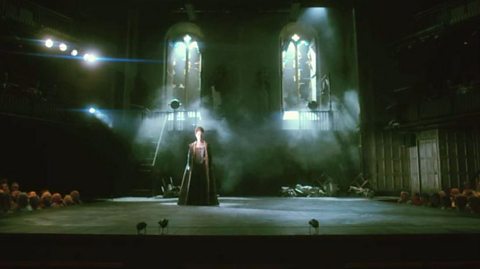
Act 1, Scene 7 - To Kill the King. video
Macbeth debates the murder of King Duncan and decides against it. Lady Macbeth uses a battery of strategies to change his mind.
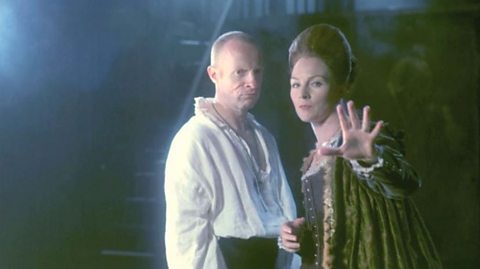
Act 1, Scene 7 - Whether to kill the king (workshop) video
Analysis of Macbeth’s soliloquy and key images in the speech.
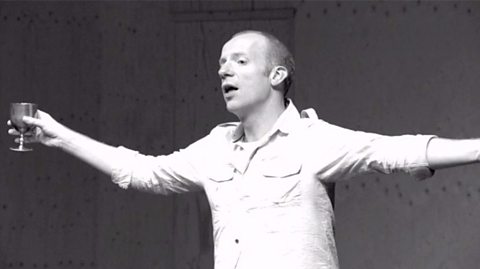
Act 2, Scene 2 - Bloody Daggers. video
Macbeth has committed the murder and is overcome with guilt and fear.
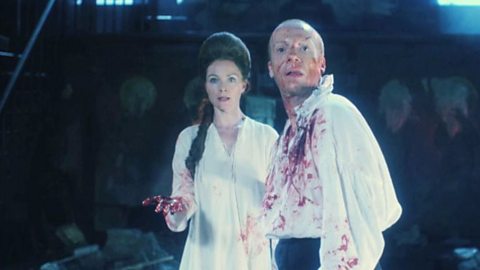
Act 2, Scene 2 - Hearing noises (workshop) video
The cast explore how Lady Macbeth takes control as Macbeth struggles with his guilty conscience.
Act 2, Scene 2 - Rhythm of the language (workshop) video
The cast discuss iambic pentameter and explore the rhythm of Shakespeare’s language.
Act 2, Scene 2 - The king is dead (workshop) video
The actors and director explore the Macbeths' very different responses to Duncan’s murder.
Act 5, Scene 1 - Candle in the dark (workshop) video
The director and actors experiment with the staging of the sleepwalking scene.
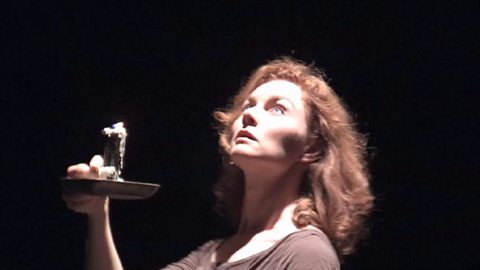
Act 5, Scene 1 - Sleepwalking. video
The doctor and lady-in-waiting witness Lady Macbeth sleepwalking.
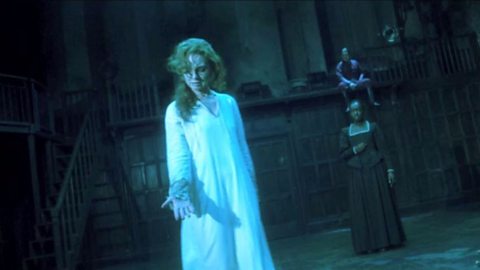
Act 5, Scene 1 - Sleepwalking Queen (workshop) video
The director investigates how knowledge of Lady Macbeth’s secret changes the lives of others.
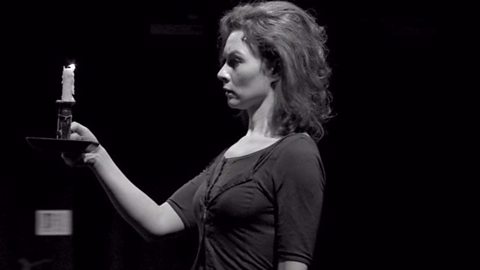
Act 5, Scene 1 - Unlocking the words (workshop) video
RSC Head of Voice, Lyn Darnley, helps Aislín McGuckin through a series of voice exercises.